
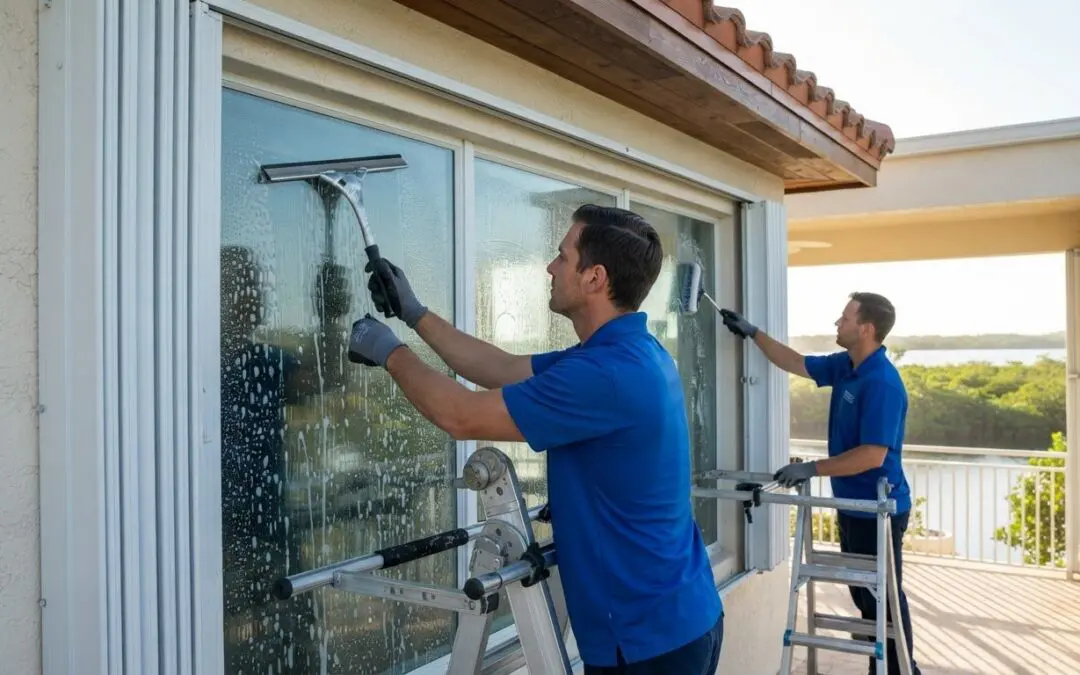

Article by
Frank Sweeney
Salt air is a charming neighbor until it starts wearing on your home’s exterior. A waterfront home exterior maintenance plan in Naples, FL should account for salt, humidity, and storm exposure. Regular attention to exterior surfaces, gutters, roofing, and signs of water damage helps you spot concerns before they are overlooked.
It makes sense to prepare your home before rough weather and inspect it carefully afterward. A practical maintenance plan considers the property’s materials and coastal exposure, then prioritizes areas most vulnerable to moisture and storm damage.
This guide explains how coastal conditions affect exterior materials, what ongoing waterfront maintenance can involve, and what to look for before and after a storm. Not every salty smudge signals a serious problem, but a thoughtful routine helps you identify issues that need attention and plan professional care with greater confidence.
Key Takeaways
- Understand why storm preparation and post-storm inspections should cover roofing, exterior surfaces, and signs of water damage, storms rarely tidy up after themselves.
- Learn which material qualities can matter for coastal homes, including resistance to rust, rot, and fading.
- See how gutters, soffits, and fascia help manage moisture, and why damage or buildup deserves attention before it gets ideas.
- Find out what affects professional pressure-washing timing and what to consider when planning exterior repainting.
- Explore how professional pressure washing, window cleaning, roof cleaning, and hurricane shutter installation can support an exterior maintenance plan, and help your home keep its cool.
Coastal home services in Naples and Southwest Florida
Waterfront maintenance in Naples must account for salt, humidity, heat, and storm exposure. Coastal construction choices also reflect lot elevation, soil conditions, drainage, and local approvals.
Salt-Air and Humidity Damage
Salt in coastal air and persistent humidity can affect exterior building materials. Painted finishes may fade or peel, exposed metal may corrode, and wood may show moisture-related deterioration. Check railings, fasteners, trim, doors, and shaded wall sections, where dampness and salt residue can linger. These changes help distinguish routine cleaning from surfaces that may need repair or refinishing.
Exterior cleaning can remove dirt, grime, algae, moss, and other buildup from patios, decks, driveways, and sidewalks. The right approach depends on the material and the condition of its finish. Surfaces need suitable care, not a forceful wash that gives your maintenance list a new item to brag about.
Coastal Construction and Weather Exposure
Coastal construction planning in Naples can involve setbacks, high winds, floodplain requirements, heat, salt, and moisture. A suitable foundation depends on the lot’s elevation and soil conditions. Pile or stem wall foundations may raise a home above flood levels while maintaining stability and code compliance. Breakaway walls may also be part of coastal design, but the property’s design and approvals determine what applies.
Seawall, dock, and waterfront repairs may require planning around zoning approvals, coastal construction lines, and utility coordination. Dock work may be coordinated with a home project when the property is appropriately zoned and has water access. Required approvals depend on the project and site.
Washing and Repainting Schedules
No single pressure-washing interval suits every Naples waterfront home. Salt exposure, shade, humidity, surface material, and visible algae or grime all affect when professional cleaning is useful. Base a maintenance plan on observed buildup and the condition of each surface, rather than relying on a calendar that ignores the property’s exposure.
When hiring a painter, consider whether the proposed preparation and coating suit the existing surface and coastal exposure. Discuss salt residue, peeling, signs of moisture, and trim condition before work begins. Preparation matters: fresh paint cannot fix damaged material beneath it, however optimistic the paint can may be.
Mold, Algae, and Erosion Warning Signs
Professional exterior cleaning can remove dirt, grime, algae, moss, and other buildup from surfaces. The method should suit the material, including delicate finishes. Watch for recurring dark or green patches on shaded walls, patios, and walkways. Their return may signal persistent dampness or an area that needs closer inspection.
At a seawall, watch for new cracks, leaning sections, soil loss, or depressions near the edge. These visible changes may indicate damage or erosion and deserve prompt attention. After a storm, include the seawall, dock, roof, and exterior walls in your inspection for movement or water damage.
Future maintenance considerations for beachfront homes
In Southwest Florida, waterfront upkeep should account for salt, moisture, storms, and exposed outdoor structures. Track the condition of the home, seawall, dock, and landscaping together, since weather affects more than walls and roofing.
Review seawalls, docks, boat lifts, and pilings regularly, and address observed wear promptly. Include these waterfront structures in the property’s maintenance record, noting changes after storms and keeping track of completed work. Think of the record as the home’s memory, storms are not known for keeping tidy notes.
Choose exterior materials with coastal exposure in mind. Rust-, rot-, and fade-resistant materials are recommended for Naples coastal homes, while hurricane-rated windows and doors can be part of storm-conscious planning. Finishes face salt and moisture, while openings need to suit the home’s storm preparation plan.
Existing materials also need a deliberate review. Note where paint fades, metal corrodes, wood looks worn, or exterior surfaces collect residue. These observations help identify areas that need cleaning, repair, or replacement planning. A maintenance record makes changes easier to compare over time, rather than relying on memory after each storm.
Include docks, landscaping, and exterior areas in the same maintenance routine. Note damaged dock components, overgrown plants near exterior surfaces, and places where debris gathers. These observations help keep outdoor spaces orderly and make changes easier to spot during later inspections. Because every waterfront lot is different, let the property’s materials and exposure guide its priorities.
Storm readiness also depends on preparation before severe weather arrives. Hurricane shutter installation is one way to protect openings, and the home’s existing features and preparation plan determine the appropriate work. After a storm, record visible changes across the house and waterfront structures, then prioritize issues that may allow water intrusion or affect structural condition. Clear notes help keep maintenance decisions focused.
When planning a renovation or replacement, consider how each choice will perform in the home’s coastal setting. A trusted professional can help connect the observed condition of exterior surfaces with a practical maintenance plan. For help organizing coastal exterior maintenance, keep the home’s materials, outdoor structures, and storm preparation needs in view.
Waterfront buyers in Naples should check the condition of the seawall and dock, carrying that review into their broader assessment of the property. Naples waterfront property owners should keep docks, landscaping, and exterior areas in pristine condition, considering these elements alongside the home’s materials and storm preparation.
Gutters, soffit, and fascia
On a Naples waterfront home, gutters, soffits, and fascia are part of the exterior moisture-management system. Gutters guide rainwater away from roofs, walls, and foundations, while soffits and fascia help protect the building from moisture. Their condition matters during ordinary rain and after coastal storms.
Think of these components as a connected route: water reaches the roof edge, enters the gutter, and moves away from the building. If leaves or other debris block the route, water may spill over the gutter. Overflow near a wall or foundation is a visible reason to arrange professional assessment and cleaning, and a reminder that gutters are not fans; they cannot blow the leaves away themselves.
Professional gutter cleaning removes debris that can block water flow. The work should cover the full gutter run, including corners and downspout openings, where leaves and grit can collect. A clear channel helps the system direct water as intended, but cleaning does not repair a loose gutter, damaged fascia, or leak. Those conditions need separate attention.
After heavy rain, note what you can observe from safe ground, such as water spilling over an edge, a section that appears to sag, or staining below the roofline. These observations give a maintenance professional useful context and help distinguish a cleaning need from a concern involving attachment or exterior materials.
Fascia sits along the roof edge and supports the gutter in many exterior designs. Look for peeling finishes, discolored or soft-looking areas, and gaps where the gutter meets the fascia. These signs may indicate moisture exposure or deterioration. Cleaning can make debris easier to identify, but it is not a substitute for fascia repair or replacement.
Soffits cover the underside of roof overhangs and help protect the building from moisture. Staining, peeling, or visible damage beneath an eave deserves attention, especially near an overflowing gutter. A professional inspection can consider the soffit, fascia, and gutter together rather than treating each mark as an isolated issue.
Include roof edges and drainage paths in storm preparation and post-storm reviews. Before a storm, a professional can clean gutters and note visible concerns that may affect drainage. Afterward, fresh overflow marks, loosened sections, or new staining can help identify areas for follow-up. This review is especially useful when wind-driven rain leaves debris along rooflines.
A practical maintenance record can track the location of recurring clogs, visible overflow, and observed staining. For example, noting that one corner repeatedly spills during rain helps focus future attention on that section. Pair those notes with post-storm observations, and gutter cleaning becomes part of a clear exterior care plan, not simply a tidy-up after leaves fall.
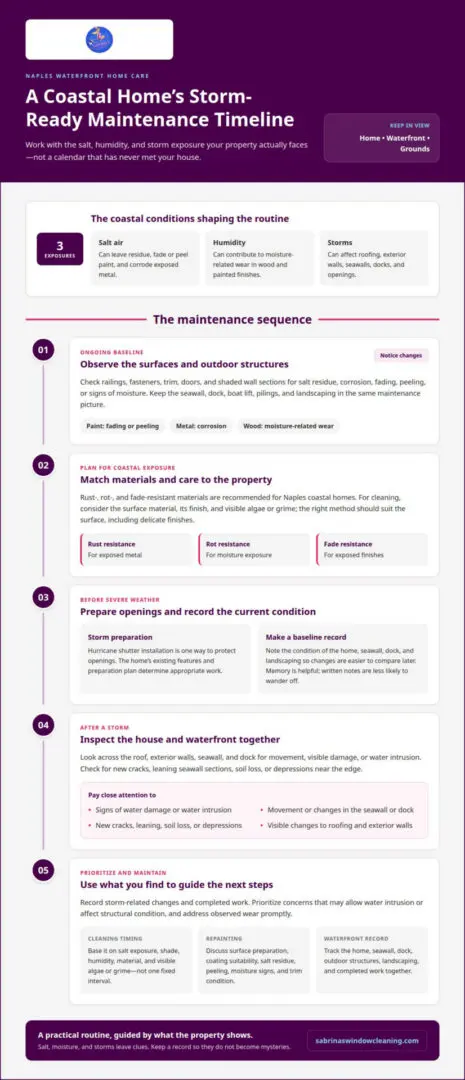
Saltwater and humidity impacts on building materials
For waterfront home exterior maintenance in Naples, FL, salt and humidity call for attention tailored to each material. Salt residue can collect on railings, window frames, fasteners, and painted trim. Humid air can keep shaded surfaces damp longer, especially beneath eaves or beside dense landscaping. A useful inspection considers how each surface is affected.
Metal components deserve close attention. Railings, hinges, screws, and exposed fixtures can show corrosion, discoloration, or a roughened finish. Salt deposits may remain visible after surfaces dry, making their location useful to note during an inspection. A professional assessment can distinguish removable residue from deterioration that may need repair or replacement. Even sturdy hardware would prefer less salt in its afternoon snack.
Wood and painted finishes tell a different story. Look for peeling paint, fading, discolored boards, or worn edges and joints. Moisture exposure can contribute to deterioration, while sunlight can change exterior finishes. A painter or building professional can assess whether the issue involves the coating, the material beneath it, or both. Painting over damaged material may leave the underlying problem unresolved.
Pay attention to where changes appear, not just what they look like. Compare a sunlit wall with a shaded one, or trim near a wet walkway with a drier section. Repeated staining around an exterior joint may deserve closer inspection than a small mark on an exposed surface. After a storm, note fresh discoloration, loose-looking trim, and changes around doors or windows. These details help focus a professional review.
Cleaning can remove surface dirt, salt residue, algae, and other buildup, but the method should suit the material and finish. A coated metal railing, painted siding, and masonry wall may need different treatment. Professional exterior cleaning can refresh surfaces and make visible changes easier to assess. It does not replace repairs to corrosion, peeling finishes, or moisture-damaged materials.
A sound waterfront home exterior maintenance plan in Naples, FL groups observations by material and location. Record whether a concern appears on metal, wood, painted trim, or another surface, and note its position and whether it changes after rain or storms. This gives a professional useful context and helps track recurring trouble spots. Coastal exposure is part of the setting; careful attention to each surface helps keep it from becoming the whole story.
How often should Naples waterfront homes be pressure washed and repainted?
There is no pressure-washing schedule that suits every Naples waterfront home. Salt exposure, shade, humidity, material, and visible buildup all affect timing. A home near open water may collect different residue from a sheltered, shaded exterior. Plan professional cleaning around the surfaces’ condition, not a calendar that ignores the property, calendars are famously bad at noticing algae.
A professional pressure-washing assessment can identify where dirt, grime, algae, moss, or other buildup appears. Decks, driveways, patios, and sidewalks may need different treatment from painted walls or trim. The cleaning method should suit the material and finish. More force is not automatically better; the aim is to remove buildup without damaging the surface.
Useful timing cues include recurring algae, visible grime, and residue on exposed exterior areas. Storms can leave debris or deposits that change what needs attention, while shaded spots may stay damp longer. A professional can assess these conditions and recommend cleaning based on the surfaces observed. That avoids treating every part of the property as though it gets equal sun, salt, and rain.
Repainting depends on the surface’s condition, not a universal interval. Fading, peeling, cracking, and exposed underlying material can signal that a finish needs attention. Before repainting, assess whether the surface is clean, sound, and free of moisture-related damage. Fresh paint over peeling layers or compromised material may hide the visible issue without addressing its cause.
When considering a painter, discuss preparation, the condition of existing coatings, and whether the proposed finish suits the exterior material and coastal exposure. Ask which surfaces are included, how damaged areas will be handled, and how nearby landscaping and fixtures will be protected. For example, a plan for painted siding should address its condition, not just the color of the next coat.
Compare proposals by scope and preparation details, not appearance alone. A thorough written description should identify the areas to be painted, surface preparation, and any exclusions. Clarify how the painter will handle peeling finishes, damaged trim, or signs of moisture before applying new paint. These details help you understand what the work covers and avoid surprises about unfinished areas.
Professional pressure washing can be part of a maintenance plan when buildup appears or weather changes exterior conditions. It does not replace repairs or repainting, and cleaning every surface the same way can be counterproductive. A careful assessment matches the cleaning approach to the material, its condition, and your priorities.
For a professional assessment of exterior buildup, schedule pressure washing suited to your property’s surfaces.
Sabrina’s Window Cleaning
Sabrina’s Window Cleaning helps Naples homeowners maintain exterior surfaces and prepare for storm season through focused, professional care. Depending on the property’s needs, that can include window cleaning, pressure washing, soft wash roof cleaning, gutter cleaning, or hurricane shutter installation. Clean surfaces and clear drainage paths support a more orderly maintenance routine, while shutters address a separate part of storm preparation. One service won’t fix every exterior concern, but the right work can help keep routine upkeep on track. Salt air may be a persistent houseguest, but it doesn’t need to run the place. For exterior maintenance support, contact Sabrina’s Window Cleaning.
Make Your Next Maintenance Decision Count
A practical next step is to turn your observations into a clear priority for the property. Choose the concern that most affects its condition or storm readiness, then plan the appropriate professional work. This keeps waterfront home exterior maintenance in Naples, FL focused on the home’s actual needs, rather than treating every surface as an emergency. Salt air may be persistent, but your maintenance plan can be thoughtfully paced.
Cleaning and storm preparation have distinct roles. Professional care can address exterior buildup and help keep surfaces presentable, while structural damage or water intrusion needs attention beyond cleaning. Keeping that distinction in mind helps you choose the right next task and make informed decisions about your home.
When you’re ready to plan professional exterior care, contact Sabrina’s Window Cleaning. A considered next step can make coastal home care feel more manageable, and help you move forward with confidence.
Frequently Asked Questions
What exterior maintenance do waterfront homes in Naples, Florida need?
Waterfront homes in Naples need maintenance tailored to their materials, exposure, and storm conditions. Keep a property record of when exterior surfaces were cleaned, where finishes are changing, and which areas raised concerns after storms. For example, recurring marks beneath a roof edge can help focus an inspection, your home’s way of leaving a paper trail. Include outdoor structures and landscaping so you can track changing conditions more easily.
How does salt air affect exterior paint, metal, windows, and HVAC equipment?
Salt air can leave deposits and contribute to wear on exposed exterior materials. Paint may fade or peel, metal may corrode, and residue on windows can reduce clarity. Exposed HVAC equipment also has exterior components worth noting during property inspections. Record where residue or visible changes appear, such as on window frames, railings, painted trim, or equipment casings, and share those observations during professional maintenance. Salt air may be persistent, but it doesn’t need a starring role in your inspection notes.
What materials and coatings resist coastal corrosion and UV damage in Southwest Florida?
For Southwest Florida homes, consider materials designed to resist rust, rot, and fading, along with hurricane-rated windows and doors. Match coatings to the underlying material and the home’s exposure, rather than choosing by color alone. A sunny exterior and a shaded, damp section face different conditions, paint doesn’t get to call them a tie. Review peeling or faded finishes before recoating, since preparation and the condition beneath the paint affect the result.
What hurricane preparation and post-storm exterior inspections are recommended for Naples waterfront homes?
Before a storm, include shutter installation in the home’s preparation plan and note existing exterior concerns. Afterward, inspect from a safe location for roof damage, water intrusion, displaced gutters, loose siding, and changes around windows or doors. Photograph visible changes and record where they occurred. If water has entered the home, preventing further intrusion through emergency dry-in is the first priority; cleaning alone will not address storm damage. In other words, a mop is not a storm-repair plan.
What exterior maintenance should be done seasonally in Naples, Florida?
Before storms, check gutters, soffits, fascia, roofing, exterior surfaces, and signs of water damage. After storms, look for visible changes to the roof, walls, seawall, and dock, then arrange cleaning or repairs based on observed buildup and damage. Your gutters may not thank you, but they’ll appreciate the attention.
Disclaimer
All articles are designed to entice you to hire Sabrina's to clean your windows, not to teach you how to clean them. They are meant for entertainment purposes only. We are not responsible for the out come of your DIY cleaning project!