

Article by
Frank Sweeney
Sabrina died in 2020, leaving me a single father to the best daughter any dad could ever want. Hoping she doesn’t notice my mistakes and when she does, try to make her think it was all part of the plan.
Imagine deciding to give your home a quick refresh only to realize you’ve accidentally stripped the paint off your shutters and sent a piece of siding into the next zip code. It’s a classic Florida weekend warrior tale, usually fueled by the misguided belief that more PSI always equals a cleaner house. When you’re staring down the debate of soft washing vs pressure washing, using the wrong tool is like trying to perform surgery with a chainsaw. You might get the job done, but the patient is definitely going to need a lot of stitches afterward.
We understand the frustration of watching that stubborn green mold creep up your walls despite your best efforts. You want a home that shines, not a property damage claim. This guide will help you navigate the technical jargon and discover the critical differences between these cleaning methods so you can protect your investment without the stress. We’ll preview which surfaces require a heavy duty blast and why a gentle, specialized soft wash is often the secret to long lasting results against our relentless coastal salt and humidity.
Key Takeaways
- Learn the difference between the “brute force” of a high-pressure blast and the “spa treatment” of a specialized cleaning solution.
- Discover why cranking up the PSI can actually seed mold deeper into your siding rather than truly removing it.
- Master the soft washing vs pressure washing breakdown to ensure your roof stays pristine without voiding its manufacturer warranty.
- Identify the common DIY mistakes that turn a simple afternoon project into a botanical graveyard for your landscaping.
- See how 35 years of local Florida expertise provides the meticulous care needed to fight back against salt spray and humidity.
Clearing the Mist: What Exactly Is Soft Washing vs. Pressure Washing?
Let’s be honest, your garden hose is great for filling up the kid’s pool or soaking a neighbor’s cat, but it isn’t a professional cleaning tool. Calling a garden hose a soft washer is like calling a tricycle a Harley; sure, they both have wheels, but one is clearly not built for the heavy lifting. Understanding the nuances of soft washing vs pressure washing is the first step toward saving your home from a very expensive “whoops” moment. In our humid Florida climate, dirt isn’t your only enemy. We’re fighting a constant battle against salt spray, thick humidity, and mold that grows faster than weeds in July. Choosing the right method depends entirely on what you’re trying to clean and how much you value your property’s integrity.
The High-Pressure Heartbreak: Pressure Washing Explained
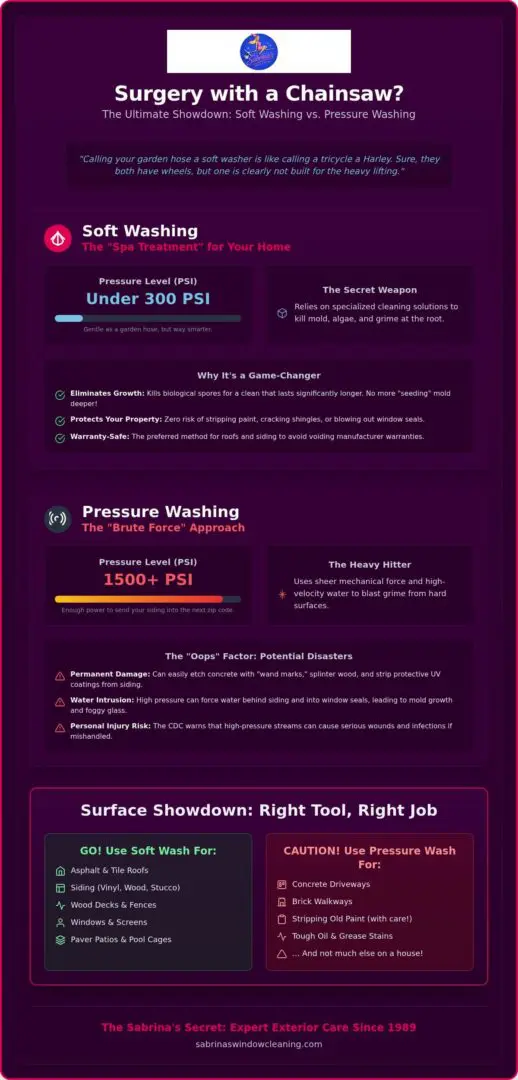
Pressure washing is the heavy hitter of the exterior cleaning world. It relies on sheer mechanical force, measured in Pounds per Square Inch (PSI), to strip away grime. Think of it as the “brute force” approach. It’s fantastic for hard, porous surfaces that can take a punch, like your concrete driveway or a brick walkway. We use this method when the surface is tough enough to handle the impact without flinching.
However, in the hands of an amateur, that high-velocity stream can become a destructive laser. We’ve seen concrete etched with permanent “wand marks” and wood decks splintered because someone got a little too enthusiastic with the trigger. It’s effective, but it requires a steady hand and a deep respect for the power of the machine. If you’re cleaning a surface that could potentially crack, dent, or fly away, high pressure is usually the wrong tool for the job.
Chemical Romance: The Science of Soft Washing
If pressure washing is a punch, then soft washing is a targeted treatment. Instead of relying on high-velocity water to blast away the mess, this method uses chemistry to do the hard work. It pairs low-pressure water, usually under 300 PSI, with specialized, eco-friendly cleaning solutions and surfactants. This is the “spa treatment” for your home’s more delicate features, ensuring a deep clean without the trauma of high impact.
These solutions don’t just rinse the surface; they kill mold, algae, and moss at the root. This is the preferred choice for roofs, siding, and windows because it lifts the dirt without the risk of stripping paint or cracking shingles. Don’t let the name fool you, though. Just because it’s “soft” doesn’t mean it lacks cleaning power. It’s actually more effective at preventing regrowth because it eliminates the biological spores that high pressure often misses. By treating the problem rather than just blasting it, you get a cleaner home that stays that way for much longer.
The PSI Trap: Why More Power Isn’t Always Better
In Florida, we often think that if a little bit of something is good, a lot of it must be better. It works for sunscreen and iced tea, but it’s a dangerous philosophy for home maintenance. The biggest misconception in the soft washing vs pressure washing debate is that cranking the dial to maximum power results in a deeper clean. In reality, high pressure often acts like a blunt instrument. It might blast the surface grime away, but it frequently leaves the underlying problem untouched or, worse, drives it deeper into the porous materials of your home.
When High Pressure Goes Wrong
Using too much force is a recipe for expensive repairs. PSI, or Pounds per Square Inch, is the measurement of the physical force water exerts against a surface to overcome its surface tension and dislodge contaminants. When that force is excessive, it doesn’t just dislodge dirt; it dislodges your home’s defenses. We’ve seen high pressure blow out window seals, leading to that permanent “foggy glass” look that no amount of wiping can fix. It can also strip the protective UV coating right off your siding, leaving it vulnerable to the brutal Florida sun. Beyond property damage, these machines are genuinely dangerous; the CDC notes that high-pressure water can cause serious wounds that lead to infection or disability if handled improperly.
The Long-Term Benefits of the Soft Touch
In places like Sarasota, we deal with what locals sometimes call “Florida Snow,” which is that thick, white or green mold that blankets everything. If you just blast it with water, you’re essentially just giving the mold a bath and “seeding” the spores deeper into your siding. Soft washing uses specialized solutions to kill those spores at the biological level. This means your house stays clean for significantly longer because the mold isn’t just hiding; it’s gone. For owners of older Florida homes, this gentle approach is vital for maintaining structural integrity. You’re not just cleaning; you’re preserving. By avoiding the erosion caused by high-pressure water, you save thousands on premature siding or roof replacements. If you want a clean that actually lasts, understanding the nuance of soft washing vs pressure washing is key. It might be time to let the experts at Sabrina’s Window Cleaning handle the delicate balance of chemistry and care.
Surface Showdown: What Gets the Gentle Scrub and What Gets the Big Blast?
Deciding between soft washing vs pressure washing isn’t just about how much dirt you see; it’s about the “bone density” of the surface you’re cleaning. You wouldn’t use a power sander on a sunburn, and you shouldn’t use high pressure on your roof shingles. Each material on your property has a breaking point, and knowing where that line is drawn separates a pristine home from an accidental construction zone. When it comes to the long-term health of your exterior, the surface always dictates the strategy.
The “Soft Wash Only” Zone: Roofs, Siding, and Windows
Your roof is the most vulnerable part of your home. Whether you have asphalt shingles or those classic Florida clay tiles, high pressure is a fast track to a premature replacement. Blasting shingles can strip away the protective granules that reflect UV rays, essentially aging your roof by a decade in a single afternoon. Most manufacturers will actually void your warranty if they find out you used a high-pressure wand up there. For safe algae removal and shingle preservation, soft wash roof cleaning Florida style is the only way to go.
Stucco and vinyl siding also fall into this delicate category. Stucco is surprisingly brittle, and high pressure can easily chip the finish or force water behind the layers, leading to mold issues inside your walls. Vinyl isn’t much tougher; it can warp or even fly off the house if hit at the wrong angle. We use a gentle approach here to ensure we kill the mold without turning your siding into a collection of plastic shards.
The “Pressure Permitted” Zone: Driveways and Sidewalks
If your driveway looks like a Rorschach test of oil stains and tire marks, it’s time to bring out the heavy equipment. Concrete and pavers are the heavyweights of your property. They can handle the mechanical force required to deep-clean porous surfaces and dislodge years of ground-in grime. This is where pressure washing Sarasota driveways really shines. It’s the best way to prep for sealing or painting, ensuring the new finish actually sticks.
Even when we’re dealing with these tough surfaces, we still follow environmentally-responsible procedures to manage runoff and protect your surrounding lawn. It’s about being effective without being reckless. Finally, consider the “Middle Ground” of decks and fences. Wood is tricky. Use too much pressure, and you’ll “fur” the wood, creating a splintery nightmare that’s impossible to walk on barefoot. We typically recommend the soft wash side of the soft washing vs pressure washing spectrum for wood to preserve the fibers while still removing that stubborn gray oxidation and green algae.
The “Oops” Factor: Why DIY Pressure Washing Often Ends in Tears
Every Saturday morning, a well-meaning homeowner heads to the local big-box store to rent an angry, vibrating machine that looks like a lawnmower’s vengeful cousin. They think they’re going to spend fifty bucks to save hundreds. By Sunday evening, they’re often staring at a $5,000 repair bill and a yard that looks like a scene from a post-apocalyptic movie. The “Oops” factor in the soft washing vs pressure washing debate is real, and it usually involves a lot of regret and a very expensive call to a contractor. High-pressure water isn’t just wet; it’s a liquid scalpel that doesn’t care if it’s cutting through mold or your expensive cedar siding.
The Most Common DIY Disasters
One of the most permanent mistakes we see is etching. This happens when an amateur uses a narrow nozzle and gets too close to the driveway, carving permanent, squiggly “art” into the concrete that no amount of scrubbing will ever erase. It’s essentially a tattoo for your house that you didn’t ask for. Then there’s the hidden nightmare of water intrusion. Blasting water upward under your siding is like inviting mold to a private housewarming party inside your walls. You won’t see the damage today, but you’ll certainly smell it in six months. Finally, there is the “Ladders and Pressure Washers” comedy of errors. Combining the physics of high-pressure recoil with a shaky aluminum ladder is a stunt even Hollywood wouldn’t film without a massive insurance policy. It’s a recipe for a very literal downfall.
Professional Grade: What the Pros Do Differently
When you hire a professional, you’re paying for more than just a guy with a hose. You’re paying for 35 years of knowing exactly which nozzle won’t turn your shutters into confetti. We use commercial-grade surfactants that actually break down the molecular bond of dirt and salt spray, rather than just hitting it with a blunt force of water. Hardware store soap is often little more than scented bubbles; our solutions are designed for the specific biological challenges of the Florida climate.
We also take a neighborly approach to your landscaping. We don’t want to turn your prize-winning petunias into a botanical graveyard. Our team follows a meticulous process of pre-soaking plants and using protective covers to ensure the only thing getting a “spa treatment” is your home. We treat your property with the same respect we’d show our own family’s home, ensuring a pristine result without the collateral damage. If you’re ready to skip the DIY drama and get a professional glow, schedule your expert exterior cleaning with a team that knows the difference between a clean house and a damaged one.
The Sabrina’s Secret: Expert Exterior Care Since 1989
Since 1989, we’ve been the ones cleaning up the messes left behind by rogue rental machines and over-enthusiastic weekend warriors. When it comes to the great debate of soft washing vs pressure washing, we don’t just guess; we rely on over three decades of battling the unique biological soup that is the Florida Gulf Coast. We’ve seen every type of mold, algae, and salt deposit from Sarasota down to Fort Myers. This isn’t just a business for us; it’s a family tradition rooted in meticulous care and a healthy respect for your property’s boundaries. We know that Florida grime is a different breed of stubborn, and it takes more than just a loud engine and a splash of water to truly win the war.
A Heritage of Cleanliness
Being family-owned and operated means our reputation is on the line with every single nozzle we pull. We’ve spent the last 35 years building a legacy of excellence that keeps our neighbors in Naples and Bradenton coming back year after year. We know that a clean home is a happy home, but a damaged home is a headache nobody needs. That’s why we’ve perfected our curb appeal exterior cleaning service to be as safe as it is effective. We treat your shingles, stucco, and windows with the same consideration we’d give our own mother’s house, ensuring you get that “just-scrubbed” glow without the drama of broken seals or etched concrete. Our longevity in this industry isn’t an accident; it’s the result of treating every client like a member of our own community.
Ready for a Stress-Free Shine?
We believe that getting your home cleaned shouldn’t be more stressful than the dirt itself. Our process is designed to be steady, logical, and direct, moving from your initial request to a pristine finish without any hidden surprises. We offer a professional standard of care that includes a commitment to protecting your surfaces, giving you the peace of mind that your home is in the hands of seasoned experts. Whether you need a gentle roof treatment or a high-powered driveway revitalization, we have the precision tools and the commercial-grade solutions to do it right the first time.
Stop worrying about PSI settings and technical jargon. Let us handle the heavy lifting while you enjoy the results. You can easily get a free estimate to start your home’s transformation and see the difference that 35 years of experience makes. It’s time to give your property the professional attention it deserves and protect your investment for many years to come. Reach out today and let’s make your home the envy of the block with a safe, effective shine that stands up to the Florida sun.
Give Your Home the Spa Day It Deserves
Your home is likely your biggest investment, so don’t treat it like a science experiment with a rented pressure washer. We’ve explored the critical differences in soft washing vs pressure washing, from protecting your roof’s warranty to avoiding those permanent “etched-in-stone” driveway mistakes. High pressure has its place on your concrete, but your shingles and siding require a much gentler, chemistry-based touch to actually kill the mold at its source.
Since 1989, our family-owned team has been the go-to expert for Sarasota and Bradenton homeowners who want a meticulous clean without the property damage drama. We’ve spent over 35 years perfecting our specialized soft wash equipment to handle the Gulf Coast’s unique salt and humidity challenges. Ready to ditch the DIY stress and see your property shine? Get Your Free Exterior Cleaning Quote from Sabrina’s Today!
Let’s get your curb appeal back on track so you can spend your weekend relaxing instead of wrestling with a high-pressure hose. You deserve a home that looks fresh and stands strong against the Florida elements. We look forward to treating your property with the same care we’d show our own.
Frequently Asked Questions About Exterior Cleaning
Is soft washing or pressure washing better for a Florida roof?
Soft washing is the only method you should ever use on a Florida roof. High pressure can strip away the protective granules on asphalt shingles and even crack clay tiles. Most roofing manufacturers will actually void your warranty if they find out you used a pressure washer up there. Our specialized soft wash approach uses gentle solutions to kill the algae without turning your shingles into expensive debris. It’s the spa treatment your roof needs.
Will the chemicals used in soft washing kill my plants or grass?
Professional soft washing shouldn’t harm your landscaping if the proper precautions are taken. We follow a meticulous, neighborly process that includes pre-soaking your plants with fresh water and rinsing them thoroughly afterward. This dilutes the cleaning solutions so your prize-winning petunias don’t end up in a botanical graveyard. While the chemicals are strong enough to kill stubborn mold, they won’t bother your lawn when handled by a seasoned expert who truly cares.
Can pressure washing really damage my concrete driveway?
Yes, high pressure can permanently etch concrete if the nozzle is too close or the PSI is set too high. We’ve seen many driveways with permanent wand marks that look like a child’s sidewalk chalk art gone horribly wrong. These grooves are actually physical damage to the surface that can’t be washed away. While concrete is tough, it isn’t indestructible; using the wrong tip can turn your smooth driveway into a pitted, unsightly mess.
How often should I have my house soft washed in a coastal area like Sarasota?
Most Sarasota homeowners find that an annual soft wash is the sweet spot for fighting back against salt spray and humidity. If your property is right on the Gulf or tucked under heavy oak trees, you might need a touch-up every six to nine months. Regular maintenance prevents the mold from seeding deep into your siding, making each subsequent clean much easier. Think of it as an annual physical for your home’s exterior health.
Is it safe to pressure wash a house with a stucco exterior?
You should never use high pressure on a stucco exterior because it is incredibly brittle and porous. Blasting stucco can cause the finish to flake off or force water behind the layers where it can’t escape. This leads to interior mold growth that smells like a damp basement in the middle of a Florida summer. Soft washing is the safer choice to kill the algae without compromising your home’s structural integrity or your indoor air quality.
What happens if I use high pressure on my windows?
High pressure is a one-way ticket to blown window seals and a permanent, foggy glass nightmare. Once that seal is compromised, moisture gets trapped between the panes and ruins the view forever. You also risk shattering the glass if the water stream hits a weak point. We recommend professional window cleaning or a very low-pressure soft wash to keep your glass clear and your frames intact without the risk of using a liquid scalpel.
Why does my house get moldy so fast in Florida, and which method stops it?
Our relentless humidity and heat turn Florida homes into a giant petri dish for mold and algae spores. Standard pressure washing just rinses the surface, which is like giving the mold a refreshing bath. When comparing soft washing vs pressure washing, soft washing is the clear winner for mold because it uses biological cleaners to kill the spores at the root. This prevents the green Florida Snow from returning just weeks later.
Can I do soft washing myself with a regular garden hose?
Unfortunately, your garden hose doesn’t have the specialized pumps or chemical injectors needed for true soft washing. While you can spray some soap on your walls, you won’t get the correct dilution or the low-pressure reach required to clean a two-story home safely. Professional equipment allows us to apply the right amount of surfactant to lift grime without the need for a shaky ladder or a high-pressure blast that could cause accidental destruction.
Disclaimer
All articles are designed to entice you to hire Sabrina’s to clean your windows, not to teach you how to clean them. They are meant for entertainment purposes only. We are not responsible for the out come of your DIY cleaning project!