

Article by
Frank Sweeney
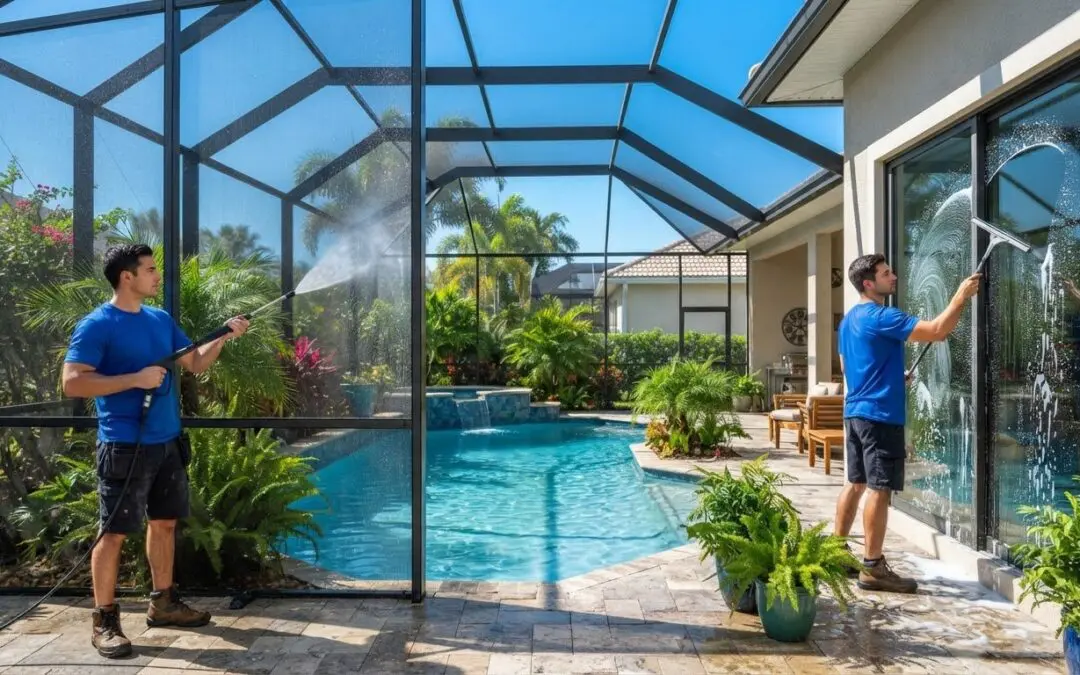
A clean pool cage needs attention on both sides of the screen. Soft wash pool enclosure cleaning in Belleview should clean both the inside and outside, using a low-pressure approach rather than blasting delicate mesh. Nearby vegetation can be pre-wetted with fresh water for 10 minutes before cleaning to help protect it.
It’s natural to wonder whether a wash reaches the grime you see from the patio and the buildup facing the pool. It should. The method matters too: excessive pressure can damage screens and frames, while controlled rinsing and attention to runoff help protect the surrounding area.
This guide explains what cleaning both sides involves, how plant protection fits into the process, and how to schedule washing based on the conditions around your enclosure. It also covers what happens to rinse water and loosened debris as the job wraps up. A clean screen should not come at the cost of unexpected mess around the pool.
Key Takeaways
- Learn why treating algae and grime on the mesh and frame takes more than simply brushing away what’s visible.
- Find out how timing the rinse and avoiding hot, direct sunlight can help prevent uneven cleaning results.
- See why nearby furniture and pool water deserve protection during the wash, not just the plants.
- Use shade, tree cover, and visible organic regrowth to help decide when your enclosure needs its next cleaning.
- Understand why managing runoff and clearing loosened debris are important finishing steps, because the job isn’t done when the screens look clean.
Low-pressure soft washing for pool cages and enclosures
Soft washing cleans a pool cage with cleaning solution and controlled rinsing rather than relying on forceful water. Thorough cleaning addresses both sides of the screens, where grime can collect facing the yard and the pool.
Low-Pressure Tools and Solutions
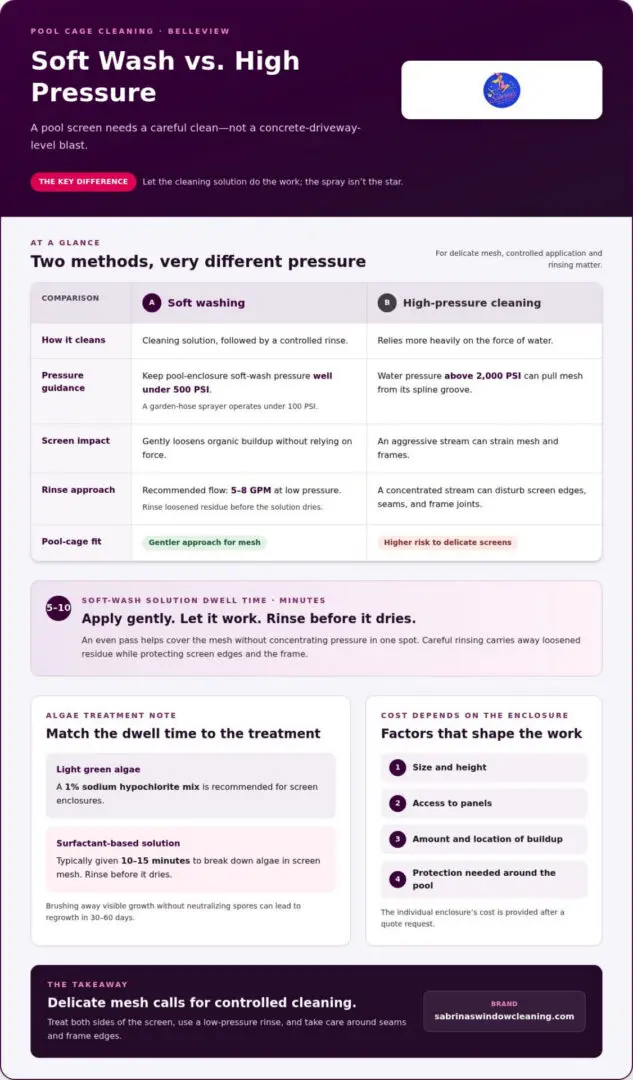
Look for equipment that applies solution gently and rinses without driving water into the mesh. Pool enclosure soft-wash pressure should stay well under 500 PSI; a garden-hose sprayer operates under 100 PSI. For rinsing, the recommended flow is 5 to 8 GPM at low pressure. These figures describe different parts of the process, not a reason to push the screen harder.
The cleaning solution needs time to work. A soft-wash solution should dwell on the enclosure for 5 to 10 minutes, then be rinsed before it dries. That step helps loosen organic buildup without relying on force. A high-powered stream may look efficient, but mesh and frames aren’t a concrete driveway.
Soft Washing Versus High-Pressure Cleaning
Soft washing uses a cleaning solution and low-pressure rinse; pressure washing relies more heavily on the force of water. That distinction matters on a pool cage, where mesh sits within a frame and can be strained by an aggressive spray. Water pressure above 2,000 PSI can pull enclosure mesh from its spline groove.
For example, algae on a screen calls for controlled solution application and rinsing, not a close-range blast. High pressure may dislodge debris quickly, but it can also strain the screen. Choose a method suited to the surface: a pool cage needs gentler handling than a hard, durable surface.
Pool Cage Cleaning Cost Factors
The cost depends on the individual enclosure and is provided after a quote request. Size, height, access, buildup, and the protection needed around the pool all affect the work. A large cage with hard-to-reach panels needs a different approach from a compact enclosure with light surface dirt. The amount and location of buildup also shape the cleaning process. For homeowners budgeting for broader exterior maintenance, reviewing transparent service packages from professional providers like So Clean Home Service can offer a helpful reference for how scope and property size influence project estimates.
For pool cage cleaning in Belleview, choose an exterior-cleaning service that handles screen enclosures. Look for a process that addresses both sides and uses controlled, low-pressure application rather than treating delicate mesh like concrete.
During application, an even pass helps cover the mesh without concentrating pressure in one spot. Rinsing then carries away loosened residue. Work carefully around the frame and screen edges, where a forceful stream can disturb the mesh’s fit. Low pressure is not a shortcut; it lets the solution do the cleaning.
For Belleview homeowners, soft wash pool enclosure cleaning is most useful when screens show organic film or grime across multiple panels. The practical test is whether the method matches the material: apply solution gently, allow 5 to 10 minutes of dwell time, then rinse at low pressure. That sequence cleans the cage without turning the spray into the main event.
What Is the Best Way to Clean a Pool Screen Enclosure?
Green algae, dark mold, pollen film, and grime along the frame are clear signs that a pool enclosure needs attention. Cleaning should remove buildup from the mesh and frame without treating either like concrete.
Removing Algae, Mold, and Grime
Start by identifying where growth is concentrated: shaded panels, lower screen edges, and frame joints can collect organic debris. Light surface dirt may come off with a garden hose and soft brush. For light green algae, a 1% sodium hypochlorite mix is recommended for screen enclosures.
Simply brushing away visible growth can leave spores behind. Much like the principles applied by ABC Mould Cleaning Solutions for professional mould removal sydney, physical removal without neutralizing spores can lead to regrowth in 30 to 60 days. A surfactant-based solution is typically given 10-15 minutes to break down algae in screen mesh. Rinse the solution away before it dries, so residue doesn’t mark the screen or frame.
Screen Materials and Vulnerabilities
A typical Florida screen enclosure combines aluminum framing with fiberglass or polyester mesh. Fasteners are usually stainless steel or coated. Each material needs a measured approach: mesh can stretch or pull loose, while dirt in frame joints may need careful rinsing instead of forceful spraying.
Pollen can settle across the screen and collect in corners, leaving a visible film that dulls the view of the yard. Shaded areas also stay favorable for organic contaminants when humidity reaches 70% or higher. Check the mesh and frame separately; a yellow pollen layer calls for cleaning, while a loose or torn panel signals physical damage.
Damage Risks to Mesh and Frames
High water pressure can pull mesh from the frame’s spline groove, turning cleaning into a repair problem. A careful inspection before washing helps identify loose edges, tears, or bent frame sections. Avoid directing a concentrated spray at seams, fasteners, and screen corners.
Look for uneven tension as well as visible holes. A panel that bows or has slipped from its channel needs gentler treatment than intact mesh. Pool cages aren’t concrete patios: the screen’s weave and its connection to the frame are vulnerable. Cleaning should loosen residue without putting unnecessary pressure on those areas.
Lifespan, Maintenance, and Cleaning Signs
Most Florida screen mesh lasts 8-10 years before replacement is needed. Routine cleaning helps remove grime and organic buildup, but it doesn’t restore worn, brittle, or torn mesh. Check the enclosure for persistent green or dark patches, pollen that remains lodged in corners, and buildup returning across multiple panels.
Organic contaminants thrive on screen enclosures in humidity of 70% or higher, especially in shade. Untreated enclosures in humid markets can show significant organic regrowth within six months. If pollen and grime also coat nearby glass, professional window cleaning can complement an exterior maintenance plan.
Protecting surrounding vegetation during cleaning
Soft washing can be gentle on a pool cage, but nearby plants, furniture, and pool water still need protection. The enclosure and its surroundings are best protected when low-pressure application is paired with careful preparation, coverage, and rinsing.
Before cleaning, move loose furniture and protect pool water and nearby plants. Soft washing uses low pressure, but solution contact and runoff still matter, so plan protection before the cleaning begins.
Protecting Plants Before and After Washing
Pre-wet vegetation around the enclosure with fresh water for 10 minutes before washing. This is a practical first step for shrubs, flowers, and other plants close to the screen panels. After cleaning, rinse plants again with fresh water to clear residue from leaves and soil. Pay attention to foliage beneath the cage, where rinse water may collect.
Covering plants adds protection, especially for delicate leaves directly beside the enclosure. Keep covers in place while applying solution, then remove them and rinse any exposed foliage. Think of a cover as a raincoat, not a substitute for pre-wetting and rinsing.
Protecting Landscaping During Cleaning
Before work begins, move patio cushions and small furniture away from the enclosure or cover them. Protect pool water before applying cleaning solution, and cover nearby plants as well. These steps help limit direct solution contact and keep loosened grime from settling on furnishings or entering the pool.
During washing, watch where runoff travels from the screen and frame. Direct rinsing carefully so loosened debris does not remain trapped in corners or wash onto nearby landscaping. A thorough finish includes checking the ground around the cage and rinsing surfaces that received splashes. Poolside cleanup should leave the patio tidy, not muddy.
Is soft washing safe for pool screens, frames, and nearby plants? Low-pressure application is gentler than forceful spraying, and pre-wetting and rinsing plants helps limit their exposure to cleaning solution. Protecting pool water and surrounding surfaces matters too.
What should homeowners do to prepare for pool enclosure cleaning? Move or cover furniture, cover pool water, and pre-wet nearby vegetation with fresh water for 10 minutes. Clear access around the enclosure so screens, frame edges, and surrounding surfaces can be rinsed carefully.
Protective coatings and sealants are separate from washing. Don’t assume a cleaning visit includes them or that they replace plant and pool protection. If you’re considering a coating, match it to the enclosure materials and follow the product maker’s directions. The cleaning process itself should focus on controlling solution, runoff, and rinse water.
For a careful exterior wash, follow the right order: prepare the area, protect pool water and furniture, pre-wet plants, then clean and rinse. Finish by checking the enclosure edges and nearby ground for trapped debris or remaining solution. These checks help deliver a thorough result without creating an unwanted landscaping mess.
Recommended cleaning frequency
For a residential pool enclosure, professional soft washing is generally recommended every 12 to 24 months. In Belleview’s humid, shaded settings, a six-to-twelve-month maintenance interval can make more sense. The right timing depends on how quickly organic growth returns, not just the date on your calendar.
Use the longer interval when the cage stays relatively open, receives good airflow, and shows little recurring grime. Choose the shorter interval if screens sit beneath heavy tree cover or mildew and algae reappear quickly. Properties beneath heavy oak or pine canopy can experience organic regrowth roughly 40% faster than other properties, so those surroundings deserve closer attention.
Inspect the enclosure between washes instead of waiting for the next scheduled date. Check shaded panels, lower screen edges, and frame joints. Note whether green film, dark spots, or embedded debris are spreading across several sections. A little loose surface dirt differs from recurring growth that returns after rain.
- More open exposure: Consider the 12-to-24-month interval when screens remain mostly clear and tree cover is limited.
- Heavy shade or canopy: Consider six to twelve months when oak or pine cover, damp areas, or recurring mildew increase buildup.
- Visible regrowth: Schedule cleaning based on the condition of the mesh and frame, rather than letting grime spread across the enclosure.
Keep a simple record after each cleaning: note the month, which panels showed growth, and where nearby trees cast shade. For example, if the north-facing side develops algae sooner than open panels, use it as an early warning. This avoids treating every surface as if it collects debris at the same pace.
Cleaning solutions remove organic buildup, but they cannot stop leaves, pollen, or moisture from reaching the screen later. That’s why the schedule for soft wash pool enclosure cleaning in Belleview should reflect the enclosure’s exposure. A shaded cage beneath branches may need attention sooner than a more open one, even if both were last washed at the same time.
Don’t wait for the entire cage to look green before reviewing its condition. Check after periods when debris collects heavily, then compare shaded and sun-exposed panels. If grime is returning across several screens or frame edges, consider a shorter interval. If the enclosure remains clean, a longer interval may suit it. The goal is a steady maintenance rhythm based on what the screens show, not a calendar reminder that ignores their condition.
In short, use 12 to 24 months as a broad residential interval, then adjust toward six to twelve months for shaded, tree-covered, or faster-growing conditions. For soft wash pool enclosure cleaning in Belleview, visible regrowth, mildew, and accumulating debris are useful signs that the pool cage needs cleaning sooner.
Soft wash cleaning process and drainage
A careful pool-cage wash involves more than applying solution and rinsing. The order of work, runoff direction, and final cleanup all matter, especially where the enclosure meets pool water, landscaping, and drainage paths.
A soft-wash method does not itself establish Belleview’s water-use allowances or runoff rules. During the job, control solution runoff and avoid unnecessary rinsing, particularly around the pool and planting beds.
Apply the cleaning solution from the top of the screen enclosure downward. This lets loosened buildup move toward lower panels instead of carrying residue over areas already cleaned. Apply it in a controlled way, then rinse before the solution dries. A pressure washer should not turn rinsing into a forceful blast at screen seams or frame joints.
Pool water needs attention before application begins. Cover or otherwise protect it, then keep an eye on runoff as the screen is rinsed. Large amounts of sodium hypochlorite runoff can raise pool chlorine above 5.0 ppm. If soft-wash runoff enters the pool, run the pool filter for at least 4 hours.
The cleaning mix should match the level of buildup. For heavy black mold or an enclosure neglected for 24 months or more, the recommended mix is 3% sodium hypochlorite. That is a targeted condition, not a reason to use a stronger mixture across every panel. A measured approach avoids treating light grime as though it were severe mold.
Finish by checking places where rinse water and loosened debris can collect. Clear trapped water and debris from enclosure edges and corners instead of leaving them to dry in place. Then flush the soft-wash system with fresh water or a neutralizing agent for at least eight minutes after each job. This helps clear the equipment before its next use.
A practical sequence keeps the process orderly:
- Protect pool water and nearby surfaces before applying solution.
- Apply solution from the enclosure’s top downward.
- Rinse before the solution dries and monitor where runoff travels.
- Clear trapped rinse water and debris, then flush the system for at least eight minutes.
These steps make drainage part of the cleaning method, not an afterthought. For example, if rinse water gathers along a lower frame, remove the trapped water and loosened debris before wrapping up. A clean-looking screen is only one part of a thorough finish; the pool, surrounding ground, and equipment need attention too.
For help planning careful exterior maintenance, arrange an exterior cleaning conversation.
Sabrina’s Window Cleaning: Window Cleaning
Sabrina’s Window Cleaning can help when pollen, water spots, or exterior grime also cloud nearby windows. Once the pool enclosure is clean, clear glass can complete the refreshed patio area. Professional window cleaning addresses a different surface with its own needs.
Consider window cleaning if glass facing the pool has collected residue or obscures the view through the newly cleaned screens. It’s a practical next step for homeowners maintaining a tidy exterior, without confusing window care with screen enclosure cleaning.
For help with window cleaning, contact Sabrina’s Window Cleaning.
Keep Your Outdoor Space Ready for the Next Season
Use a freshly cleaned enclosure as a chance to assess the whole outdoor space. Clear screens can make dusty windows or weathered exterior surfaces stand out, making this a good time to plan other upkeep your home needs.
For soft wash pool enclosure cleaning in Belleview, choose an approach suited to the screen, surrounding landscaping, and pool area. Sabrina’s Window Cleaning also provides window cleaning, pressure washing, and hurricane shutter installation for other exterior maintenance needs.
When you’re ready to discuss your home’s exterior care, contact Sabrina’s Window Cleaning. A thoughtful maintenance plan can help your outdoor space feel welcoming, season after season.
Frequently Asked Questions
Do you clean the inside and outside of the screens?
Yes, professional pool enclosure cleaning addresses both sides of the screens. Cleaning only the patio-facing surface can leave grime on the side facing the pool, where it may still dull the view. Before work begins, clear access around the cage so both surfaces can be reached. For example, moving chairs away from an interior screen panel makes it easier to clean without working around patio clutter.
How long does the cleaning process take?
The time is shaped by the enclosure’s size, height, access, buildup, and the preparation and rinsing required. A large cage with several shaded panels takes a different sequence from a smaller enclosure with light surface dirt. Cleaning both sides and carefully clearing rinse water also add steps. The solution’s dwell time is 5 to 10 minutes, but that is only one part of the overall job.
Is it safe around pets and kids?
Keep children and pets away during application and rinsing, and until surfaces have been fully rinsed and dried. Biodegradable soft-wash solutions are described as safe for children and pets once they have dried and been fully rinsed. Since that condition matters, plan where pets can stay during the work, and keep toys, bowls, and pet beds away from the enclosure and rinse area.
What does soft washing a pool enclosure involve?
Soft washing applies a cleaning solution to loosen organic buildup, then uses a low-pressure rinse to clear it from the screen and frame. Apply the solution from the top of the enclosure downward and rinse before it dries. The process also involves preparing nearby surfaces and checking afterward for trapped rinse water or loosened debris. It cleans by letting the solution work rather than relying on forceful water.
How often should a pool enclosure in Florida be soft washed?
Most residential enclosures are professionally soft washed every 12 to 24 months, while shaded or humid settings may call for cleaning every six to twelve months. In practice, inspect panels beneath trees and compare them with more open sections. If algae or mildew returns sooner on shaded screens, use that visible regrowth to guide the next cleaning rather than relying only on the previous appointment date.
What cleaning solutions are used for pool enclosure soft washing?
Soft washing can use a mild bleach mixture, about one part bleach to four or five parts water. The solution should suit the type and amount of organic buildup; light green algae and heavier black mold may call for different concentrations. Apply it carefully, allow the appropriate dwell time, and rinse before it dries. Protect nearby plants and pool water during application.
How does soft washing compare with pressure washing for pool cages?
Soft washing uses cleaning solution with a low-pressure rinse, while pressure washing relies more on water force. That difference matters on mesh: pressure above 2,000 PSI can pull it from the frame’s spline groove. For a pool cage, choose a method that loosens buildup without directing a forceful stream at screen seams. A pressure washer is better suited to durable surfaces than delicate enclosure mesh.
Disclaimer
All articles are designed to entice you to hire Sabrina's to clean your windows, not to teach you how to clean them. They are meant for entertainment purposes only. We are not responsible for the out come of your DIY cleaning project!