

Article by
Frank Sweeney
Who will close your shutters in September if you’ve already left Mount Dora? Plan installation and a final inspection before you head north in spring, and arrange for someone to be present if your shutters need to be deployed while you’re away. For snowbird hurricane shutter service in Mount Dora, start planning in November or December to leave time before departure. Shutters, unfortunately, don’t put themselves up.
It makes sense to secure your home before leaving, rather than rely on a last-minute scramble when a storm is approaching. This guide explains when to schedule installation, how storm panels and shutters protect window and door openings, and why a system that needs someone on-site may not suit an empty home. You’ll also find practical guidance on choosing protection and planning for your seasonal absence, so you can leave with a clear plan.
Key Takeaways
- Schedule measurements and installation planning while you’re in Mount Dora, leaving time to finish the work before your spring departure.
- Storm shutters and panels help protect window and door openings from high winds and flying objects.
- Plan for who can deploy protection if your system needs to be closed while you’re away.
- Weigh the convenience of installed shutters against the handling and storage needs of removable panels.
- Account for local permit requirements as part of your installation timeline, so paperwork doesn’t become a last-minute storm cloud.
Scheduling installation during the snowbird occupancy window
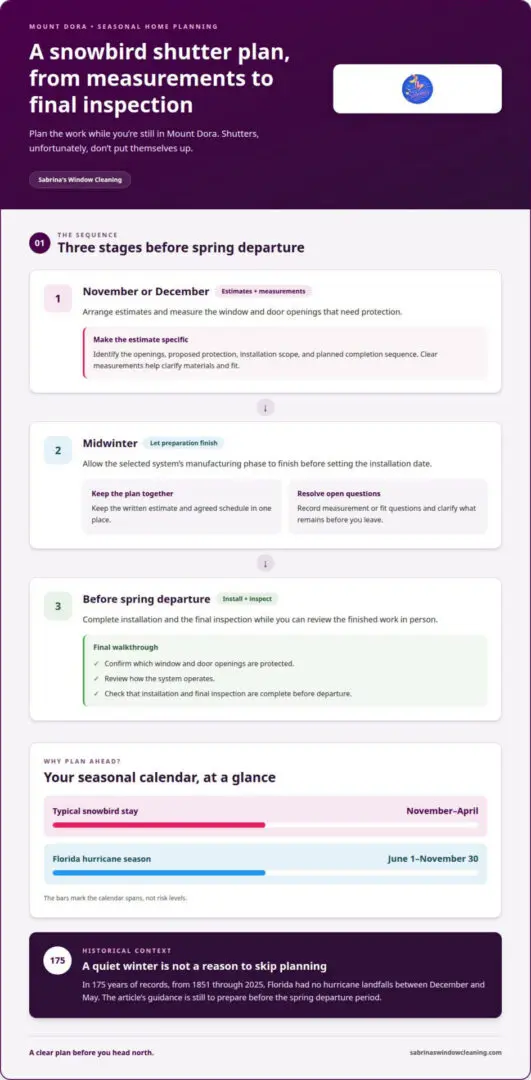
For a snowbird hurricane shutter service in Mount Dora, plan to finish installation before leaving in spring. Begin with measurements and planning in November or December, allow time for preparation during winter, then schedule installation and a final inspection before departure. This sequence leaves time to address measurement or fit issues while you’re still nearby.
The timing aligns with Florida’s seasonal pattern. Snowbirds typically stay from November through April, while Florida’s hurricane season runs from June 1 through November 30. In 175 years of records, from 1851 through 2025, Florida had no hurricane landfalls between December and May. That history can make winter feel quiet, but it doesn’t remove the value of preparing before the busy departure period.
Use a simple schedule to keep decisions in order:
- November or December: Arrange estimates and measurements for the window and door openings that need protection.
- Midwinter: Allow the selected system’s manufacturing phase to finish before setting the installation date.
- Before spring departure: Complete installation and final inspection while you can review the finished work in person.
Before arranging shutter installation, make sure the estimate clearly identifies the openings, proposed protection, installation scope, and planned completion sequence. For Mount Dora homes, these details clarify what will be covered and whether the work can finish before departure. Have installation and the final inspection included in the schedule, not left as a vague “we’ll get to it.”
Installation planning should begin with measurements, because each window and door opening affects the materials and fit. The estimate should also distinguish shutter installation from impact-window replacement. These are different approaches to protecting openings, and impact-window replacement requires a separate scope.
Impact-window installation costs depend on factors such as the number and dimensions of openings, the selected window products, and the work required at the home. A useful estimate explains these cost factors rather than relying on a broad comparison that may not reflect your property. For shutters, careful measurements and a clear installation scope make the estimate more meaningful.
Choosing a snowbird hurricane shutter service in Mount Dora means coordinating the work around your departure, not simply picking an installation date. Before leaving, confirm which openings are protected, review how the system operates, and complete the final inspection. A walkthrough is easier to do in Mount Dora than to supervise from hundreds of miles away.
Ensuring that the physical measurement and fitting process at each opening has been completed and that any remaining questions are recorded for follow-up is essential when working with Sabrina’s Window Cleaning. Use your seasonal arrival and departure dates as a clear point for checking whether the estimate, installation plan, and final inspection fit your own schedule. If any part of the work is still uncertain, ask the service provider to clarify the next step before you leave. Keep the written estimate and agreed schedule together, and make sure you understand which openings are included and what remains to be done. A clear handoff helps you leave with the work status understood.
Hurricane and forced-entry protection
Storm shutters are designed to protect window and door openings from high winds and flying objects. Covering these openings can help reduce the risk of broken glass or wind-driven debris causing further problems inside the home. In Mount Dora, the question isn’t simply whether a house has shutters. It’s whether the protection fits each opening and can be used safely when needed, because shutters are most helpful when they’re ready for their close-up.
Shutters can provide a physical barrier across vulnerable openings, but don’t treat them as a guarantee against forced entry. Their primary purpose is storm protection, and a closed shutter can affect outside access. That matters during hurricane season, especially when a seasonal home is unoccupied and no one is present to open the system promptly. A little planning can help keep the shutters from becoming an unintentional “do not enter” sign.
A Cocoa Beach condominium fire on April 18 illustrates the access concern. Hurricane shutters installed by an absentee owner impeded firefighters’ entry, and firefighters took several minutes to enter the apartment. The lesson isn’t to leave openings unprotected. It’s to include emergency access in the household’s storm plan, alongside deciding who can reach the property and operate its shutters.
Before closing a home for the season, include these checks in your plan:
- Cover the openings: Florida’s wind-mitigation inspection form requires every glazed opening to be protected for the full opening-protection credit.
- Plan access: Identify how emergency responders or a trusted person can reach the home if shutters are closed. The key is having a plan before everyone’s out of town.
- Understand local rules: Some counties and cities allow storm shutters to be installed only during storm threats, so permanent closure may not suit every location.
- Know any association policy: One homeowners-association policy described for storm shutters permits them only during a warning, then requires them opened or removed after danger passes.
That association policy is an example, not a statewide rule. Mount Dora homeowners should distinguish local requirements from the rules that apply to their property or association. If a policy limits how long shutters may remain closed, your plan needs to identify someone who can respond while you’re away. Shutters are useful only when their operation fits the home’s rules and practical access needs; even good protection needs a human backup plan.
For a seasonal home, discuss the opening-by-opening coverage and safe operation as part of professional hurricane shutter installation. Clear planning helps balance protection from windborne debris with access for emergencies, rather than treating those needs as separate decisions.
Potential insurance savings for opening protection may also inform your decision. These estimates reflect different home and premium profiles, so consider them in light of your property’s circumstances.
Product approvals are another consideration. The 40mm Rhino Series roll shutter is described as Miami-Dade HVHZ NOA approved and compliant with Florida Building Code standards. In Cocoa Beach, firefighters took several minutes to enter an apartment because hurricane shutters obstructed access. Confirm that someone with access to the home can operate its shutters when needed, because in an emergency, “I’ll get to it later” is not much of a plan.
Hurricane exposure during snowbird homeowners’ absence
Mount Dora homes can sit empty during the months when Florida’s hurricane exposure is highest. From 1851 through 2025, 123 of Florida’s 126 hurricane-strength landfall events occurred between June 1 and October 31. That represents 97.6 percent of the events counted. For seasonal homeowners, the key planning issue is not only whether openings have protection. It’s whether that protection can be put in place when nobody is home.
The concentration grows sharper in late summer and fall. August through October accounted for 111 of Florida’s 126 hurricane landfall events counted from 1851 through 2025. A system that must be deployed before a storm therefore depends on access to the property. Deployable hurricane-protection systems require someone to be present 24 to 72 hours before landfall to close or install them. A distant owner can’t count on being there during that window.
Build the absence plan around three practical decisions:
- Identify the system: Determine which openings need protection and whether the system must be closed or installed manually.
- Assign access: Choose someone who can reach the Mount Dora home and operate the protection if a storm threatens.
- Set expectations: Make sure the person understands which openings are covered and how the system is secured.
These steps address a specific gap: a deployable system offers no opening protection while it remains stored or open. The person responsible needs enough notice and access to act within the 24-to-72-hour pre-landfall window. If no one can reliably reach the property, that limitation belongs in the choice of protection, not in a last-minute scramble when a forecast changes.
Consider a Mount Dora homeowner who leaves before the peak-risk months. The home may be prepared at departure, but a later storm threat could require someone to return and secure the openings. A written plan can name the responsible person, identify the openings to protect, and outline the steps. Keep the instructions clear and practical: a storage area full of panels is not a deployment plan.
Florida’s hurricane season runs from June 1 through November 30, while the landfall record shows the strongest concentration between June and October. That difference matters: the season’s calendar and the historical distribution of landfalls answer different questions. Use the season dates to define the period requiring preparedness, then use the landfall pattern to understand why an unattended home needs a workable access plan.
For snowbirds, preparedness means being able to protect every opening when needed, even while you’re away. Match the system’s operation to the person who can access the home, and settle that responsibility before leaving Mount Dora for the season.
Storm panels and storm shutters
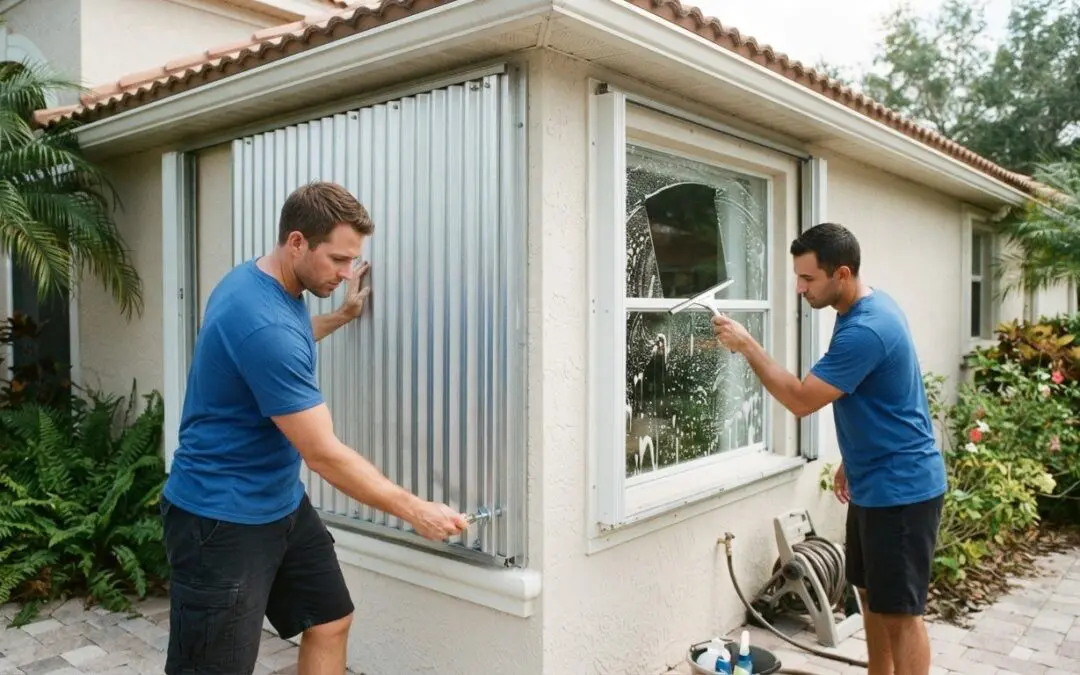
For a Mount Dora home, choosing between storm panels and shutters often comes down to how protection is stored and deployed. Panels are removable and need a designated storage place when not in use. Shutters stay attached to the home and move over openings when needed. Either option requires a plan that suits the home’s layout and the people who will operate it.
Panels may suit homeowners who can manage separate pieces and keep them organized between storms. Before choosing panels, map the openings they’ll cover and decide where to store them. A labeled storage arrangement can make it easier to match each panel to its opening. When protection is needed, someone still has to carry, position, and secure the panels, so consider whether you’re ready for a storm-season puzzle with a few heavy pieces.
Attached shutters eliminate the need to store separate panels, but their operation depends on the system installed at the home. Some systems operate manually, while others roll into position. Have the operating method explained during installation, then consider who can use the system if you’re away from Mount Dora. Convenience matters when the system can be deployed as planned.
Compare the options with a practical opening-by-opening review:
- Storage: Decide where removable panels will stay and how they’ll remain organized.
- Handling: Consider who can move and position panels across the home’s openings.
- Operation: Learn how each installed shutter system closes or deploys.
- Coverage: List the windows and doors the selected protection is intended to cover.
For example, a seasonal homeowner with several exposed windows may value the simplicity of attached shutters. Another homeowner may prefer removable panels and be able to plan for their storage and handling. The right comparison isn’t just “panels or shutters.” It’s how the setup fits the home, the openings, and the person responsible for using it.
Measurements matter for either option. An estimate should account for each opening rather than treat every window as interchangeable. Differences in dimensions, placement, and access affect what protection fits and how it will be installed. A clear scope also shows which openings are included and which are outside the planned coverage.
Before deciding, list the openings, storage needs, and operating steps that matter for your Mount Dora property. Then compare panel handling with the shutter system’s operation and installation scope. A careful match can make preparation more manageable. Choosing by appearance alone may leave practical questions unanswered when it’s time to secure the home.
What permits are required for hurricane shutters in Mount Dora?
For a Mount Dora shutter project, determine permit requirements before setting an installation date. Requirements depend on the project scope and the rules that apply to the property. A new installation, a replacement, and a change to existing openings may involve different details. Don’t treat a general statement about Florida as a local determination.
Start with a written description of the planned work. Include the property address, the openings involved, whether the shutters are new or replacement protection, and the system being considered. Ask the relevant building-permit office which approvals apply to that specific scope. Getting an answer before work begins helps avoid scheduling based on an assumption that may not fit the property.
Organize the project information before making that inquiry:
- Describe the work: Note whether the project covers new shutters, replacement units, or changes to existing openings.
- List the openings: Identify the windows and doors included in the proposed work.
- Gather product details: Keep the selected system’s documentation available for review.
- Record the response: Save the permit office’s instructions with the estimate and installation schedule.
These details help the permitting office assess the actual project rather than a vague request about “shutters.” For example, a homeowner replacing protection at several windows can clearly describe the openings and proposed work. If the project later expands to include doors or additional windows, update the scope before relying on the earlier answer.
Permit approval and product suitability are separate questions. A product document may describe a system, but it does not determine which local approvals apply to a particular Mount Dora property. Likewise, an installation estimate describes the planned work, not necessarily the permitting steps. Keep the decisions separate so your schedule accounts for both approvals and installation.
Timing matters for seasonal homeowners. Include the permit inquiry early in your planning calendar, alongside measurements and scheduling, rather than leaving it until installation is near. If the permitting office requires documents or revisions, the timeline can account for them before you leave in spring. Paperwork is less charming than a Florida winter, but easier to handle while you’re still in town.
Before proceeding, make sure the project scope, required approvals, and installation schedule all refer to the same openings and system. That simple alignment reduces confusion if plans change. For help planning the installation details around your home’s openings, plan your hurricane shutter installation.
Required approvals depend on the project scope and the rules that apply to the property. Ask the relevant building-permit office which approvals apply to the specific work before installation begins.
Sabrina’s Window Cleaning: Hurricane Shutter Installation
Sabrina’s Window Cleaning provides hurricane shutter installation for Mount Dora homeowners preparing to leave for the season. Plan ahead of your spring departure to discuss the openings, installation scope, and schedule while you’re still at home, before your suitcase claims the spare room. A clear list of the windows and doors you want protected helps keep the project focused, and an installation walkthrough shows you how the system operates, no storm-season guesswork required.
If you’re comparing storm panels with attached shutters, or planning protection for an unoccupied home, arrange installation as part of your preparations. Your seasonal checklist can include the project scope, permit steps, and a plan for who can access the home if protection needs to be deployed while you’re away.
Contact Sabrina’s Window Cleaning to discuss hurricane shutter installation for your Mount Dora home.
Make Your Seasonal Plan Ready to Go
Turn your research into a decision you can act on: choose the protection that suits your home, then arrange the work before departure preparations get crowded. A settled plan makes it easier to coordinate installation with the rest of your seasonal tasks, rather than leave storm readiness until the last minute. After all, packing is easier when your shutters aren’t also on the to-do list.
For snowbird hurricane shutter service in Mount Dora, Sabrina’s Window Cleaning can help you plan hurricane shutter installation. The company also offers window cleaning and pressure washing for exterior property care, but your next step can focus on the openings you want protected.
Bring your priorities and questions to the conversation, including what matters most for your home while you’re away. A clear starting point keeps the process practical and focused on your property, no crystal ball required.
Contact Sabrina’s Window Cleaning today to discuss your hurricane shutter installation. You can take the next step with a plan that feels considered, not hurried, because last-minute planning is best left to vacation playlists.
Frequently Asked Questions
Who Closes Your Shutters in September?
If you’re away in September, someone you designate must close manually operated shutters. Choose someone who can access your Mount Dora home, identify the windows and doors that need covering, and understand how the system works, preferably before a storm turns your to-do list into a sprint. Make the arrangement before you leave, rather than relying on a last-minute favor when a storm approaches. Sabrina’s Window Cleaning provides seasonal hurricane shutter installation and removal; deploying shutters during your absence requires someone on-site.
Disclaimer
All articles are designed to entice you to hire Sabrina's to clean your windows, not to teach you how to clean them. They are meant for entertainment purposes only. We are not responsible for the out come of your DIY cleaning project!