

Article by
Frank Sweeney
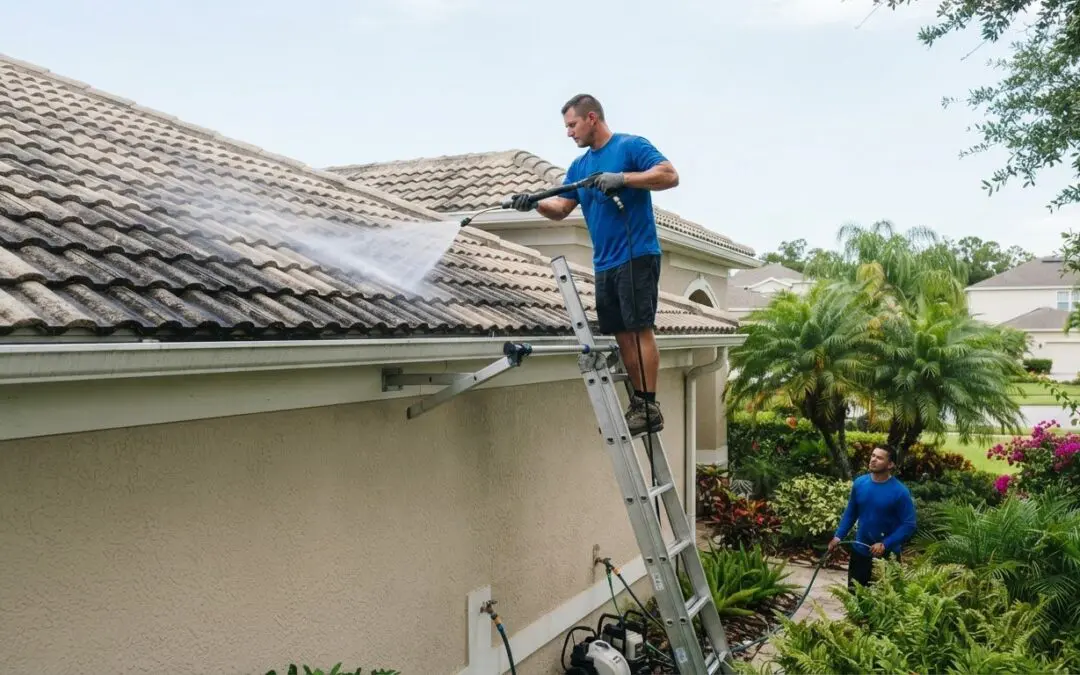
What if the gentlest way to clean a roof is to keep the pressure low? Residential roof soft washing in Orlando uses a low-pressure approach to remove algae and black streaks from shingles and tile, no pressure washer impersonating a wrestler required. Careful application helps match the cleaning to the roof surface.
It makes sense to be cautious about cleaning materials designed to protect your home. Soft washing is intended to clean without the force that can strip protective roof layers or contribute to leaks. Timing matters, too: October through April is a commonly recommended window for roof cleaning in Orlando, outside much of the rainy season. Your roof, after all, may prefer a calmer forecast.
Here, you’ll learn how soft washing works, why it’s used on shingle and tile roofs, and how it tackles algae and black streaks. We’ll also cover when to schedule cleaning and what a careful professional process involves, so you can make an informed decision about your roof, without needing to climb up and ask it yourself.
Key Takeaways
- Soft washing uses a gentler approach than pressure washing to clean shingles and tile without blasting the roof into next week.
- Cleaning results on many Orlando homes last about 2 to 3 years, with roof exposure and surrounding shade affecting how soon algae returns for an encore.
- Black streaks often come from algae that feeds on roofing material, so treating the growth addresses more than the appearance, it’s not just a bad hair day.
- October through April is a commonly recommended time to schedule roof cleaning in Orlando, outside the rainy season.
- A professional soft wash follows a careful treatment and rinse process; the cleaning solution is typically left on the roof for 15-20 minutes before rinsing.
Will my property be protected during the roof cleaning process?
Soft washing cleans shingles and tile with low-pressure water, while careful preparation helps protect the surrounding property. In Florida, how long a clean roof stays looking fresh depends partly on sun exposure and shade, nature’s way of picking favorites.
Protecting Plants and Property
Protecting plants and property starts with preparing the areas below and around the roof. Runoff can travel from roof edges toward landscaping, windows, walkways, and outdoor belongings. A careful process accounts for these surfaces, shields vulnerable areas as needed, and manages water flow during rinsing. For example, move or protect patio furniture beneath an eave before work starts; patio chairs rarely enjoy an unexpected roof wash.
Plants near the house deserve particular attention. A professional can wet nearby landscaping before cleaning, monitor it during the work, and rinse it afterward. These steps help limit exposure to cleaning solution. Roof access and drainage patterns matter too: water from a lower roof section may reach a garden bed or paved area, so the crew should plan for those routes, not focus only on the roof.
Runoff and Wastewater Considerations
Runoff and wastewater considerations mean controlling where roof-cleaning water travels and keeping it away from sensitive areas. For a roof wash, manage runoff carefully and avoid directing cleaning solution toward storm drains, ponds, or planted areas. These are practical precautions, not a statement of a specific Orlando or Florida legal requirement. Drain locations and the roof’s slope shape how water moves, so they belong in the preparation plan.
During rinsing, a professional can watch the flow at roof edges and around downspouts. That attention helps protect landscaping and nearby surfaces from unnecessary contact with runoff. Since no specific local disposal rule is established here, the section doesn’t claim one; the useful point is to control water on the property and handle it responsibly.
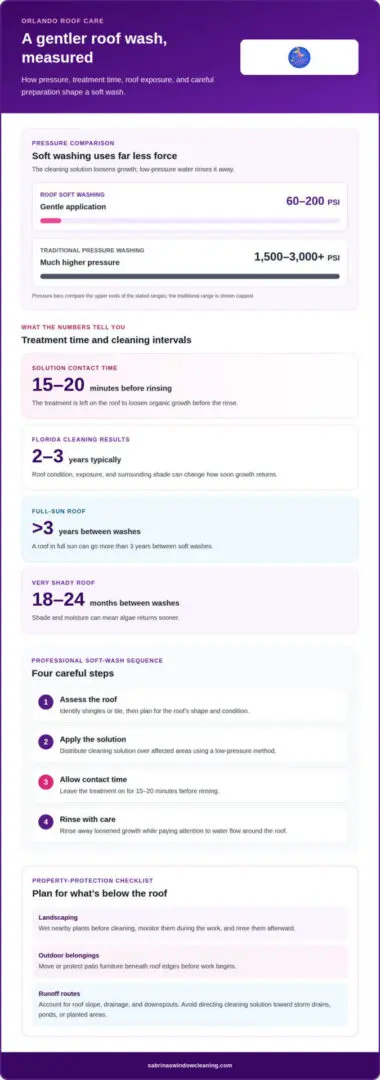
Cleaning results in Florida typically last 2 to 3 years, though roof conditions affect the interval. A roof in full sun can go more than 3 years between soft washes, while a very shady roof may need cleaning every 18-24 months. Shade, moisture, and recurring organic growth can make a difference, so the calendar alone doesn’t tell the whole story, though it may still be the most organized member of the household.
Algae, mold, and mildew can affect both shingles and tile. Black streaks are commonly associated with algae, while mildew and other grime can dull a roof’s appearance. Soft washing applies cleaning solution at low pressure, then rinses away loosened growth. This approach avoids the force of pressure washing, which can damage roofing surfaces if used improperly.
Roof material also informs the cleaning approach. Asphalt shingles need care that avoids disturbing their protective surface; tile roofs need controlled treatment that accounts for their shape and seams. In either case, the goal is to remove buildup gently, not scrub or blast the roofing. In Central Florida, the roof’s material, drainage, nearby plants, and exposure all help shape a thoughtful cleaning plan.
What Is Roof Soft Washing?
Soft washing combines low-pressure water with cleaning solutions to loosen roof growth. The main difference from pressure washing is the force used during cleaning, your roof gets a gentle wash, not a power-washer pep talk.
Low-Pressure Soft Washing
Low-pressure soft washing applies cleaning solution with a gentler water stream rather than a forceful spray. The method matters because the roof’s surface should be cleaned without treating shingles or tile like a concrete driveway. Soft washing commonly operates at 60-200 PSI, while traditional pressure washing can use 1,500-3,000+ PSI. That gap changes how the washing process acts on roofing, and how likely the roof is to feel like it’s under attack.
Pressure alone doesn’t do the cleaning in a soft wash. The cleaning solution helps loosen algae, mold, mildew, and grime, then water rinses away residue. On shingles, this means avoiding a close, forceful spray across the surface. On tile, controlled application helps the solution reach uneven contours without relying on impact to dislodge buildup. In other words, the solution does the heavy lifting while the water avoids showing off.
Pressure washing has a different role: its force can help clean durable surfaces such as driveways and sidewalks. These surfaces can tolerate a more direct stream than many roofing materials. A roof, however, has overlapping shingles or tile joints that make spray direction important. A professional method accounts for the material and directs water carefully instead of treating every exterior surface alike. Roofs, after all, are not just driveways with better views.
Steps in a Professional Roof Soft Wash
A professional roof soft wash follows a sequence: assess the surface, apply the cleaning solution, allow it to work, then rinse. The solution needs time to loosen organic growth, so the process doesn’t depend on high-pressure water to remove it. Good cleaning, it turns out, is sometimes about waiting your turn.
- Assess the roof. Identify whether the surface is shingles or tile, then plan an approach suited to its shape and condition.
- Apply the solution. Use a low-pressure method to distribute cleaning solution over the affected areas.
- Allow contact time. The treatment is left on for 15-20 minutes before rinsing.
- Rinse the surface. Use controlled water flow to clear away loosened residue without turning the rinse into pressure washing.
The treatment time is one part of the process, not a promise that every roof responds identically. The amount and location of buildup, roof material, and application all affect how the cleaning proceeds. The aim is a measured wash, not a dramatic blast, this is a roof cleaning, not an action movie. For more information about professional roof soft washing, explore the service details available here.
Algae, mildew, and black-streak removal
On Orlando roofs, black streaks often point to Gloeocapsa magma, a type of algae that feeds on roofing material. Left untreated, it can cover an area roof within two to three years. That growth affects more than curb appeal: algae can make Orlando roofs wear out 25% faster. Cleaning addresses the visible staining and the growth behind it.
Algae, mold, and mildew don’t look identical on every roof. A dark streak on asphalt shingles may appear as a long stain, while buildup on tile can collect along textured surfaces and edges. The roof’s shape and material influence where growth is most noticeable. Looking at the pattern helps distinguish widespread staining from a smaller patch that needs focused attention.
Cleaning targets organic growth on the surface rather than scraping it away. A low-pressure application lets cleaning solution reach affected areas without a forceful stream against shingles or tile. The solution works on the buildup, and a controlled rinse clears loosened residue. This approach avoids turning roof cleaning into a high-pressure contest, which roofs never signed up for.
Different growth calls for careful observation. For example, mildew may appear as a dull or patchy film, while algae can leave dark streaks that stand out against light-colored shingles. A professional assesses where stains appear, how they follow roof slopes, and whether they reach tile grooves. Those details guide coverage and help prevent missed sections during treatment.
- Black streaks: Look for dark lines on shingles or tile, commonly associated with Gloeocapsa magma.
- Uneven discoloration: Check roof sections where mildew or grime creates a patchy appearance.
- Recurring growth: Note shaded surfaces where visible staining may return sooner.
Plant protection remains part of the cleaning plan because runoff can travel from roof edges into nearby landscaping. Before treatment, a professional identifies plants below the affected roof sections and considers where rinse water will flow. Nearby plants can be wetted and rinsed during and after application to limit contact with cleaning solution. Downspouts and sloped roof sections also shape runoff routes.
Removing algae helps restore a cleaner appearance, but the roof still needs a suitable cleaning method. Scrubbing or forceful pressure can disturb roofing materials, while a measured treatment targets growth with less impact. For Orlando homes, the practical question is whether algae has spread across shingles or tile enough to merit careful roof cleaning, not just whether streaks look unattractive.
Best time of year to soft wash in Orlando
October through April is a commonly recommended window for roof soft washing in Orlando. For residential roof soft washing in Orlando, scheduling should account for the city’s May-through-October rainy season.
Seasonal timing matters because roof washing involves applying treatment and rinsing surfaces. Rain can disrupt a planned workday or affect how the cleaning proceeds. A dry forecast makes it easier to coordinate washing, protect nearby plants, and manage runoff. Since Orlando’s rainy season overlaps part of the suggested cleaning window, flexible scheduling can help homeowners choose a suitable day, because even roofs prefer not to work in the rain.
October through April is a practical period to consider a soft wash, beginning as the rainy season ends and continuing through the cooler months. It’s a scheduling guide, not a rule that every roof must be cleaned then. Visible algae, roof exposure, and the condition of shingles or tile still matter. A roof with little visible buildup may need a different approach from one with spreading dark streaks.
Hurricane season can also shape a homeowner’s calendar. Orlando homeowners may schedule roof cleaning before June 1st or after November 30th to avoid hurricane season. Those dates give residents another way to organize exterior maintenance. For example, someone planning several home projects before June can consider placing roof cleaning within that seasonal schedule.
Rain is one factor, but the roof’s condition and surroundings matter too. A shaded roof with recurring algae may need attention sooner than a roof in full sun. If black streaks become prominent, visible buildup can guide scheduling instead of waiting for a particular month. A professional assessment considers the roof surface and helps determine whether treatment is appropriate at that time.
Think of scheduling as a balance between the season and the roof’s condition. Residential roof soft washing in Orlando makes sense when the cleaning window and visible roof needs align. These considerations can help organize the decision:
- Season: Consider October through April, outside most of Orlando’s rainy season.
- Calendar: Consider scheduling before June 1st or after November 30th when avoiding hurricane season.
- Roof condition: Factor in visible algae, shade, shingles, or tile.
- Weather: Choose a workday when rain is less likely to interrupt the planned cleaning.
A timely soft wash removes visible growth without relying on forceful pressure. The best appointment fits both the recommended season and the roof’s actual condition, so the calendar supports the cleaning plan rather than dictating it.
What are the steps involved in a professional roof soft wash?
A professional roof soft wash follows an orderly process, from roof assessment through final rinsing. Each step helps match the cleaning to the roof surface and surrounding property.
First, the crew assesses the roof’s material, slope, and visible buildup. Shingles and tile have different surfaces, so the treatment plan should account for their shape and condition. The crew also identifies runoff paths, downspouts, nearby plants, and outdoor items below the roof. For example, a garden bed beneath an eave needs attention before rinsing begins.
Preparation comes before applying cleaning solution. The crew protects vulnerable areas and plans how to manage water around the home. They can wet nearby plants and monitor runoff as it moves from roof edges. This step matters because cleaning water follows the roof’s slope, not a neat path chosen for convenience.
The main stages typically follow this sequence:
- Assess the roof. Identify shingles or tile, locate visible algae or grime, and consider the roof’s contours.
- Prepare the area. Account for landscaping, outdoor belongings, and likely runoff routes before treatment.
- Apply cleaning solution. Distribute it using low pressure, covering affected sections without blasting the surface.
- Allow contact time. Leave the treatment on for 15-20 minutes before rinsing.
- Rinse and review. Clear away loosened residue with controlled water flow and inspect the treated areas.
During application, even coverage matters. A roof with dark streaks across several slopes needs attention across those affected areas, rather than a quick pass over the most visible section. The solution works on organic buildup while the low-pressure method avoids relying on force to remove it. Application also needs to suit the roof material, since tile contours and shingle courses present different surfaces.
After the treatment has had time to work, rinsing clears residue from the roof. Controlled flow helps keep this final stage from becoming high-pressure washing. The crew also monitors downspouts and nearby landscaping as water moves off the roof. A final review can identify spots that need additional attention and confirm that the work area is tidy.
These steps make the process more than simply spraying and rinsing. If your roof has visible buildup, schedule a professional roof soft wash for a careful, material-conscious cleaning.
Sabrina’s Window Cleaning: Pressure Washing
Sabrina’s Window Cleaning provides soft wash roof cleaning for homeowners looking to remove roof algae and black streaks with a low-pressure approach. For driveways and other suitable hard surfaces, Pressure Washing tackles grime that calls for a different method, because roof shingles and concrete don’t exactly enjoy the same spa treatment. Matching the service to the surface helps avoid treating roof shingles or tile like concrete.
Turn to Sabrina’s Window Cleaning when your roof needs careful cleaning or exterior surfaces need pressure washing. Window Cleaning and Hurricane Shutter Installation are also available for other home maintenance needs, because homes do enjoy keeping us busy.
Contact Sabrina’s Window Cleaning to discuss your roof cleaning needs.
Give Your Roof a Thoughtful Next Step
A clean roof is part of caring for your home’s exterior, and choosing a method suited to its material keeps that care focused. If you’re considering residential roof soft washing in Orlando, start with the roof’s condition and the buildup you see. A professional assessment can help shape a cleaning plan around your home instead of treating every roof the same, because roofs, like people, appreciate a little personal attention.
Sabrina’s Window Cleaning also offers Window Cleaning, Pressure Washing, and Hurricane Shutter Installation for other exterior maintenance needs. Each service addresses a different part of home care, from clearer windows to clean hard surfaces and storm-ready shutters.
Ready to discuss your roof? Contact Sabrina’s Window Cleaning to talk about a careful cleaning approach for your home. A cleaner-looking roof can be a satisfying place to start, and your home’s exterior has plenty of room to shine, without needing a standing ovation.
Frequently Asked Questions
Is roof cleaning safe for my shingles or tile?
Soft washing cleans shingles and tile with low-pressure water instead of a forceful spray. The right approach still depends on the roof’s material and condition. For example, overlapping shingles and shaped tile surfaces need different attention during application and rinsing. A professional assessment helps determine how to treat the surface while avoiding unnecessary pressure. Roof cleaning should focus on removing buildup, not blasting the roof into submission.
How much does roof cleaning cost in Orlando FL?
Roof cleaning prices in Orlando depend on the home and the work involved. The price depends on the case and is given after a quote request. Factors include roof size, material, slope, access, and the amount of visible buildup. A large or steep roof may require a different approach from a smaller, easier-to-reach surface. Those details help determine the scope of cleaning for your home.
What special solution do you use to clean my roof?
Roof soft washing uses cleaning solutions to treat organic growth, rather than relying on high water pressure alone. The exact solution is not named here, so no specific brand or chemical formula should be assumed. The cleaning approach should account for roof material and visible buildup. For example, a professional considers whether the affected area is shingle or tile before applying treatment and rinsing.
Will the cleaning solution damage my plants or landscaping?
Careful preparation and rinsing help limit cleaning-solution contact with landscaping. For example, plants beneath a roof edge or downspout can be wetted before work and rinsed afterward. Runoff paths matter too: a sloped roof may direct water toward a flower bed rather than a paved area. These precautions help protect plants, which should be considered as part of the cleaning plan.
What is residential roof soft washing, and how does it work?
Residential roof soft washing is a roof-cleaning method that applies cleaning solution using low-pressure water. The treatment loosens organic buildup, then a controlled rinse clears residue. Unlike pressure washing, the process doesn’t depend on a strong water stream to scour the surface. For an Orlando home with dark streaks on shingles, the treatment targets the growth while keeping the washing approach gentler.
How much does roof soft washing cost in Orlando, Florida?
Roof soft washing in Orlando is priced according to the home’s specific cleaning needs. The price depends on the case and is given after a quote request. Roof dimensions, material, pitch, access, and the extent of algae or grime can affect the work involved. Sharing those details helps establish a relevant quote rather than relying on a generic estimate that may not match your roof.
What factors affect the price of roof soft washing in Orlando?
Roof size, material, slope, access, and buildup all affect the scope of a soft wash. A steep roof or sections that are harder to reach can require more careful work. The roof’s surface also influences the approach, since tile contours differ from shingle courses. The amount and spread of visible growth matter too. A quote request allows these property-specific factors to be considered together.
How often should Orlando homeowners have their roofs soft washed?
Many Orlando homes may need soft washing every 2 to 3 years, while heavy shade can shorten that interval to 18-24 months. A roof in full sun may go more than 3 years between cleanings. These intervals are useful planning guides, not a substitute for watching the roof’s condition. New dark streaks or spreading algae can signal that it’s time to assess the surface.
Disclaimer
All articles are designed to entice you to hire Sabrina's to clean your windows, not to teach you how to clean them. They are meant for entertainment purposes only. We are not responsible for the out come of your DIY cleaning project!