

Article by
Frank Sweeney
Sabrina died in 2020, leaving me a single father to the best daughter any dad could ever want. Hoping she doesn't notice my mistakes and when she does, try to make her think it was all part of the plan.
Your brick house looks like a fortress, but treat it like one during a deep clean and you might just blast your historic charm straight into your neighbor’s pool. While those sturdy red blocks seem indestructible, they’re actually more like a sponge in a tuxedo; they look sharp, but they’re surprisingly porous and delicate. If you’re considering pressure washing brick house surfaces to tackle that stubborn Florida “green fuzz,” you’re likely caught between wanting a pristine exterior and fearing you’ll turn your mortar into expensive dust.
We understand the struggle of living in the Sunshine State, where the humidity treats your masonry like an all-you-can-eat buffet for mildew. It’s completely normal to feel a bit of “PSI paralysis” when choosing nozzles, especially when one wrong move could leave permanent scars on your home’s face. The good news is that you don’t need raw power to get professional results.
This guide will show you how to master the art of the “Soft Wash,” a technique that uses specialized cleaning agents to melt away grime while keeping your water pressure at a gentle, safe level. You’ll learn exactly which settings to use and how to protect your investment, giving you the confidence to boost your curb appeal without a single masonry repair bill in sight.
Key Takeaways
- Learn why treating your brick like a sidewalk with high PSI turns your pressure washer into a “liquid chainsaw” and how to avoid permanent etching.
- Decode the “Nozzle Rainbow” to ensure you’re using gentle green and white tips rather than the mortar-shredding red enemy.
- Master the “Soft Wash” method for your next pressure washing brick house project to let chemistry do the heavy lifting while you protect your masonry.
- Apply the “Bottom-Up” detergent rule to skip permanent streak marks and achieve a professional, uniform glow across your entire exterior.
- Identify the specific Florida humidity triggers that turn your home into an algae farm and how to shut the buffet down for good.
To Blast or Not to Blast: The Brick Home Dilemma
Brick houses are the ultimate Florida flex. They look like they could withstand a category five hurricane and still have time to host a neighborhood barbecue. However, there’s a secret your home isn’t telling you: your walls are basically giant, heavy sponges wearing very fancy red suits. While you might think pressure washing brick house exteriors requires the same brute force you’d use on a concrete driveway, that approach is a recipe for a masonry disaster. Brick is incredibly durable against the wind, but it’s surprisingly sensitive to high-velocity water.
Porosity is the measure of void spaces in a material, acting like a microscopic honeycomb that traps Florida’s liquid-thick humidity deep inside your walls. This trapped moisture invites a whole host of unwanted guests. You’ve probably seen them: the neon green algae that makes your house look like a swamp creature, the black mold that gives off “haunted mansion” vibes, and that powdery white stuff known as efflorescence. Efflorescence is just salt being pushed out of the brick by moisture, but it’s a clear signal that water is moving through your walls in ways it shouldn’t.
To clear these out, we have to choose between raw power and smart chemistry. Traditional pressure washing relies on high-velocity water to knock dirt loose; however, Soft washing uses eco-friendly detergents to kill the biological growth at the root without the high-impact trauma. It’s the difference between using a chisel and using a gentle soapy soak. If your Florida home also has stucco surfaces, understanding can you pressure wash stucco safely is equally important before picking up that pressure wand.
The Hidden Anatomy of Your Brick Wall
Your wall isn’t a solid block; it’s a team effort between the brick face and the mortar joints. The brick is the star of the show, but the mortar is the supporting cast that holds everything together. Because mortar is significantly softer and more porous than the brick itself, it’s the “weak link” that high-pressure streams love to shred. If you see “sandy” residue on the ground or notice your mortar looking recessed and crumbly, your home is crying for a more respectful touch. A clean house is great, but not if you have to rebuild the walls afterward.
Why ‘Power’ Isn’t Always a Positive
There’s a common myth that 3000 PSI is the only way to get a deep clean. In reality, that kind of force acts like a liquid chisel. Beyond just surface damage, excessive pressure can actually inject water through the pressure washing brick house pores and straight into your home’s wooden framing. This leads to internal rot and mold that you won’t see until it’s far too late. Since 1989, Sabrina’s has operated on a simple philosophy: we treat your home with the same meticulous care we’d give our own. We prioritize gentle, effective methods over “blasting and praying,” ensuring your curb appeal stays high and your repair bills stay low.
The Delicate Dance of PSI: Why High Pressure is Brick’s Worst Nightmare
Imagine taking a liquid chainsaw to your front porch. That’s essentially what happens when you point a 3000 PSI stream at your masonry. While it’s tempting to crank the dial to “obliterate” to save time, high pressure is often the primary villain in a pressure washing brick house horror story. Water at that speed doesn’t just clean; it erodes. It creates “etching,” which are permanent scars or swirl marks on the brick face. Unlike a scuff on your hardwood floors, you can’t just buff out a hole in a brick. Once that surface is gone, the porous interior is exposed to every drop of Florida rain, turning your home into a giant, red sponge.
Safety isn’t just about the brick, either. Following CDC safety guidelines is vital because that same pressure can cause serious physical injury or inject water into places it doesn’t belong, like under your siding or into your electrical outlets. For a deeper dive into protecting your entire property from the roof down, check out our guide on house exterior pressure washing.
Vintage vs. Modern: Not All Bricks are Created Equal
If your home predates the 1900s, those bricks were likely handmade and fired in lower-temperature kilns. They possess a delicate “fire skin” on the outside that acts as a natural shield against the elements. Modern bricks are tougher, but even they have limits. If you blast off that outer layer, you’re essentially stripping the enamel off your home’s teeth. Before you start, try the “scrub test”: use a soft-bristled brush and some water on a hidden corner. If the brick starts shedding like a cat in July, put the pressure wand down immediately and rethink your strategy.
The Mortar Mess: Avoiding the Crumble
Mortar is designed to be the sacrificial lamb of your wall. It’s meant to be softer than the brick so that it absorbs stress, but high pressure turns it into sand in a heartbeat. Blasting out your joints means you’ll eventually need “repointing,” which is a fancy, expensive word for “putting the wall back together.” Older homes often use lime-based mortar, which is basically as soft as a sugar cube under a garden hose. Modern Portland cement is sturdier, but it still won’t survive a direct hit from a zero-degree nozzle. If you’re worried about the state of your masonry, a quick professional evaluation can save you thousands in structural repairs.
The Ultimate Pre-Game: Tools and Safety for a Brick-tastic Finish
Before you even think about pressure washing brick house surfaces, you need to audit your arsenal. Picking the wrong machine is like bringing a tank to a library; sure, you’ll get the job done, but the neighbors will never forgive the collateral damage. Gas-powered washers are the muscle cars of the industry, often pushing well over 3000 PSI. While they’re great for stripping a driveway, they’re usually overkill for masonry. Most homeowners find that a high-quality electric washer is the MVP because it naturally operates closer to the safe 500 to 1,000 PSI range that brick actually enjoys.
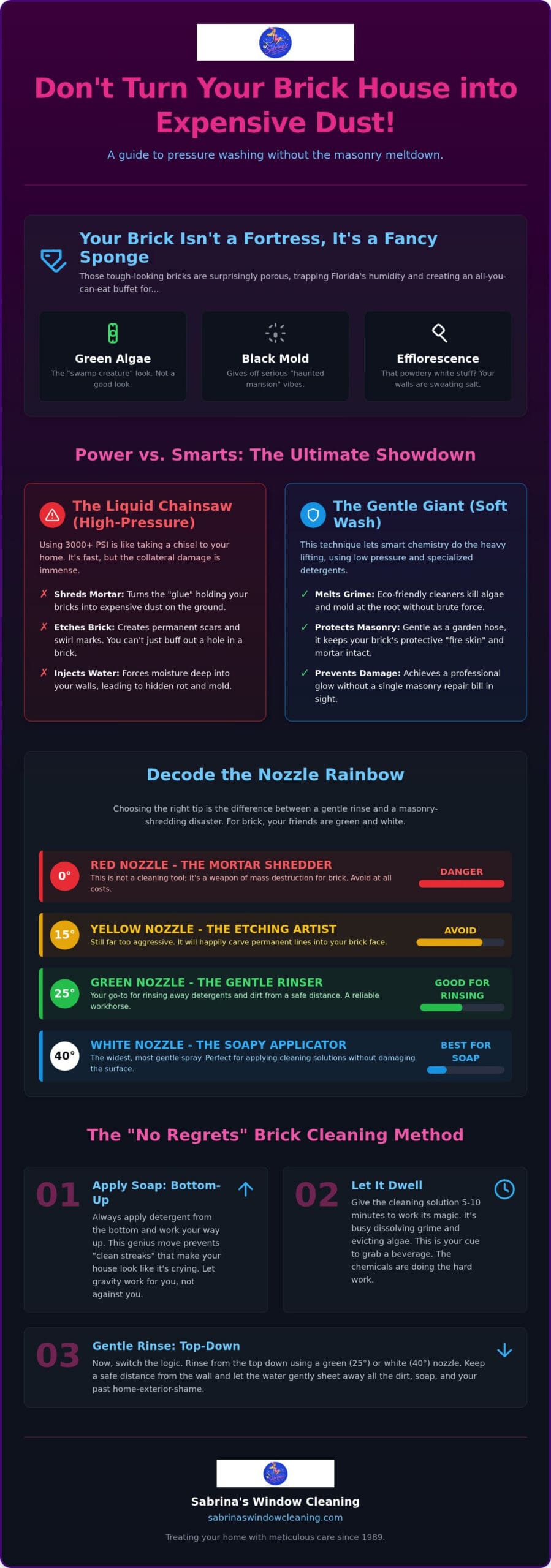
Then there’s the “Nozzle Rainbow.” If you see a red tip, put it back in the box and back away slowly. That 0-degree nozzle is a concentrated laser beam designed for cutting through concrete and making very expensive mistakes. The 40-degree white nozzle is the ‘Goldilocks’ of brick cleaning because it provides a wide, gentle fan that whisks away dirt without gouging the surface or shredding your mortar. Finally, don’t forget your personal protective gear. Water at high speed doesn’t care about your shins or your eyes, so wear sturdy boots and safety glasses. Looking like a “safety first” nerd is much better than a trip to the urgent care clinic.
Chemical Romance: Selecting the Right Detergents
Florida’s organic growth isn’t impressed by a little bit of dish soap. To truly clean your brick, you need specialized detergents that include surfactants. These clever chemicals help the water “stick” to the vertical surface of your home, allowing the cleaning agents to break down mold and mildew at the root. If you’re worried about your landscaping, look for oxygen-based cleaners or sodium hypochlorite blends that are diluted properly. These options will melt away the swampy green fuzz without turning your prized Florida hibiscus into a cautionary tale. The same gentle chemistry principles apply whether you’re wondering can you pressure wash stucco or tackling brick, since both surfaces demand low pressure and smart detergent choices.
Protecting the Perimeter
Preparation is the difference between a successful clean and a weekend spent on repairs. Water and electricity are famously bad roommates, so grab some painter’s tape and plastic sheeting to cover every outlet, doorbell, and door seal. You should also “pre-wet” your lawn and garden beds. By saturating your plants with fresh water before you start, their roots will be too full to soak up any run-off from your cleaning solutions. It’s a simple, neighborly trick that ensures your home looks fresh while your lawn stays vibrant and healthy.
Step-by-Step: How to Pressure Wash Brick Like a Pro
Now that you’ve got your gear and your garden is safely hydrated, it’s time to actually pull the trigger. But don’t just start spraying like you’re starring in an action movie. Successful pressure washing brick house projects follow a very specific rhythm. The first rule of “Soap Club” is the Bottom-Up Rule. You apply your detergent starting from the foundation and work your way up to the eaves. If you start at the top, the dirty suds will run down the dry brick below, creating permanent streak marks that are nearly impossible to remove. By starting at the bottom, the surface is already lubricated, allowing the grime to slide off harmlessly.
Once the soap is on, you need to master the magic of dwell time. This isn’t the time to be impatient. Think of it like marinating a tough cut of steak; you have to let the chemistry do the heavy lifting. Give the detergent about five to ten minutes to break the bond between the algae and your masonry. Just make sure you don’t let the solution dry on the brick, or you’ll be starting the whole process over again. If you see it starting to get tacky, give it a light mist of water to keep it active.
Step 1 & 2: The Saturation and Soap Phase
Before any soap touches your home, you must pre-soak the brick with plain, fresh water. Because your house is essentially a giant sponge, it will greedily drink up whatever liquid hits it first. If that liquid is concentrated detergent, it can get trapped deep in the pores and cause “ghosting” or white salt deposits later. Work in manageable sections, roughly ten feet wide, using your low-pressure black soap tip. This ensures even coverage and keeps the process under control so you aren’t rushing to catch up with drying soap.
Step 3 & 4: The Gentle Rinse and Drying
When it’s time to rinse, switch the direction to Top-Down. Now that the dirt is loose, let gravity be your free assistant to flush everything toward the ground. Keep your 40-degree nozzle at a consistent 12 to 18 inch distance from the wall. Use long, sweeping, overlapping strokes. If you stop and start in the middle of a brick, you’ll leave “tiger stripes,” which are uneven cleaning lines that scream “amateur hour.” Once you’ve finished a section, consult our pressure washing Bradenton FL checklist to ensure you haven’t missed any stubborn spots or hidden corners. If the thought of spending your Saturday on a ladder sounds less than ideal, you can always book a professional soft wash and let us handle the heavy lifting while you enjoy the AC.
Why Your Florida Brick Needs a Neighborly Hand
Living in Florida means dealing with humidity so thick you can practically wear it like a damp sweater. From the rolling hills of Ocala down to the sun-drenched streets of Naples, our climate turns every pressure washing brick house project into a battle against an algae farm. It’s not just about the green fuzz, though. If you live near the coast, salt spray acts like nature’s sandpaper, silently eroding your masonry and weakening your mortar joints over time. This isn’t just dirt; it’s a biological and chemical assault on your home’s structural integrity. Homeowners in the greater Sarasota area face these exact challenges daily, which is why dedicated pressure washing Sarasota services that understand local water restrictions and coastal conditions are so valuable.
At Sabrina’s, we’ve been tackling these exact Florida-specific challenges since 1989. With 35 years of experience under our belts, we’ve seen every type of mold, mildew, and salt-stained brick the Sunshine State can throw at us. Our meticulous expert promise means we don’t just “blast and dash.” We treat your home with the neighborly warmth it deserves, ensuring every nook and cranny is cared for with the precision of a family-owned business that takes pride in its craft.
The Local Advantage: From Tampa to West Palm
Our regional expertise goes beyond just spotting mold. We understand how local water hardness varies from Tampa to West Palm Beach, which affects how detergents interact with your brick’s finish. Hard water can leave behind unsightly mineral deposits if not managed correctly. Seasonal cleaning is also a vital part of your maintenance schedule. Getting your brick pristine before your hurricane shutter installation ensures that no trapped moisture or organic growth is hiding behind those panels when the storm clouds gather. It’s about being proactive rather than reactive.
When to Hang Up the Wand and Call a Pro
Sometimes, a weekend DIY project can quickly turn into a masonry nightmare. If you notice your brick is crumbling at a light touch or if the “green” has turned into a deep, black “crust,” your home might be too fragile for a standard rental machine. Professional-grade equipment allows us to dial in the exact temperature and pressure needed for a safe soft wash. We use specialized detergents that are far more effective than anything you’ll find in a big-box store. Let us handle the grime and the heavy lifting while you spend your Saturday enjoying the Florida sunshine with a cold drink in your hand.
Brick by Brick: Your Path to a Pristine Home
You’ve now discovered that your home’s exterior is less like an indestructible fortress and more like a sensitive sponge in a tuxedo. By swapping the high-pressure “liquid chainsaw” for a gentle soft wash, you’re saving your mortar from a one-way trip to the next county. Successfully pressure washing brick house surfaces in our humid climate is all about letting smart chemistry tackle the algae while you keep the PSI low and the curb appeal high.
Since 1989, we’ve been treating Florida properties with the meticulous care and neighborly warmth they deserve. With over 35 years of experience and expert soft wash certified techniques, we take the guesswork out of maintenance so you don’t have to spend your Saturday wrestling with a rental machine. We’re proud to be the locally owned choice for families who want professional results without the DIY drama.
Ready for a Brick-tastic Glow-Up? Get Your Free Quote from Sabrina’s Today!
Take a deep breath and relax. Your home is about to be the cleanest on the block, and your mortar is staying exactly where it belongs.
Frequently Asked Questions
Is it okay to pressure wash an old brick house?
Yes, you can wash an old home, but you must use the soft wash method to protect the historic integrity. Older bricks were often fired at lower temperatures, making their outer layer quite fragile. If you use a standard pressure washing brick house setup with high settings, you’ll strip away the protective fire skin. Think of it as using a gentle facial scrub instead of a belt sander on a piece of antique furniture.
Can pressure washing damage the mortar between bricks?
High pressure is the natural enemy of mortar joints. Because mortar is designed to be softer than the brick it holds, a powerful stream can carve it out like a hot spoon through a pint of ice cream. Once that mortar is gone, you’re looking at expensive repointing repairs. It’s much cheaper to keep the pressure low and let the cleaning solutions do the heavy lifting for you.
What is the best detergent for cleaning a brick house?
The best choice is a professional-grade detergent that includes surfactants and a diluted biocide. Surfactants help the cleaner cling to vertical surfaces so it doesn’t just run off into your flower beds. This allows the chemistry to break down the proteins in mold and algae without needing mechanical force. Plain water just won’t cut it against Florida’s stubborn organic growth; you need a little scientific backup to get that deep clean.
How do I remove white powdery stains (efflorescence) from my brick?
You can remove efflorescence by using a stiff-bristled brush and a specialized acidic masonry cleaner. These white stains are just salt deposits left behind after water evaporates from the brick. While a light dusting might disappear with a simple scrub and rinse, heavy buildup requires a dedicated solution to dissolve the minerals. Don’t just blast it with water, or you’ll just be feeding the cycle and inviting more salt to the surface.
Should I seal my brick house after pressure washing it?
Applying a breathable, penetrating sealer is a fantastic way to protect your masonry after a deep clean. Look for products containing silane or siloxane, which block liquid water while allowing water vapor to escape. This prevents the “sponge effect” that leads to mold growth and salt stains. It’s essentially a high-tech umbrella for your home that keeps the interior dry without trapping destructive moisture inside the walls.
How much PSI should I use for washing a brick exterior?
You should aim for a range of 500 to 1,000 PSI when pressure washing brick house exteriors. Anything above 1,500 PSI is entering the danger zone where you risk permanent etching or mortar damage. Professional setups often prioritize flow rate over raw pressure to flush away grime safely. If your machine doesn’t have a gauge, stick to the widest nozzle possible and stay at least 12 inches away from the surface.
Can I use bleach to clean the mold off my brick walls?
Diluted bleach, or sodium hypochlorite, is the most effective way to kill mold and mildew at the root. When mixed with the right surfactants, it acts as a sanitizing agent that prevents the green fuzz from returning next week. Just be sure to pre-wet your plants and rinse them thoroughly afterward. You want to evict the algae, not send your prize-winning rose bushes to an early grave.
How often should a brick house be cleaned in Florida?
In Florida, most brick homes benefit from a professional cleaning every 12 to 24 months. Our state’s unique combination of high humidity and coastal salt spray creates a perfect nursery for biological growth. If you notice shadows under the eaves or a green tint on the north side of your home, it’s time to schedule a wash. Regular maintenance is much easier than trying to scrub away a decade of accumulated swamp life.
Disclaimer
All articles are designed to entice you to hire Sabrina's to clean your windows, not to teach you how to clean them. They are meant for entertainment purposes only. We are not responsible for the out come of your DIY cleaning project!