
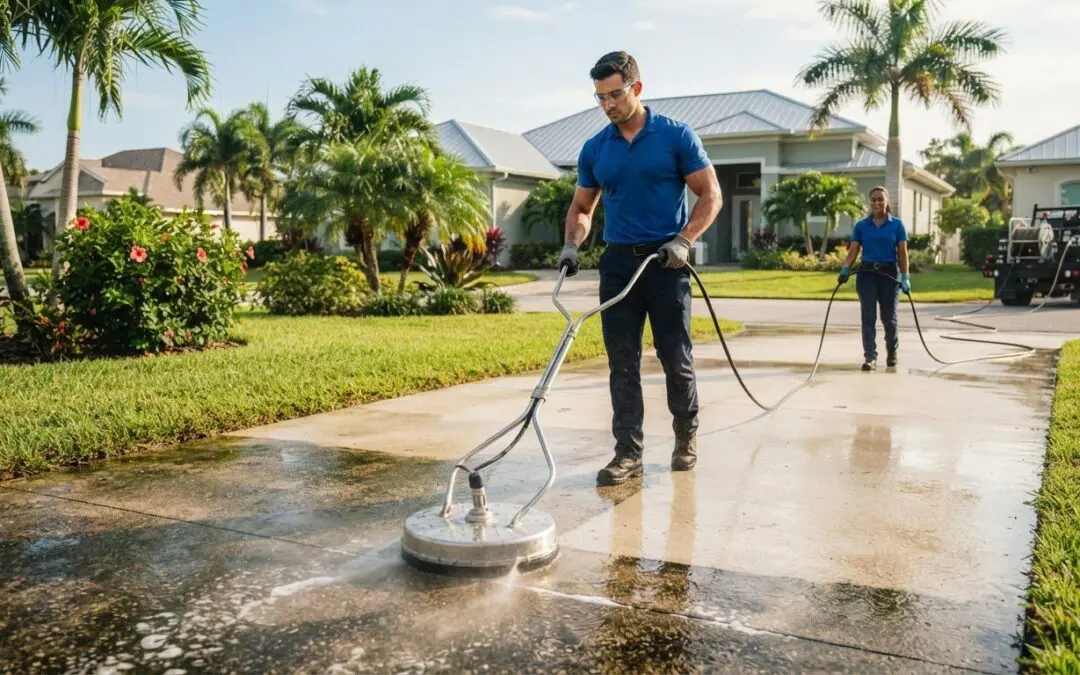

Article by
Frank Sweeney
What if the fastest way to clean a driveway is also the easiest way to damage it? Florida grime can make a pressure washer look like the obvious answer, but turning up the force isn’t always smart. Humidity gives algae and other organic growth plenty of opportunity to move in, while stubborn stains may need more than a blast of water. Your driveway needs a cleaning plan, not a pressure-washer showdown.
If you’re wondering how to pressure wash driveway surfaces effectively without leaving etches, streaks, or other unwelcome souvenirs, this guide explains what pressure washing can remove, how to prepare the area, and why the surface matters. You’ll also learn when professional cleaning may be a practical option, especially for a large job or a surface you’re unsure about. Sabrina’s Window Cleaning provides pressure washing for residential and commercial properties. We’ll walk through the details so you can choose an approach with less guesswork.
Key Takeaways
- Check the type of buildup and driveway surface before choosing a cleaning approach. Not every stain will disappear with a blast of water.
- To pressure wash driveway surfaces safely, adjust your technique to the material, nozzle distance, and movement rather than relying on one setting for everything.
- DIY may suit a manageable job if you understand the surface and equipment. A broad area or persistent buildup may call for professional help.
- Before cleaning, move vehicles and loose items, then identify nearby doors, landscaping, and anything else that may need protection.
- Professional driveway washing can take the guesswork out of a large or delicate job, without letting the grime have the last word.
Why Pressure Wash a Driveway, and What Does the Buildup Tell You?
Driveway pressure washing uses pressurized water to remove surface soil from suitable exterior surfaces. It can lift loose dirt, tire marks, and some organic buildup, leaving the area looking cleaner. In Florida, rain and humidity can contribute to recurring grime and organic growth, so a driveway may need attention again after cleaning. Left to collect, that buildup can turn your driveway into the household’s least glamorous welcome mat.
Think of cleaning as one part of the job, not a promise that every mark will vanish. Pressurized water may remove surface soil, while oil, rust, and stains that have settled into the material can respond differently. Some marks may need a separate treatment. The right approach depends on both the driveway material and its condition. A method suited to sound concrete, for example, may not suit a worn or more delicate surface.
What can pressure washing remove from a driveway?
Loose dirt and surface buildup are common targets, but results depend on the type of mark and the driveway itself. Before you pressure wash driveway surfaces, consider whether the problem is loose soil or a set-in stain. Pressure isn’t a universal stain remover. Some alternatives, including soft washing, use lower pressure with cleaning solutions. That doesn’t make one method right for every driveway, but it shows why the surface and soil matter.
When is driveway cleaning worth considering?
Look for visible buildup, an uneven appearance, or grime concentrated near the garage, parking spots, and other frequently used areas. These signs can help you decide whether cleaning is worthwhile without relying on a one-size-fits-all schedule. Check the driveway periodically so you can notice when everyday dirt is becoming a bigger eyesore. Taking a moment to identify the buildup also helps you choose a suitable cleaning approach.
How Driveway Pressure Washing Works Without Treating Every Surface Alike
A good result depends on more than the machine’s pressure setting. The distance between the nozzle and the surface, how steadily you move, and the driveway’s condition all affect the result. Too much force or an inconsistent pass can leave an uneven appearance or make an existing weak spot worse.
The driveway material and its condition should guide the cleaning approach. There’s no single PSI setting that’s safe or effective for every driveway. Before deciding how to pressure wash driveway surfaces, identify the material, look for signs of wear, and follow guidance suited to that surface and the equipment.
Does driveway material change the cleaning approach?
Yes. Concrete, pavers, and asphalt call for different considerations, and none should be assumed to suit high pressure. Concrete can have cracks or worn patches; paver joints may be vulnerable to force; and asphalt can be more susceptible to surface damage. These are general cautions, not a substitute for material-specific instructions. If the driveway is damaged, loose, or weathered, take extra care and verify the appropriate technique before cleaning.
Why pressure alone does not determine the result
Technique matters. Keep the spray moving in a controlled, consistent pattern instead of lingering in one spot. Nozzle distance affects the force of the spray, so test cautiously in an inconspicuous area and watch how the surface responds. A concentrated or uneven pass may leave visible stripes or affect vulnerable sections. The trigger is not a magic wand with a driveway setting.
Preparation matters too, especially if pressure washing involves materials covered by lead-safe renovation rules. The EPA’s guidance on containment requirements addresses pressure washing in that specific context. It shouldn’t be read as a universal rule for every driveway. Keep the surface, surroundings, and relevant material-specific instructions in mind before starting.
If the driveway is broad or its condition leaves you unsure about the right approach, professional driveway pressure washing is a practical alternative to guessing with the settings.
DIY or Professional Driveway Pressure Washing: Which Fits Your Situation?
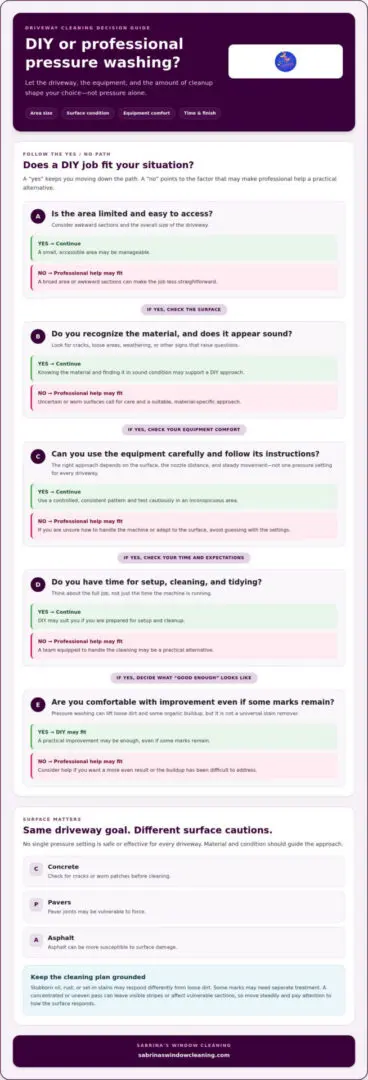
Renting equipment doesn’t automatically make driveway cleaning an easy afternoon. A small, accessible area may be manageable if you understand the surface and feel comfortable using the machine. A large driveway, stubborn stains, or signs of wear can make the decision less straightforward. Use this comparison to weigh the job before you commit.
| Factor | DIY may fit if… | Professional help may fit if… |
|---|---|---|
| Task size | The area is limited and easy to access. | The driveway covers a broad area or has awkward sections. |
| Surface condition | You recognize the material and it appears sound. | You see cracks, loose areas, weathering, or other signs that raise questions. |
| Equipment familiarity | You know how to use the equipment carefully and follow its instructions. | You’re unsure how to handle the machine or adapt your approach to the surface. |
| Time and cleanup | You have time for setup, cleaning, and tidying the work area. | You’d rather leave the project to a team equipped to handle the cleaning. |
| Desired finish | You’re comfortable with a practical improvement, even if some marks remain. | You want a more even result or the buildup has been difficult to address. |
When might DIY driveway washing make sense?
DIY can be a reasonable choice for a limited, accessible area when you understand the surface and can use the equipment carefully. Before you begin, consider the time needed for setup, steady passes, and cleanup. Keep expectations realistic: not every stain will lift in one session. A rental machine deserves more respect than a garden hose. It has a much less forgiving personality.
When is professional driveway cleaning a better fit?
Consider professional help for a large area, persistent stains, a vulnerable or uncertain surface, or whenever you don’t feel confident handling the equipment. Convenience matters, as does careful attention to the surrounding property and the driveway’s condition. Sabrina’s Window Cleaning provides pressure washing for residential and commercial properties as part of its exterior-maintenance work. For related service information, see Sarasota pressure washing.
If you decide to pressure wash driveway surfaces yourself, choose an approach based on the area, its condition, and your familiarity with the equipment, not simply because a machine is available. If the job feels bigger than your comfort level, professional cleaning offers a practical alternative to a long afternoon negotiating with a pressure washer.
How to Prepare Your Driveway for Pressure Washing
A little preparation helps keep the work area orderly and makes it easier to spot places that need extra care. Before you pressure wash driveway surfaces, walk around the area and plan what to move, what to protect, and where water may travel. Florida landscaping can be lovely, but it didn’t volunteer to join the cleaning project.
What should you move or protect first?
Start by clearing the driveway and its immediate edges. Work through this checklist:
- Move vehicles out of the work area.
- Pick up toys and loose belongings, including anything that could get in the way or be affected by spray.
- Relocate planters and other movable items near the driveway.
- Identify nearby doors, landscaping, and exterior items that may need protection.
- Consider where cleaning water may travel, especially around garden beds and plants, and plan the work area accordingly.
Look beyond the concrete. A nearby door, planter, or outdoor item is easy to overlook when your attention is fixed on the grime. Broader upkeep can also shape how the whole exterior looks; explore Florida curb appeal and exterior cleaning for more ideas.
What should you inspect before cleaning?
Check the driveway’s condition before starting. Look for cracks, crumbling spots, loose pavers, delicate edges, or repaired areas. These details can affect how the surface should be treated, so don’t assume every section can handle the same approach. Note oil or other persistent stains, too. Water pressure alone may not remove them, and identifying them ahead of time helps set realistic expectations.
Preparation supports a tidier, more considered job, but it doesn’t replace surface-aware technique. Clearing the area won’t make a worn section sturdier or change how a particular material responds to cleaning. If you spot damage or feel unsure about the surface, account for that before proceeding.
Prefer to leave driveway cleaning to a family-owned exterior-maintenance business? Explore professional driveway pressure washing from Sabrina’s Window Cleaning.
When Professional Driveway Pressure Washing Makes the Job Easier
Some driveway jobs are better left to experienced hands. A broad area can take more time and effort than expected, while persistent buildup may not respond to a simple rinse. If you’re unsure what the driveway is made of or how its condition will affect cleaning, professional help can spare you from guessing with a powerful machine.
That’s especially helpful when the surface has worn patches, delicate edges, or repairs you’re concerned about. A careful approach takes the driveway and its visible condition into account instead of treating every surface the same. Professional cleaning can also be more convenient when you’d rather not manage equipment, work around the property, and handle cleanup yourself.
What to expect from a professional driveway-cleaning service
Sabrina’s Window Cleaning is a family-owned exterior-maintenance business. Its pressure-washing service includes driveways and other exterior surfaces at residential and commercial properties. The cleaning approach should reflect what’s being cleaned and the condition of the surface, with care for the surrounding property and clear communication about the work. No responsible approach should promise that every stain will disappear; marks can respond differently depending on their type and the driveway’s condition.
If you’re deciding whether to pressure wash driveway surfaces yourself or bring in help, ask whether the job feels manageable and whether you’re comfortable choosing an appropriate approach. A large area, persistent buildup, or uncertainty about the surface can all make professional cleaning a sensible option.
A cleaner driveway is one part of exterior upkeep
A driveway is often one of the first things visitors notice, whether they’re arriving at a home or a business. Cleaning it can contribute to a fresher overall impression alongside other exterior maintenance, such as window cleaning, roof cleaning, or gutter cleaning. There’s no need to turn upkeep into a full-time hobby. Sometimes it’s simply about noticing what needs attention and choosing a careful way to address it.
Give your driveway a cleaner, less muddy introduction. Explore Sabrina’s exterior cleaning services.
Give Your Driveway a Safer, Fresher Start
A clean driveway starts with a thoughtful approach. Check the surface and its condition before you choose how to clean it, because concrete, pavers, and asphalt don’t all respond the same way. Move vehicles and belongings, look for cracks or loose sections, and remember that surface dirt and set-in stains may need different treatment. To pressure wash driveway surfaces safely, match the technique to what’s underfoot, not simply to the machine’s most powerful setting.
If the area is large, the buildup persists, or you’re uncertain about the surface, professional cleaning can take the guesswork out of the job. Sabrina’s Window Cleaning provides professional pressure washing for residential and commercial properties. Careful exterior upkeep can make a welcoming difference, and your driveway doesn’t have to audition for the role of Florida’s muddiest doormat.
Sabrina’s Window Cleaning provides exterior cleaning in Bradenton, Sarasota, Port Charlotte, Punta Gorda, Fort Myers, Naples, Leesburg, Orlando, The Villages, Tampa, Ocala, Belleview, Mount Dora, Eustis, Winter Garden, West Palm Beach, Boca Raton, Largo, and Clearwater. Explore Sabrina’s exterior cleaning services and take a comfortable next step toward a cleaner-looking property.
Frequently Asked Questions
Can you pressure wash a concrete driveway?
Yes, concrete can often be pressure washed, but the surface’s condition and cleaning technique matter. If you pressure wash driveway surfaces, don’t assume every concrete driveway can handle the same force. Check for cracks, worn areas, and previous repairs first, then follow guidance suited to the surface and equipment. Pressure washing may lift loose dirt and some buildup, but set-in stains can remain or need different treatment.
Is it safe to pressure wash a driveway yourself?
It can be safe to clean a manageable driveway yourself if you understand the surface and feel comfortable operating the equipment carefully. Read the machine’s instructions, keep the spray moving, and avoid concentrating it on one vulnerable spot. If the surface is damaged, the area is large, or you’re unsure how to proceed, professional cleaning may be a more comfortable choice. A pressure washer is not quite a garden hose with ambition.
How often should you pressure wash a driveway in Florida?
There’s no single schedule that suits every Florida driveway. Rain, humidity, shade, and how the area is used can affect how quickly dirt and organic growth become noticeable. Check the surface periodically and decide based on visible buildup rather than a calendar rule. Homeowners in Bradenton, Sarasota, Tampa, and nearby Florida communities may see recurring grime, so regular observation can help catch changes before the driveway becomes an eyesore.
What happens if you use too much pressure on a driveway?
Too much pressure, especially when concentrated in one spot, can leave an uneven appearance or damage a vulnerable area. The risk depends on the driveway material, its condition, nozzle distance, and how the spray is moved. Cracks, loose sections, and weathered areas deserve extra caution. There isn’t one pressure setting that’s right for every driveway, so match the technique to the surface instead of assuming more force means a better clean.
Can pressure washing remove oil stains from a driveway?
Sometimes pressure washing may reduce the appearance of an oil stain, but it doesn’t guarantee removal. Oil can behave differently from loose surface dirt, especially if it has settled into the driveway. A separate treatment may be needed, and the right option depends on the material and stain. Identify the mark before cleaning and keep expectations realistic: the pressure washer can help with surface soil, but it isn’t a stain-erasing wand.
Should I pressure wash a paver driveway?
Pavers may be cleaned, but their condition and joints need consideration before using pressure. Loose pavers, worn areas, or delicate edges call for extra care, and not every paver surface suits the same approach. Inspect the driveway and follow guidance appropriate for its material and condition. If you’re unsure how the pavers may respond, professional pressure washing can help you avoid turning a cleaning job into a rearranging project.
Do I need to prepare my driveway before pressure washing?
Yes. Move vehicles, toys, planters, and other loose belongings away from the driveway and its immediate edges. Identify nearby doors, landscaping, and exterior items that may need protection, and consider where cleaning water may travel. Before starting, look for cracks, crumbling sections, loose pavers, and previous repairs. Preparation helps keep the work area tidy, but it doesn’t replace choosing a technique suited to the driveway’s surface.
Disclaimer
All articles are designed to entice you to hire Sabrina's to clean your windows, not to teach you how to clean them. They are meant for entertainment purposes only. We are not responsible for the out come of your DIY cleaning project!