

Article by
Frank Sweeney
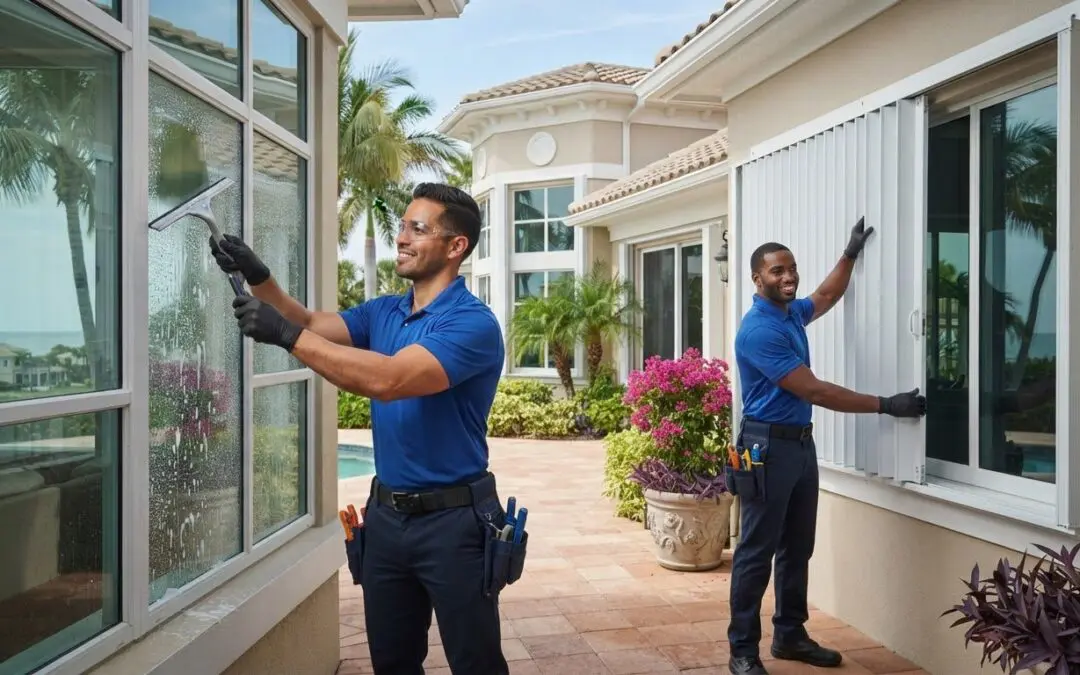
Beat the scramble, not just the storm. Schedule a pre-hurricane shutter deployment service in Naples, FL, in April or May, ahead of the June 1 start of hurricane season. In the United States, hurricane season runs from June through November annually, so early preparation leaves more room to address shutter issues before a storm approaches.
It’s easy to forget about shutters when the skies are clear, but finding a stuck panel as a storm approaches is a poor time for surprises. This guide explains how to prepare for seasonal deployment, what to consider before shutters go up, and how takedown fits into the season. You’ll also learn why checking and operating shutters ahead of time matters, and how a professional service can help prepare your home. Planning ahead can make storm preparation feel less like a last-minute race against the weather.
Key Takeaways
- Plan shutter maintenance in April or May, before hurricane season begins June 1, so you have time to address issues before a storm approaches.
- Operate and inspect existing shutters ahead of time; a stuck panel is no one’s idea of a last-minute project.
- Build seasonal deployment and takedown into your storm plan, including the Lee County rule requiring shutters and plywood to be removed within 30 days after a storm passes.
- For homes, condos, and rental properties, clarify who is responsible for access and deployment before storm preparations begin.
- Learn what to consider when arranging professional shutter installation and deployment, and how exterior maintenance services can fit into your property’s preparation.
Pre-storm shutter deployment
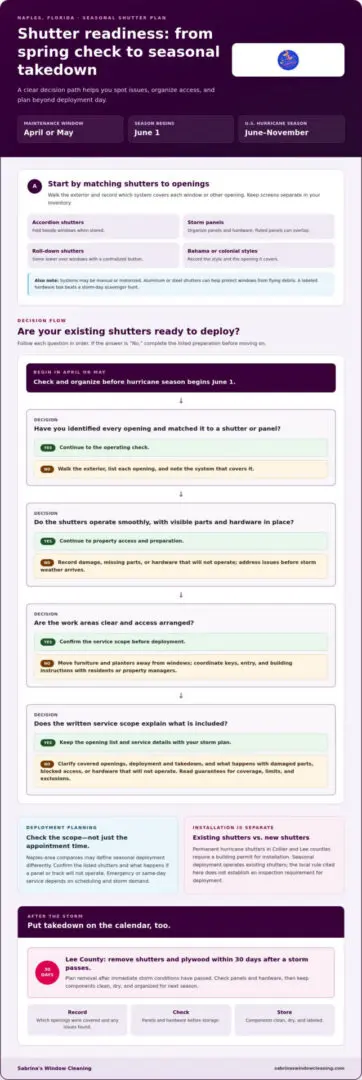
Start with the shutters already fitted to your home: identify every opening and confirm how each system operates. In Florida, preparation is easier when panels, hardware, and access are organized before storm weather arrives.
Deployment can involve accordion shutters, storm panels, roll-down shutters, or Bahama and colonial styles. Accordion shutters fold beside windows, while fluted storm panels can overlap to provide greater resistance to hurricane-force winds. Roll-down shutters may lower over windows with a centralized button. Aluminum or steel shutters can protect windows from flying debris. Keep screens separate in your inventory, and note which openings each shutter covers.
Comparing Companies and Service Guarantees
When comparing local companies, focus on what the written agreement covers: which openings are included, whether the work includes deployment or takedown, and how it handles existing damage or inaccessible hardware. Look for reviews that describe careful work and clear communication, not just a star rating. If an agreement includes a guarantee, read its coverage, limits, and exclusions rather than relying on a broad promise.
Local and Emergency Deployment Availability
Naples-area companies may define seasonal deployment differently, so compare the stated scope rather than assuming every service covers the same tasks. Confirm that the plan addresses all listed shutters and explains what happens if a panel or track won’t operate. Emergency or same-day deployment depends on scheduling and storm demand. Arrange service ahead where possible, and don’t make a last-minute appointment your entire storm plan.
Property Coverage and Home Preparation
For a home, condo, or rental, make a clear list of each opening and arrange access before the crew arrives. Owners and property managers should coordinate entry, keys, and building instructions with residents. Move furniture, planters, and other obstacles away from windows, and keep labeled panels and hardware together. A little organization prevents a scavenger hunt.
In Collier and Lee counties, permanent hurricane shutters require a building permit. This requirement concerns installation; seasonal deployment operates existing shutters. The local rule cited here does not establish an inspection requirement for deployment. Treat installation and operation as separate steps, especially when adding shutters or changing an existing setup.
Before agreeing to service, read the exclusions closely. An agreement may explain what happens if shutters are damaged, parts are missing, access is blocked, or hardware won’t operate. Record these conditions and the affected openings before deployment begins. A useful scope specifies the work included, rather than leaving storm-day expectations to guesswork.
Seasonal hurricane shutter deployment and takedown
In Southwest Florida, hurricane season officially starts June 1st annually, and the United States season runs from June through November annually. Treat deployment and takedown as planned parts of the calendar, not tasks to squeeze between storm alerts. April or May is the recommended time for shutter maintenance, giving homeowners an opportunity to address worn parts before the season begins.
A seasonal plan should account for shutter type, the number of windows and other openings, and who can access each area. For example, accordion shutters fold beside windows when stored, while storm panels need their hardware organized for installation. Motorized systems operate differently from manual ones. Record which openings each system covers, then keep the operating instructions and necessary hardware together.
Before deployment, make a simple property-specific checklist:
- Walk the exterior and match each shutter or panel to its opening.
- Look for visible damage, missing hardware, or parts that no longer move smoothly.
- Clear furniture, planters, and other obstacles from windows and access paths.
- Arrange entry for the contractor, including any condo or rental-property access details.
- After deployment, note which openings are covered and any issues that need attention.
That record helps homeowners avoid guessing later, especially if a property has several shutter styles. Aluminum panels, accordion shutters, and motorized units don’t all store or operate alike. Note each system and the opening it covers. A labeled storage area can also prevent hardware from becoming a mystery collection of screws and brackets by next season.
Takedown needs its own place in the calendar. Lee County ordinance Section 6-115d requires hurricane shutters and plywood to be removed within 30 days after a storm passes. Plan removal after the immediate storm conditions have passed, and include a careful check of panels and hardware before storage. Clean, dry storage helps keep components organized for the next deployment; damaged or missing parts are easier to identify before they become urgent.
Seasonal planning also separates existing-shutter operation from new work. If a property needs new shutters, hurricane shutter installation is a separate project from deploying equipment already in place. Keep the schedule, opening list, and access arrangements together, then organize your seasonal shutter preparation before severe weather narrows the calendar.
Accordion shutters fold beside windows for storage and can be deployed and retracted as needed. As part of your seasonal routine, note how each opening is left after use and keep the relevant operating instructions with the property’s shutter records. A written record makes it easier to confirm that each opening has been addressed, rather than relying on memory.
As the season changes, use the opening list to guide deployment and takedown, and update it if a shutter or its hardware needs attention. Make the next steps clear for anyone helping with the property: which areas are ready, which need checking, and where the instructions are kept. This simple handoff can reduce confusion when access or responsibility changes. Return components to their identified places and record any issue to resolve before the next seasonal cycle. A consistent routine keeps the work orderly without waiting until preparation becomes urgent.
Which Naples, FL companies offer pre-hurricane shutter deployment services?
In Naples, distinguish seasonal shutter deployment from installation when comparing services. Deployment means operating shutters already fitted to a property; installation means adding or fitting shutters. A company’s description should make clear which work it handles, whether it covers every opening, and whether removal is included. A precise scope is more useful than a tidy service name.
Read the Scope, Not Just the Service Label
Look for a written description that names the property’s shutter types and openings. For example, a home might have accordion shutters on the ground floor and removable panels upstairs. The plan should identify both systems rather than treating “all shutters” as an unexplained catch-all. It should also state whether the work covers deployment only or includes seasonal takedown and handling of stored panels.
Ask how the service handles practical differences between systems. Accordion shutters fold alongside windows, while removable storm panels require matching hardware. Motorized units operate differently from manual shutters. A clear scope explains what the scheduled work covers for each type. It also records access needs, such as a locked side gate or condo entry procedure, before the appointment.
Compare Reviews and Written Commitments
Use reviews to look for specific descriptions of shutter work, property care, and communication. A comment about panels being matched to the right windows says more about deployment than a general compliment. Compare written commitments for included openings, access arrangements, and how missing hardware or inoperable shutters are handled. If a guarantee is offered, its terms and limits should be clear.
For a fair comparison, prepare the same details for each conversation: shutter type, covered openings, property layout, access instructions, and whether takedown is needed. This keeps the discussion focused on the actual job. If a service description mentions installation, clarify whether it means fitting new shutters or operating existing ones. The tasks are related, but not interchangeable.
Match the Service to the Property
Homes, condos, and rental properties can involve different access arrangements. A condo may require building entry coordination; a rental may require the owner or manager to arrange keys with residents. Share a list of each opening and note unusual arrangements, such as panels stored away from the windows they cover. Specific details help define the work without turning an appointment into a hardware treasure hunt.
Before scheduling, compare the written scope with your opening list. Check that shutter type, access, deployment, and any requested removal are addressed. Keep a copy with the property’s shutter instructions, so the next seasonal visit starts with useful details rather than guesswork.
Do Naples shutter companies offer emergency or same-day deployment?
Emergency and same-day deployment are not interchangeable promises. A same-day visit means work is scheduled that day; emergency service describes a response to urgent conditions. Neither phrase alone tells you which openings are covered, whether the crew can access the property, or whether every shutter can operate. For a Naples home, make advance planning your primary approach and treat urgent service as a possible backup, not the whole strategy.
Why Last-Minute Scheduling Can Be Difficult
Deployment time depends on practical details: shutter type, the number of openings, access to stored panels, and the condition of tracks and hardware. A home with accessible accordion shutters presents a different task from one with removable panels in a locked garage. If parts are missing or a motorized unit won’t operate, the work may require troubleshooting instead of straightforward deployment.
Weather also affects safe access to exterior openings. A roof, ladder, or exposed work area may not be safe once conditions become hazardous. That’s why a calendar reminder is better than hoping someone can arrive after a warning appears. Shutters that haven’t been operated since last season can turn a quick task into an unexpected repair problem.
Build a Practical Backup Plan
Prepare a short deployment record before storm season. Include the property address, a list of openings, shutter types, panel storage locations, access instructions, and known operating problems. For example, note that the rear bedroom uses removable panels kept in a labeled shed. Clear notes help someone understand the property without searching for everything in the rain.
- Keep shutter instructions and matching hardware together.
- Arrange keys, gate access, and condo entry procedures in advance.
- Identify an alternate person who can provide access if you’re away.
- Record any shutter that sticks, binds, or fails to close during a test.
For a rental property, the owner or manager should coordinate entry with residents before urgent conditions arise. A crew arriving at a locked gate can’t deploy shutters inside the property, no matter how efficient the schedule looks on paper. Condos may also need building access arrangements, so include those instructions in the property record.
When comparing a scheduled visit with emergency service, focus on the written scope and response terms, not the label. Check whether the agreement covers deployment, specific openings, and access arrangements. If severe weather is already affecting the property, follow official safety instructions rather than attempting exterior work yourself. A plan can’t control the weather, but it can keep keys, panels, and expectations organized.
Are shutter deployment services available for homes, condos, and rental properties?
Deployment planning can cover single-family homes, condos, and rental properties, but each needs a clear scope. At a standalone home, one owner may coordinate access. A condo may involve a building manager, while a rental may require communication between owner and resident. Before scheduling, identify who can authorize entry and who will be present.
For a house, start with a list of each opening. Note the shutter type and anything that affects access, such as a narrow side passage or panels stored in a detached shed. If the home has a mix of accordion shutters and removable panels, record which openings use each system. This gives the visit a practical map, not a guessing game.
Condos add shared access considerations. A resident may need to arrange entry through a lobby, gate, or management office. List building instructions alongside the unit’s shutter details, and identify whether windows or balconies are accessible from inside the unit. Clear coordination helps prevent a crew from arriving at the right address but the wrong entrance.
Rental properties benefit from a simple handoff between owner, manager, and resident. Before deployment, agree on who will provide keys, move items away from windows, and report a stuck shutter. For example, a resident can flag a bedroom shutter that won’t close, while the manager shares where the panels are stored. This keeps property details from disappearing into a chain of messages.
Use a property checklist that captures:
- Each covered opening and its shutter type.
- Storage locations for removable panels and matching hardware.
- Gate, lobby, or unit-entry instructions.
- Known operating problems and the person who reported them.
- The owner, manager, or resident responsible for access.
For multi-unit properties, keep each unit’s information separate. A building-wide note saying “shutters are in storage” doesn’t tell anyone which panels fit Unit 3B. Labeling the unit, opening, and panel location makes the record useful when residents change. For a vacation property, leave the access instructions and shutter notes where the person managing the home can find them.
If a property needs new shutters rather than operation of existing ones, that is an installation project. To discuss hurricane shutter installation for your property, share the property type and openings involved. A precise description helps distinguish new work from seasonal deployment and keeps the next step focused.
One reviewer says she had worked for a property management firm for over 10 years, bringing property-management experience to the practical coordination considerations for these properties.
Sabrina’s Window Cleaning: Window Cleaning
Sabrina’s Window Cleaning helps homeowners care for their property’s exterior, including professional window cleaning and hurricane shutter installation. After shutters are installed or seasonal preparations are complete, clean windows can make it easier to enjoy the view once the panels are open again. Pressure washing and soft wash roof cleaning can also help refresh exterior surfaces as part of broader property upkeep. The right service depends on the task: window cleaning addresses dirty glass, while shutter installation is for adding hurricane protection. For help with exterior maintenance or shutter installation, contact Sabrina’s Window Cleaning.
Make Your Next Storm Plan Easier
Give the next storm season a practical starting point: create a shutter record for the property and keep it where the person coordinating access can find it. A pre-hurricane shutter deployment service in Naples, FL, works best as part of that plan, not as a scramble after weather alerts begin. Clear notes about openings, access, and operating concerns make preparation more manageable.
Think beyond storm day, too. A well-kept exterior maintenance plan can help care for your property between seasons, while new shutters call for a separate installation conversation. Choose the next step that fits your home and timing, without trying to solve everything at once. The weather may be unpredictable; your preparation doesn’t have to be.
Contact Sabrina’s Window Cleaning to discuss your property’s exterior care or hurricane shutter installation. A little planning now can help you approach the next season with greater confidence.
Frequently Asked Questions
When should I have my hurricane shutters serviced before hurricane season?
Schedule shutter maintenance in April or May, before hurricane season starts June 1. That timing gives you a chance to identify an operating problem while there’s still time to plan the work. For example, test a motorized shutter and note any window where panels or hardware are difficult to handle. Put the appointment on your spring home-maintenance calendar, rather than waiting for a storm forecast to make the decision for you.
What does a pre-hurricane shutter deployment service include?
A deployment visit generally focuses on putting existing shutters in place and covering the intended openings. The steps depend on the system: a crew may close accordion shutters or fit stored storm panels to their matching windows. Installing new shutters is a separate task from deploying existing ones. For Naples properties, an opening list and clear access instructions help define the work before the visit.
How far in advance should I schedule shutter deployment before a hurricane?
Schedule before a hurricane is forecast to affect Naples, rather than waiting until severe weather is close. There’s no single lead time for every property: scheduling depends on the number and type of shutters, access arrangements, and whether equipment needs attention. A home with stored panels or condo entry procedures needs more coordination than a property with readily accessible shutters. Plan early and document a backup access contact.
Disclaimer
All articles are designed to entice you to hire Sabrina's to clean your windows, not to teach you how to clean them. They are meant for entertainment purposes only. We are not responsible for the out come of your DIY cleaning project!