


Article by
Frank Sweeney
Upper-floor windows need an access plan that accounts for building height, window placement, ground conditions, and nearby obstacles. For multi-unit condo exterior cleaning in Sarasota, these details shape how crews reach the glass and what belongs in a practical estimate. A ladder isn’t a magic wand, though it can look optimistic from the sidewalk.
Coastal grime, shared spaces, and residents coming and going all add complications to exterior cleaning. It’s reasonable to want a clear estimate and an organized plan that keeps the property accessible.
This guide explains how upper-floor access is assessed, how Sarasota’s coastal conditions affect cleaning needs, and what can influence an estimate. You’ll also learn how service areas and coordination fit into the process, so you can plan building maintenance with fewer surprises and a clearer picture of what the work involves.
Key Takeaways
- Upper-floor access depends on the building’s layout, window locations, and surrounding space, so include these details when planning the work.
- Cleaning estimates are shaped by the property’s size, surfaces, access needs, and requested scope, not just the number of buildings.
- For shared areas, cleaning frequency depends on resident traffic, property size, and how residents use those spaces.
- Coastal conditions can affect exterior cleaning needs; plan care around the surfaces and areas exposed to the elements.
- Clear scheduling and communication help coordinate work around residents and shared spaces with less disruption.
Service areas in Sarasota and Manatee counties
Permit requirements depend on the jurisdiction and scope of work. For a Sarasota or Manatee condo, identify whether county or municipal rules apply before scheduling pressure washing. Describe the property and planned work clearly so the relevant local office has the details needed to assess permit requirements.
A county name alone doesn’t define the cleaning route. Sarasota, Venice, and North Port are examples within Sarasota County. Bradenton and Palmetto are examples within Manatee County. The property’s exact address helps identify its local jurisdiction and plan access. It also distinguishes county locations from incorporated cities, which may have different procedures.
For a condo association, start with the property address and management contact. Then note which buildings and shared areas need attention. A community with several buildings may need a different work sequence than a single structure. Record entrances, resident walkways, parking areas, and landscaped sections to map the work without treating every property as interchangeable.
Plan shared-area schedules around resident traffic, property size, and how each space is used. A busy entrance in Bradenton may need attention more often than a quiet side walkway. A pool deck, lobby approach, and parking area also serve different purposes. List the shared spaces and rank them by daily use to make the schedule practical.
Coordinate cleaning around the places residents use most. For example, plan work near a Sarasota building entrance separately from a less-used service path. Give residents notice about affected areas and access changes. Keep the schedule clear for managers, residents, and cleaning crews. If several buildings share one site, group work by location to reduce unnecessary movement across the property.
Before requesting an estimate, assemble a short site brief. Include the address, building count, surfaces, shared spaces, and preferred work sequence. Add access points and areas with frequent resident traffic. For properties near county boundaries, the address helps identify the jurisdiction. These details turn a broad request for Sarasota or Manatee service into a clear description of the work and coordination needs.
Permit requirements vary by jurisdiction and scope of work. Check with the local office using the property address and a clear description of the planned pressure washing.
Specialty cleaning for multifamily properties
Shared buildings combine different surfaces, access points, and resident routines. A useful cleaning plan matches the method to each surface and communicates the work clearly.
Cleaning Methods for Condo Surfaces
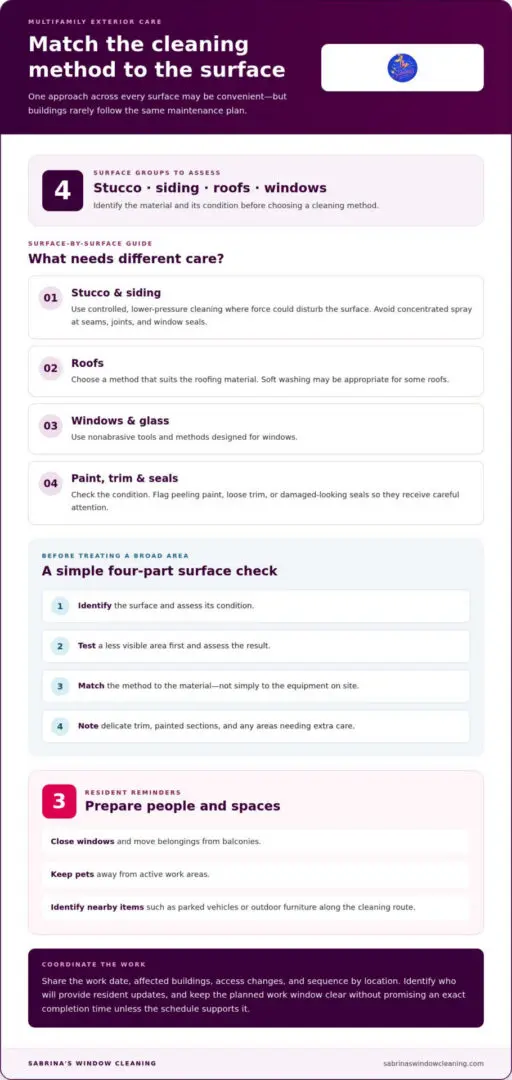
Stucco, siding, roofs, and windows need surface-specific care. Use controlled, lower-pressure cleaning where force could disturb stucco or siding, and avoid directing concentrated spray at seams, joints, or window seals. Roof cleaning should suit the roofing material; soft washing may be appropriate for some roofs. Glass needs nonabrasive tools and methods designed for windows.
Before treating a broad area, identify the surface and its condition. Painted sections, delicate trim, and glass can respond differently, even on the same building. Test a less visible area first and assess the result. Match the cleaning method to the material, not simply to the equipment on site. That small distinction can prevent an unwanted “before and after” surprise.
Property managers can map surfaces by building. Note stucco walls, siding sections, roof areas, and window types separately. Flag peeling paint, loose trim, or damaged-looking seals for careful attention. Clear notes help crews understand where methods should change. One approach across every surface may be convenient, but buildings rarely follow the same maintenance plan.
Resident and Property Preparation
An association can prepare residents by sharing the work date, affected buildings, and expected access changes. Ask residents to close windows, move balcony belongings, and keep pets away from active work areas. Managers can also identify parked vehicles or outdoor furniture near the cleaning route. A simple notice helps residents avoid entering a work zone unexpectedly.
Before work begins, walk the property with the manager’s site plan. Mark entrances, resident paths, outdoor seating, and areas requiring temporary access changes. Confirm how residents will receive updates, such as through an association email or lobby notice. A clear communication contact helps prevent conflicting instructions.
Managers should share the sequence by building and location. For example, tell residents which entrance or walkway may be affected first. Keep the message practical: identify the area, explain what residents should move, and give the planned work window. Avoid promising exact completion times unless the schedule supports them. Clear updates let residents plan around cleaning without turning a routine maintenance day into a guessing game.
After preparation, managers can coordinate the requested scope by surface and access area. For glass-focused work, professional window cleaning can address exterior windows as part of the property’s maintenance plan.
Apartment complex cleaning
Apartment complexes combine homes, shared paths, and service spaces. A cleaning plan should treat each zone according to its use, rather than as one oversized surface. For example, a busy entrance may need a different schedule than a quiet side walkway.
Cleaning frequency depends on resident traffic, property size, and shared-area use. A large Sarasota property with active common spaces has different needs from a smaller complex with quieter paths. Start by listing shared exterior areas, then note how residents use each space and set priorities accordingly.
Divide the property into practical work zones, such as building entrances, walkways, parking areas, and shared outdoor spaces. A zone map helps managers describe the work clearly and gives crews a consistent sequence, rather than sending them back and forth across the grounds.
Next, identify the purpose of each area. Residents may track dirt along a main walkway, while a side path sees less daily use. A parking area has different cleaning needs from a building entrance. These distinctions help managers identify high-use spaces and areas that may need less frequent attention.
Build the schedule around those differences. Give busy areas regular attention, then plan other shared spaces according to their use and condition. Avoid defaulting to one frequency for the entire property. A uniform calendar may look tidy on paper, but it can miss where residents actually walk.
Property size also shapes the work sequence. A complex with several buildings may be easier to organize by building or nearby zones. Managers can group connected walkways with their nearest entrances. This makes the scope easier to review and keeps the plan focused on actual property areas.
Use a simple site record to track each zone. Include its location, surface, resident use, and most recent cleaning. For example, label a shared entrance separately from a rarely used side path. These notes give managers a practical basis for adjusting schedules as use patterns change.
Review the plan when property use changes. A newly active outdoor gathering space may need more attention than before. A walkway affected by construction or landscaping may also warrant a schedule review. Managers can update the affected zone without changing the rest of the property’s plan.
Keep the schedule readable for residents and staff. Name each area plainly, such as “north entrance” or “pool walkway.” Pair the location with the planned work and resident access guidance. Clear labels reduce confusion, especially across a complex with multiple buildings and shared routes.
Finally, compare the planned schedule with actual conditions. If a busy entrance repeatedly looks dirty between visits, revisit its priority. If a quiet area stays clean, it may need less attention. Ongoing review helps apartment managers match cleaning to actual use instead of relying on guesswork.
Cleaning estimates and service coordination
A useful estimate starts with a clear property scope. List each building, surface, and shared area. Note access limits, resident traffic, and the requested cleaning. Sarasota associations can then compare proposals for the same work, not just the same headline. A vague scope can lead to mismatched expectations; details make an estimate easier to review.
The estimate depends on property details and requested scope. Building count, height, surface type, access, and included work all shape it. For example, a proposal covering windows differs from one that also includes roof areas. Ask for each work area to be listed clearly so the association can see what the estimate covers.
Compare proposals against the same checklist. Review the surfaces, cleaning methods, access plan, schedule, and cleanup responsibilities. Check whether shared walkways or entrances are included. If one proposal includes those areas and another doesn’t, the totals don’t represent equal work. An apples-to-apples comparison is more useful than comparing headline totals.
Insurance calls for a document-based comparison. Review each contractor’s current proof of insurance and the coverage details shown. Compare the named insured, coverage types, limits, and dates across proposals. Note any gaps between the work described and the documents provided. Don’t assume two certificates mean identical protection. Record questions for the association’s review before approving the work.
Read warranty terms carefully. Compare what each written warranty covers, its duration, exclusions, and the steps for making a claim. If a proposal includes no warranty language, don’t treat silence as coverage. A written scope and written terms give board members a shared reference, rather than relying on someone’s memory of a conversation.
Evaluate coordination alongside the work itself. Identify who will communicate schedule changes, share resident notices, and manage access around entrances. For a property with several buildings, review the proposed work sequence by location. A clear sequence helps residents know which areas may be active and helps managers track progress.
Before approval, the association can follow a simple review process:
- Send each contractor the same property scope and access notes.
- Compare included areas, methods, exclusions, and cleanup details.
- Review insurance documents and written warranty terms.
- Choose a communication contact and document the work sequence.
Keep the final estimate, insurance documents, warranty terms, and schedule together. For example, store them with the board’s maintenance records under the property name. That gives future board members a clear basis for reviewing completed work, updating the scope, and planning the next cleaning cycle.
Coastal condo exterior cleaning
Runoff requirements depend on local jurisdiction and drainage. For multi-unit condo exterior cleaning in Sarasota, identify the property’s local stormwater controls and where washwater flows. Sarasota associations should account for site drainage before exterior work begins. A drain map can show whether water reaches landscaped areas, streets, or nearby waterways. Don’t let runoff choose its own route.
Pressure washing can affect buildings, plants, residents, and waterways. Strong spray may damage vulnerable finishes or disturb landscaping. Water on walkways can create a slip hazard, and runoff can carry loosened dirt or cleaning products toward drains. Pressure, surface type, and water flow all shape the risks.
Coastal exposure brings salt deposits, windblown sand, and grime that may collect around windows, ledges, and sheltered corners. During a property walk, compare an exposed balcony with a protected entrance. Their surfaces may show different buildup. Record these locations so the cleaning plan reflects actual site conditions.
Before work starts, identify surfaces and nearby drainage routes. Mark storm drains, planted beds, pool areas, and resident paths. Note where runoff could gather or travel beyond the work zone. This review helps organize water management and gives crews clear boundaries around landscaping and shared areas.
Pressure washing isn’t right for every surface. Forceful spray can harm vulnerable coatings, loosen material, or push water into openings. Stucco, siding, trim, and window seals need suitable treatment. Match the method to each surface’s condition, and record worn or cracked sections before work begins.
Protect landscaping through careful preparation. Move portable planters away from active work areas. Protect delicate plants where appropriate, and direct spray away from foliage. Mark wet walkways and provide residents with another route. A clear path around active work helps prevent avoidable contact with water or equipment.
Trace runoff before cleaning begins. Check whether the ground slopes toward a storm drain. Keep loosened debris out of drains and manage washwater at the property. The association should identify applicable local stormwater requirements for its site, especially where drainage may lead toward a canal or bay.
Include coastal conditions in the maintenance record. Note where deposits return, which surfaces collect buildup, and how drainage moves. During later reviews, compare those observations with current conditions. A multi-unit condo exterior cleaning plan in Sarasota can then reflect the property’s actual exposure, surfaces, and runoff paths. Careful planning helps protect buildings, landscaping, residents, and nearby waterways.
The applicable requirements are the property’s local stormwater controls. The cleaning plan should account for drainage, manage washwater, and keep loosened debris out of drains.
Sabrina’s Window Cleaning: Window Cleaning
Sabrina’s Window Cleaning helps condo associations plan exterior maintenance around their property’s needs. Window Cleaning addresses exterior glass, while Pressure Washing can clean suitable exterior surfaces. Associations planning roof care can also consider Soft Wash Roof Cleaning. Hurricane Shutter Installation is available for properties preparing for storm season.
Turn to Sabrina’s Window Cleaning when your association is ready to discuss exterior cleaning for its buildings. Sharing the property’s surfaces and requested work helps clarify the next steps. For a condo with several buildings, outline which areas need attention and how residents use them. Contact Sabrina’s Window Cleaning to discuss your property’s exterior cleaning needs.
Make Your Next Maintenance Step Count
A thoughtful maintenance plan makes exterior care easier to manage over time. For multi-unit condo exterior cleaning in Sarasota, choose a next step that fits your association’s priorities, whether refreshing the windows or planning broader exterior work. A clear scope gives the board a practical starting point and keeps the property’s needs at the center of the decision.
Sabrina’s Window Cleaning offers Window Cleaning and Pressure Washing, along with Hurricane Shutter Installation. These services support different property needs, from routine exterior upkeep to storm-season preparation. Matching the work to the building’s priorities helps associations move forward with a focused plan rather than trying to tackle every maintenance task at once.
When your association is ready to discuss its property’s exterior cleaning needs, contact Sabrina’s Window Cleaning. A considered next step can help your community keep its exterior care on track.
Frequently Asked Questions
How do you access upper-floor windows safely?
Access planning starts with assessing the building’s height, window positions, and ground-level obstacles. A narrow courtyard, overhang, or nearby landscaping can affect which approach suits the property. Before work begins, identify the windows requiring attention and note access constraints for each building. The method should suit the building and window type, rather than relying on one approach for every elevation.
What exterior cleaning services are available for multi-unit condos in Sarasota?
Exterior cleaning options include Window Cleaning, Pressure Washing, Soft Wash Roof Cleaning, and Gutter Cleaning. The right scope depends on what the association wants addressed. For example, a property might request exterior glass care while scheduling roof or gutter maintenance separately. Sabrina’s Window Cleaning provides these services for residential and commercial properties, including in Sarasota and Bradenton.
How much does condo building exterior cleaning cost in Sarasota?
The estimate depends on the property and requested scope, and is provided after a quote request. Building size, surface types, access needs, and included areas all affect the estimate. A request covering exterior windows differs from one that also includes other surfaces. To make the estimate useful, describe the buildings and work areas you want addressed.
What factors affect the price of cleaning a multi-story condo exterior?
Building height is one consideration because it affects access to upper floors. Surface material, window layout, condition, and nearby obstacles also shape the work. For example, a tall building with recessed windows presents different access needs than a low-rise building with broad, unobstructed elevations. The estimate reflects the property’s particular scope, not simply its floor count.
How often should Sarasota condo buildings have their exteriors cleaned?
There isn’t one schedule that fits every Sarasota condo. Shared-area cleaning frequency depends on resident traffic, property size, and how each space is used. A frequently used entrance may need attention sooner than a quiet side path. Managers can review each area’s condition and use, then adjust the schedule as resident activity or property needs change.
Who is responsible for arranging and paying for exterior cleaning in a Florida condominium association?
The association’s governing documents determine how exterior maintenance responsibilities and costs are handled. The board or property manager can review the declaration, bylaws, and maintenance budget to identify the applicable process. For example, the documents may distinguish shared building elements from areas assigned to individual owners. Confirming that distinction helps the association plan work and communicate costs appropriately.
Which Sarasota exterior cleaning companies specialize in multi-unit condominium buildings?
Sabrina’s Window Cleaning provides exterior maintenance services suited to condominium properties, including Window Cleaning, Pressure Washing, Soft Wash Roof Cleaning, and Gutter Cleaning. Its services cover residential and commercial properties, including in Sarasota and Bradenton. Associations can define the buildings, surfaces, and work areas to include when planning a project. Choose a scope that matches the property’s maintenance priorities.
Disclaimer
All articles are designed to entice you to hire Sabrina's to clean your windows, not to teach you how to clean them. They are meant for entertainment purposes only. We are not responsible for the out come of your DIY cleaning project!