

Article by
Frank Sweeney
Hurricane shutter installation in Port Charlotte starts with choosing a style that suits your home and storm-preparation routine. Accordion shutters stay attached to the building and fold across openings; storm panels are separate pieces installed when needed. The practical differences come down to how you operate the shutters, where you store them, and how much handling you’re comfortable with.
It’s sensible to weigh more than appearance: a shutter should suit your home and feel manageable when storm preparations begin. No one needs a last-minute wrestling match with a panel. This guide explains the practical differences between accordion shutters and storm panels, what a design consultation and estimate can cover, and what to expect from installation in Port Charlotte.
You’ll also see how to think through the decision based on your home’s openings and your preferences, so you can move toward a choice with a clearer picture of the process.
Key Takeaways
- Compare accordion shutters, which stay attached to the home, with storm panels, which are stored separately and put in place when needed.
- A design consultation can help connect your preferred shutter style with your home’s openings and the practicalities of storm preparation.
- Clear estimates and project details make it easier to understand what the work involves before installation begins.
- For a residential shutter permit in Charlotte County, plans need to show shutter locations and opening sizes, including egress and rescue openings.
- Learn what to look for in installer reviews and quotes, and when Sabrina’s Window Cleaning’s shutter installation service may fit your needs.
Accordion shutters
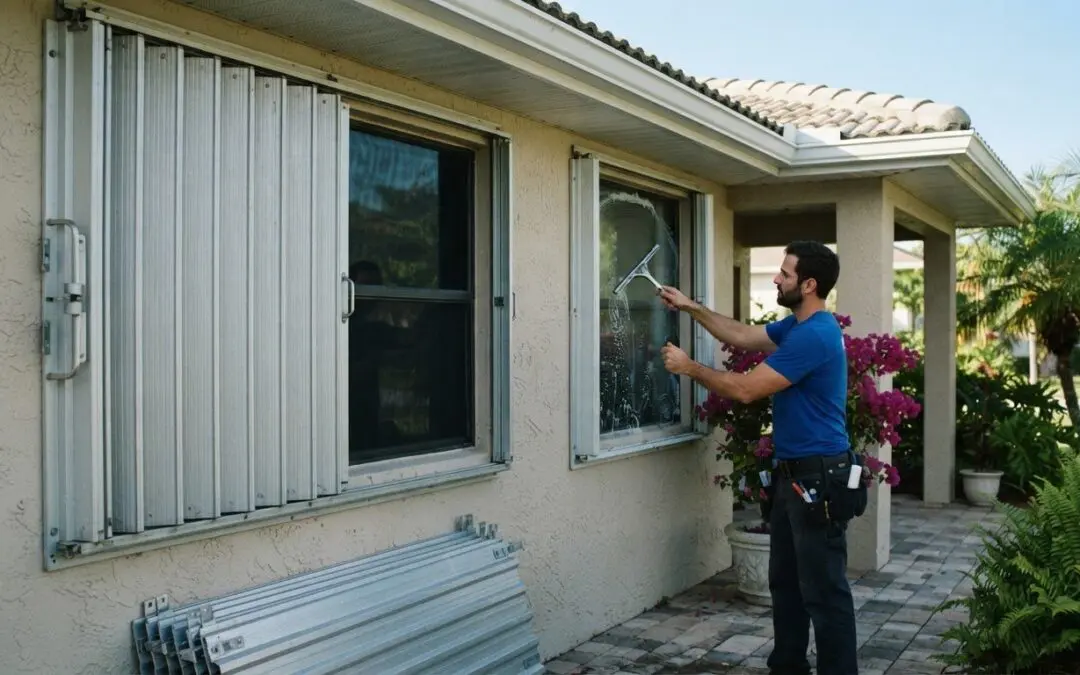
Accordion shutters fold across an opening from tracks mounted beside it. Before a storm, you draw the panels together and secure them over the window or door. They remain attached to the building between storms, so you don’t have to carry separate panels from storage. At a front window, the shutters are already beside the opening when preparation begins.
This fixed setup can suit homeowners who want a repeatable way to protect several openings. Each shutter must fit the size and location of its window or door. A patio slider, for instance, needs coverage across a wider opening than a small bedroom window. Clear access to the tracks matters too, because furniture, landscaping, or nearby fixtures can affect how the panels move.
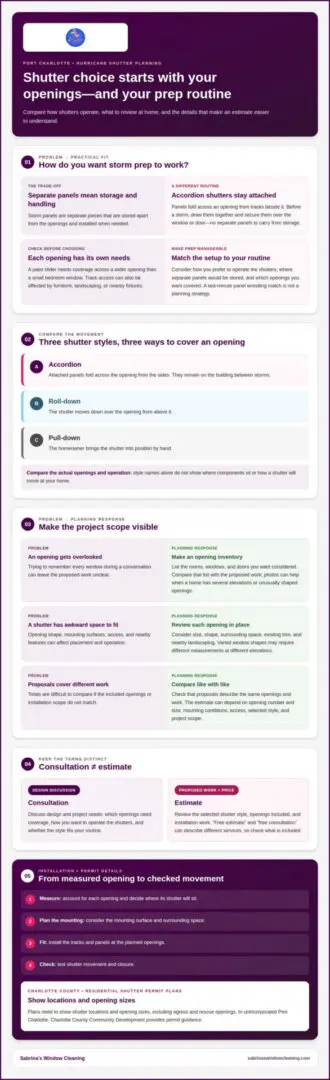
Accordion shutters are one option among aluminum roll-down and pull-down shutters. Roll-down shutters cover an opening by moving down from above it, while pull-down systems are brought into position by hand. Accordion panels instead fold from the sides. These styles differ in how they move and where their components sit, so consider the actual openings and how you prefer to prepare them, not just the style name.
List each opening you want included in the project plan. This makes the scope easier to follow: compare the living-room picture window, bedroom windows, and entry doors with the proposed work. It also helps you distinguish openings where attached shutters may suit your routine from those where a separate, hands-on setup works for you. In Punta Gorda and Port Charlotte, homes with varied window shapes may require different measurements at different elevations.
- Accordion: attached panels fold across the opening from the sides.
- Roll-down: a shutter moves down over the opening from above.
- Pull-down: the homeowner brings the shutter into position by hand.
Installation planning starts with measuring each opening and deciding where the shutter will sit. The mounting surface and surrounding space affect the layout. The tracks and panels are then fitted, and their movement and closure are checked. For hurricane shutter installation in Port Charlotte, planning opening by opening helps prevent a common headache: realizing an awkward window was overlooked just as storm preparations begin.
The estimate depends on the number and size of openings, mounting conditions, access, the selected shutter style, and the project scope. Compare proposals by checking that they describe the same openings and work, rather than comparing totals for different scopes. This makes it easier to weigh accordion shutters against other styles while considering operation and storage.
Design consultations and estimates
A useful consultation turns a general request into a plan for your home. In Port Charlotte, start by identifying which windows and doors need coverage. Explain your priorities too, such as ease of operation or avoiding the storage and handling of separate panels. These details help shape the project around the property rather than a rough guess.
An in-home consultation can account for details visible at the property. Review each opening, its shape, and the space around it. A wide slider beside a lanai, for example, presents different planning needs from a compact bedroom window. Existing trim, access, and nearby landscaping can also affect how a shutter fits and operates.
Bring a simple list of the rooms, doors, and windows you want considered. Compare it with the proposed work so you can spot any omissions. Photos can help keep the discussion focused, especially when the property has several elevations or unusually shaped openings. A clear list is more reliable than trying to remember every window during the conversation.
The estimate should make the proposed scope easy to understand. Look for the selected shutter style, the openings included, and the installation work. If the plan covers a living-room window but not a nearby door, that difference should be clear before you proceed. A detailed document helps you compare options without reducing the decision to one total.
“Free estimate” and “free consultation” describe different things. An estimate outlines proposed work and its price; a consultation discusses design and project needs. Check what the specific service includes rather than assuming the terms refer to the same appointment. This distinction helps you understand what an estimate covers and what a broader design discussion involves.
Use the consultation to settle practical choices before installation planning. Consider which openings need coverage, how you want to operate the shutters, and whether the style suits your routine. A homeowner who prefers attached panels ready at each opening may choose a different arrangement from someone comfortable storing and handling separate pieces.
In unincorporated Port Charlotte, Charlotte County Community Development provides permit guidance. Residential shutter plans must show shutter locations and opening sizes, including egress and rescue openings. An accurate opening inventory is useful for design and helps document where the planned protection will go.
A thoughtful estimate connects the walkthrough, selected style, and opening list. For a closer look at hurricane shutter installation, use those details to frame the next conversation and keep the project scope clear.
Installation experience and project examples
A completed shutter installation involves more than attaching panels to a wall. The work follows a practical sequence: prepare each opening, position the mounting components, fit the shutters, and test their movement. For a Port Charlotte home, working opening by opening keeps the plan organized and helps prevent mix-ups during installation.
A typical full-home shutter installation in Charlotte County takes 1-3 days. That’s a planning reference, not a stopwatch promise for every house. The number and layout of openings, site access, and selected shutter system all shape the work. A straightforward row of accessible windows differs from a home with varied elevations and tight working spaces.
Consider a home with a front entry, a side window, and a screened lanai. Each opening needs to be assessed in its own location, with enough room to fit and operate the shutter. A sensible work sequence might begin where access is easiest, then move to tighter areas. This illustrates project planning, not a report about a specific completed property.
During installation, the visible work follows a few clear steps:
- Prepare: Clear the immediate area around each window or door.
- Fit: Position shutter components at the planned opening.
- Operate: Move the installed shutter through its intended path.
- Review: Walk through the completed locations and note questions.
Make the work area easier to access by moving patio furniture, planters, and loose items away from openings. Clearing a lanai, for example, gives the crew room to work. Indoors, move curtains or furniture away from a window to keep the immediate area accessible. A little preparation can prevent obstacles during installation.
After installation, review each completed opening, not just the most visible one. Walk through the home room by room and compare the work with the planned locations. Test shutter movement as demonstrated and note any questions beside the relevant opening. Clear location notes make it easier to discuss a specific window or door.
A final walkthrough gives you a chance to see how each shutter operates and raise any questions about the completed work. Keep project notes with your opening list, especially if several areas were included. Tracking each location makes the installation easier to review and helps you prepare for storm season.
Permit paperwork is another item to keep with the opening list. Charlotte County residential shutter permit applicants should provide the complete product number, including the digits after the decimal point; the page gives 251.1 as an example of a complete number for a general number of 251. Keeping that detail handy can make the project records clearer.
Hurricane shutter installation in Port Charlotte
In Port Charlotte, hurricane protection starts with choosing coverage for each opening and planning around local permit requirements. Consider these points before beginning the paperwork.
Shutter Costs and Protection
Shutters cover openings when deployed, while impact windows remain in place. Compare how each option fits your home, desired coverage, and preparation routine. Project cost depends on the system, opening sizes, access, and installation scope. Compare estimates that describe the same windows, doors, and work. A side-by-side comparison is more useful than judging totals for different scopes.
Code Requirements and Permits
Charlotte County reviews residential shutter work for applicable Florida Building Code structural requirements, including wind loads and flood loads. Residential plans must show shutter locations and opening sizes, including egress and rescue openings. For a residential shutter permit, applications require 2 original signed and sealed documentation sets in person, or 1 original signed and sealed set online.
When ICC valuation is at least $50,000, the building fee is 0.004 times that valuation, plus a surcharge of 0.025 times the building fee. A Notice of Commencement is required when the direct contract price is greater than $5,000, and must be submitted before scheduling the first inspection. Charlotte County Community Development provides permit guidance. It’s not glamorous reading, but paperwork is easier before installation day.
Installer Reviews and Quotes
Reviews can offer context about communication, care around a home, and the project handoff. A quote should describe the shutter style, openings, and work included. Compare matching scopes, then read any written warranty terms rather than assuming coverage is identical. If a proposal says “whole home,” check which openings that phrase covers.
Measuring and Installation Preparation
List each window and door by room, then record its location and opening size for the project plan. Clear furniture, planters, and loose items from work areas. A typical full-home shutter installation in Charlotte County takes 1-3 days. Qualifying shutters may offer Charlotte County homeowners up to 45% potential wind insurance savings. DIY errors can include missed openings or poor fit, so careful measurements and installation checks matter. Review warranty terms in writing, too.
Hurricane shutter installers serving Port Charlotte FL reviews and quotes
Reviews and written quotes serve different purposes. Reviews describe past customers’ experiences; quotes spell out proposed work for your home. Read them as separate sources of information. A homeowner’s account of accordion shutters may help you understand that experience, while your quote should address the work proposed for your property.
Look for useful details in reviews, such as communication, care around landscaping, or how the final walkthrough went. A comment about a narrow side-yard entrance, for example, gives more context than a star rating alone. It still reflects one person’s project, not a universal promise. Reviews are helpful snapshots, not guarantees of your own experience.
Notice whether a review describes the shutter style or home layout. Someone discussing a single entry door may have had a different project from a homeowner with several window types. That context helps you judge how relevant the experience is to your plans. Look for recurring themes across comments instead of relying on one unusually positive or negative review.
Then read the quote for specifics about the proposed work. Look for the shutter style, installation scope, and project terms, including any written warranty language. The document should make clear what is included and excluded. A simple comparison checklist can help:
- Project scope: Does the quote describe the work requested?
- Style and operation: Is the proposed shutter system identified?
- Terms: Are scheduling, payment, and warranty details written clearly?
- Open questions: Are unclear phrases explained before you decide?
When comparing estimates, make sure they describe equivalent work. A proposal might cover a different shutter style or leave out part of the requested scope, which can explain why totals vary. Comparing mismatched quotes is like comparing a grocery list with a recipe: both contain useful information, but they are not measuring the same thing.
Bring questions to the estimate discussion. Ask how the proposal addresses unusual layouts, what its written warranty terms cover, and whether any line needs clarification. If “full-home coverage” appears, ask for a clear description of what that means in the quote. Specific wording makes the project easier to understand before you agree to the work.
Keep useful reviews and the written proposal together. After installation, they can help you compare the planned scope with the completed work and prepare questions for the final walkthrough. Reviews inform your expectations; the quote documents your project. Each has a distinct role.
Ready to discuss your project? Request a hurricane shutter installation quote with your questions in hand.
Sabrina’s Window Cleaning: Window Cleaning
Sabrina’s Window Cleaning provides hurricane shutter installation for homeowners planning storm protection, along with window cleaning to keep exterior glass clear. When you’re ready to turn your selected style and opening plan into a project, the company can help with shutter installation. Window cleaning is also useful once shutters are open and the glass is accessible again.
For broader exterior upkeep, Sabrina’s Window Cleaning also offers pressure washing and soft wash roof cleaning. These services address different parts of the property, so choose the work that fits your home. A clear scope helps keep each request specific, whether you’re planning shutters or maintaining clean windows.
To discuss your home’s shutter installation needs, contact Sabrina’s Window Cleaning or visit the website.
Make Your Next Step a Clear One
Storm preparation becomes easier to manage when your next step is specific. Start with the openings you want covered, the shutter style that fits your routine, and any questions about the project scope. That gives your planning a useful direction instead of leaving it on the “deal with later” list, where household tasks go to nap.
Hurricane shutter installation in Port Charlotte is about more than choosing panels. It’s about creating a plan that suits your home. Sabrina’s Window Cleaning provides hurricane shutter installation, along with window cleaning and pressure washing for exterior upkeep.
If you’re ready to talk through your home’s shutter needs, contact Sabrina’s Window Cleaning. A clear conversation can help you take the next step with confidence and keep storm-season planning moving forward.
Frequently Asked Questions
Can I compare several shutter styles?
Yes. Compare styles by how they cover openings, how they operate, and what storage or handling they involve. Accordion shutters, for example, fold across openings from the sides, while separate storm panels need to be stored when not in use. Consider a patio door and an upstairs window separately, since access and daily use can affect which arrangement is practical for your home.
What goes into my shutter estimate?
A shutter estimate reflects the scope of work for your home. It should account for the included openings, their dimensions, the selected style, and installation conditions at each location. A quote covering a sliding door and several windows has a different scope from one covering only front-facing windows. Check that the written description matches the areas you want addressed.
What is the hurricane shutter installation cost in Port Charlotte, FL?
The cost depends on your project, and the price is provided after a quote request. The number and size of openings, chosen shutter style, access, mounting conditions, and work scope all affect the estimate. A home with a broad lanai door and several window shapes may require different planning from one with similar, easily accessed openings. Compare quotes with matching scopes.
What types of hurricane shutters are available in Port Charlotte: accordion, roll-down, panels, or Bahama?
Styles to compare include accordion shutters, roll-down shutters, storm panels, and Bahama shutters. Accordion shutters fold across openings; roll-down shutters move down over them, while storm panels are separate pieces installed when needed. Bahama shutters are another style to consider. Compare how each option fits your openings, storage preferences, and preparation routine before settling on a design.
Charlotte County wind speed and impact protection requirements for shutters
The article says shutter systems are Florida Building Code approved and rated for Charlotte County wind loads, and permits are reviewed for structural requirements including wind loads. It gives no specific wind-speed or impact-protection requirements.
Disclaimer
All articles are designed to entice you to hire Sabrina's to clean your windows, not to teach you how to clean them. They are meant for entertainment purposes only. We are not responsible for the out come of your DIY cleaning project!