

Article by
Frank Sweeney
Sabrina died in 2020, leaving me a single father to the best daughter any dad could ever want. Hoping she doesn’t notice my mistakes and when she does, try to make her think it was all part of the plan.
What if the secret to surviving the 2026 Atlantic hurricane season isn’t a frantic, last-minute trip to the hardware store for the last sheet of warped plywood? We’ve all been there, balancing on a ladder in the rising wind while trying to wrestle heavy panels into place. It’s exhausting, and with the 2026 forecast predicting up to 14 named storms, the pressure to get it right is real. You’re likely tired of the generic advice from government sites and the physical toll of DIY preparation. Focusing on hurricane proofing your windows is the smartest move you can make for your home’s safety and your own peace of mind.
We understand that your home is your sanctuary, and protecting it shouldn’t feel like a second job. This guide offers a clear, expert-led plan to harden your home’s exterior without the typical stress. We’ll explore why professional shutter installation and clear gutters are your best defense, ensuring you’re ready for whatever the season brings. From understanding the latest building codes to avoiding the “plywood panic,” you’ll gain the confidence to face the storm season with a steady hand and a secure home.
Key Takeaways
- Learn why the June 1st to November 30th window is critical for Florida homeowners and how to prepare for the 2026 forecast.
- Discover the essential “Oh-Snap” kit items that provide real comfort, moving beyond generic supplies to things you’ll actually use.
- Stop the plywood panic by exploring the most effective methods for hurricane proofing your windows without the back-breaking DIY struggle.
- Understand how proactive gutter maintenance acts as a secret weapon against water damage and foundation issues during heavy rains.
- Master the post-storm transition with a clear plan for safe shutter removal and damage assessment once the all-clear sounds.
The June 1st Jitters: Understanding Hurricane Season in Florida
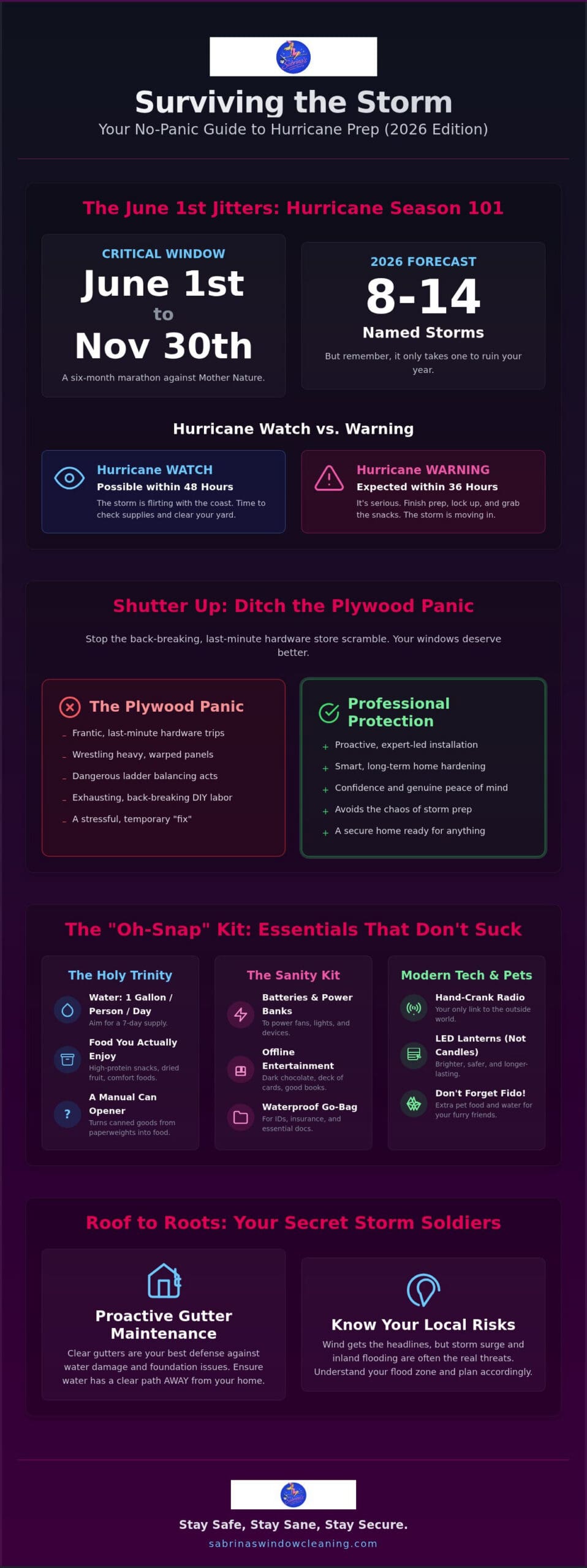
In Florida, the calendar doesn’t just mark the start of summer; it signals the beginning of a six-month marathon. From June 1st to November 30th, we keep one eye on the sky and the other on the tropics. While the 2026 forecast suggests a below-normal season with about 8 to 14 named storms, it only takes one to change your year. This period often feels like the longest half-year on record for anyone responsible for a roof and four walls.
Understanding the “Big Ones” helps you decide when to hunker down and when to head out. A Tropical Storm brings winds between 39 and 73 mph, while Category 1 hurricanes start at 74 mph. By the time a storm reaches Category 3 or higher, it’s considered a major hurricane with winds exceeding 111 mph. These categories are based on sustained wind speeds, but they don’t tell the whole story of the potential damage a slow-moving system can cause to your property.
Wise homeowners start their 2026 prep in April. This allows you to avoid the plywood panic that consumes hardware stores the moment a storm enters the Gulf. It’s also the perfect time to evaluate your long-term solutions, like hurricane proofing your windows with professional shutters rather than relying on last-minute boards. Don’t let the “Cone of Uncertainty” rattle you; it represents the probable track of the storm center, not the entire area that will feel the impact. Even if you aren’t in the center, you can still experience significant wind and rain.
Hurricane Watches vs. Warnings
A Hurricane Watch means conditions are possible within 48 hours. Think of it as the storm is flirting with our coastline. This is your cue to check your supplies and clear your yard of any debris. A Hurricane Warning is much more serious, indicating that hurricane-force winds are expected within 36 hours. The storm is moving in, so you should have already finished hurricane proofing your windows, locked the doors, and grabbed the snacks. Timing is everything, and that 36 to 48-hour window is your final chance for meaningful action.
Local Risks: Storm Surge and Inland Flooding
Wind gets all the headlines, but in cities like Sarasota and Bradenton, water is often the real threat. You don’t need a beach view to be at risk; inland flooding can happen anywhere if the drainage system is overwhelmed by torrential downpours. Storm surge is the bully of the coastline that causes the most property damage. Understanding your flood zone is essential, as these boundaries can shift with updated modeling and new building codes. Protecting your home means looking from the roof to the roots to ensure water has a clear path away from your foundation.
The Oh-Snap Kit: Essential Supplies That Don’t Taste Like Cardboard
Most hurricane kits look like they were designed for a fallout shelter, but your survival gear doesn’t have to be depressing. Once you’ve handled the structural side by hurricane proofing your windows, it’s time to stock the pantry. The “Holy Trinity” of prep starts with enough water for your family, a stack of non-perishable foods that you actually enjoy, and a sturdy manual can opener. Without that last one, your expensive canned tuna is just a very heavy paperweight. Choose foods that provide comfort, like high-protein snacks and dried fruits, rather than just the cheapest bulk items you can find.
You’ll quickly realize that the thing you miss most isn’t the television; it’s the ceiling fan. Florida’s humidity is relentless when the air conditioning dies. Stock up on high-quality batteries and portable chargers to keep small handheld fans and your devices running. While hurricane proofing your windows protects the glass, the “Sanity Kit” protects your nerves. When the Wi-Fi disappears, a secret stash of dark chocolate and a deck of cards will do more for your mental health than any weather update. Keep your insurance documents and IDs in a waterproof go-bag so you aren’t hunting for essential paperwork in the dark.
Food and Water Math for Families
Calculations for your supplies are simple but non-negotiable. Plan for one gallon of water per person per day for at least seven days. This covers both hydration and basic hygiene. When picking canned goods, choose low-sodium options to keep your thirst in check. Remember that Fido needs a kit too. Pack an extra week of pet food and plenty of water for your furry companions to ensure they stay as calm as possible during the storm.
The 2026 Tech Checklist
Modern prep requires modern tools. A solar-powered or hand-crank radio is your only reliable link to the outside world when cell towers take a nap. Swap out old candles for LED lanterns and flashlights; they’re brighter, cooler, and won’t start a fire if they’re knocked over. External battery banks should be fully charged by the time the first clouds roll in. If you’re still worried about the physical labor of securing your home, consider professional hurricane shutter installation to save your energy for the storm itself. These battery-powered tools ensure you stay informed and safe without relying on a failing power grid.
Shutter Up: Professional Protection vs. The Plywood Panic
Taping an “X” across your glass is one of the most persistent myths in storm prep. It doesn’t prevent breakage; it just creates large, dangerous shards of glass and leaves a sticky mess for you to clean up later. True hurricane proofing your windows requires a physical barrier that can withstand high-velocity impact. While many homeowners resort to the “Plywood Panic,” wrestling heavy, splinter-filled boards onto a ladder is a recipe for a bad back and a bruised ego. These makeshift solutions often lack a proper fit, leaving gaps where wind can enter and pressurize your home, potentially leading to roof failure.
Choosing the right protection makes all the difference in your seasonal stress levels. Accordion shutters offer quick, one-person deployment, while Bahama shutters provide a permanent, stylish aesthetic that also offers shade during the hot Florida summer. Classic storm panels remain a cost-effective choice, though they require significant storage space and more labor to install. For those who want to skip the heavy lifting entirely, hurricane shutter installation Florida services through Sabrina’s ensure your home is hardened by experts who have been protecting local families since 1989. We take pride in our meticulous approach, ensuring every fastener is secure and every panel fits perfectly.
The Dangers of Procrastination
Waiting until a Hurricane Watch is issued to find your wingnuts and hardware is a dangerous game. By then, the wind is already picking up, and the local hardware store is likely out of stock of essential supplies. High-reach windows pose a significant risk for DIYers on ladders during gusty conditions, and a single slip can lead to an emergency room visit. Professional installation ensures every panel has a tight seal, which is critical for preventing wind-driven rain from entering the tracks and causing interior water damage. Letting a seasoned team handle the heights keeps you safely on the ground with your family.
Maintaining Your Hardware Year-Round
Your shutters are only as good as their last maintenance check. Salt spray in coastal Florida can corrode shutter tracks in under a year, leading to seized hardware exactly when you need it to move. Regularly cleaning the tracks of salt, sand, and debris prevents the “crunch” that happens when shutters get stuck in their tracks. Apply a silicone-based lubricant to the moving parts and test the operation every few months to ensure they slide smoothly. This simple routine ensures that hurricane proofing your windows remains a functional reality rather than a forgotten chore on your to-do list. If your tracks are already showing signs of neglect, a professional cleaning can restore their operation before the next storm arrives.
Roof to Roots: Why Your Gutters Are Secret Storm Soldiers
While you are busy hurricane proofing your windows, don’t forget to look up. Your gutters are the silent guardians of your home’s structural integrity. When they are clear, they channel thousands of gallons of water away from your siding and foundation. If they are clogged with pine needles or oak leaves, you face the “Waterfall Effect.” This happens when water backs up, seeps under your shingles, or pours directly against your foundation, turning a heavy tropical rain into a potential indoor pool.
Maintaining roof health is equally vital for storm resistance. We recommend soft wash roof cleaning Florida to remove organic growth like Gloeocapsa magma. This dark algae doesn’t just look bad; it can actually lift the edges of your shingles. Once a shingle is lifted, even moderate hurricane winds can get underneath and strip your roof bare. A clean roof is a wind-resistant roof, providing the first line of defense against the elements.
The Gutter-Foundation Connection
Water is surprisingly heavy and destructive. When your downspouts aren’t working, that weight settles right at the base of your home. Professional gutter cleaning Sarasota is essential for preventing the soil erosion that leads to foundation cracks. You can perform a quick “tennis ball test” by dropping a ball down the spout to check for obstructions, but don’t risk a fall for a weekend hobby. Two-story gutters require specialized equipment and a steady hand. If you want to ensure your home stays dry from the roof to the roots, schedule a professional gutter inspection today.
Landscaping for Storm Safety
Your yard is full of potential missiles. During a “Fly-Away Audit,” take ten minutes to walk around and identify anything not bolted down. Patio chairs, potted plants, and even decorative gnomes can easily shatter glass, undoing all your hard work hurricane proofing your windows. Check your landscaping materials too. While rocks look great, they can become dangerous projectiles in high winds, whereas mulch generally stays put or washes away harmlessly. Trim any “danger limbs” that hang over power lines or your roof. Keeping these branches at least ten feet away from your structure significantly reduces the risk of impact damage during the 2026 season.
The Calm After the Storm: Safe Shutter Removal and Cleanup
Once the local authorities give the official all-clear, it is tempting to collapse onto the sofa and ignore the exterior of your home for a few days. However, the post-storm phase is just as critical for your property’s health as the preparation was. Before you even touch a shutter, perform a slow walk around your perimeter to assess for damage. Look for downed power lines, leaning trees, or structural shifts. Take clear photos of every side of your home and any debris in the yard before you begin cleaning up. This documentation is your most valuable asset if you need to file an insurance claim, so follow the “don’t touch that” rule for major damage until an adjuster gives the green light.
Leaving your shutters up for weeks after the clouds have parted is a common Florida mistake. Beyond making your house look like a deserted bunker, those panels trap intense heat and humidity against your window frames. This creates a breeding ground for mold and mildew that can damage your seals and paint. Removing them promptly is the final step in hurricane proofing your windows for the long term. To restore your home’s curb appeal and remove the abrasive salt spray left behind by coastal winds, consider pressure washing Sarasota. A professional wash removes the storm grime and corrosive minerals, giving your home that just-scrubbed glow it deserves after a rough week.
Safe Shutter Storage
Proper storage ensures your protection is ready for the next threat. Before stacking panels in the garage, wipe them down with a damp cloth to remove salt and dirt. Storing them dirty can lead to corrosion or mold colonies that will be much harder to clean next year. Label your hardware meticulously. Mark each panel with its specific location, such as “Kitchen East” or “Guest Bed North,” because Window A and Window B look identical when you are trying to beat a ticking clock. If the physical toll of removal is too much, our professional removal services can handle the heavy lifting while you focus on getting your household back to normal.
Exterior Maintenance Reset
The day after the 2026 season ends is the best time to start planning for 2027. Evaluate how your home held up. Check your roof for missing shingles or granules that might have washed into the gutters. If you invested in hurricane proofing your windows, inspect the tracks for any debris that might have blown in during the high winds. A thorough window cleaning is often necessary to remove the thick salt crust that standard rain doesn’t wash away. By resetting your maintenance schedule now, you ensure that your home remains a hardened sanctuary, ready to face whatever the Florida sky decides to throw your way next year.
Secure Your Sanctuary for the 2026 Season
Facing the Florida hurricane season doesn’t have to be a source of constant anxiety. By prioritizing hurricane proofing your windows and maintaining clear gutters, you’re building a layer of defense that protects both your property and your peace of mind. A proactive approach, started well before the first tropical wave develops, is the best way to avoid the stress of last-minute hardware store runs and back-breaking DIY labor. Whether it’s ensuring your roof is free of organic growth or having your shutters professionally tested, every small step contributes to a safer home.
At Sabrina’s, we take immense pride in our craft and the meticulous care we bring to every client’s environment. Serving Florida homeowners since 1989, our family-owned team offers expertise you can trust for comprehensive exterior care from roofs to windows. Don’t wait for the clouds to turn gray; book your hurricane shutter installation today! You’ve worked hard for your home, and we’re here to help you protect it with confidence and neighborly warmth. Stay safe, stay prepared, and enjoy the sunshine knowing you’re ready for whatever the skies may bring.
Frequently Asked Questions
When does hurricane season officially start and end in Florida?
The Atlantic hurricane season officially begins on June 1st and concludes on November 30th each year. This six month window represents the time when tropical systems are most likely to develop in the Atlantic basin. While storms can occasionally form outside these dates, the vast majority of activity occurs during this period. Staying alert during these months is a standard part of life for Florida homeowners who value property protection and safety.
Is plywood as effective as professional hurricane shutters?
Plywood is a temporary makeshift solution that lacks the impact rating of engineered products. Professional shutters are tested to withstand high velocity debris and extreme pressure changes that plywood simply cannot handle. Additionally, improper installation of heavy boards can lead to gaps where wind enters your home. For true peace of mind, investing in hurricane proofing your windows with rated shutters is a far superior choice for long term structural security and safety.
How often should I have my gutters cleaned during the storm season?
We recommend a thorough cleaning at the start of the season in June and a follow up check in late August. If your property has overhanging oaks or pines, you might need monthly inspections. Heavy tropical rains can quickly wash debris into your downspouts, causing blockages that lead to foundation damage. Keeping these channels clear ensures that water moves away from your home rather than pooling against your walls during a storm event.
Can I leave my hurricane shutters up all summer long?
Leaving shutters closed for months is generally discouraged because it traps heat and moisture against your window seals. This environment encourages mold growth and can damage your exterior paint over time. Many local homeowners associations also have rules against keeping a home “boarded up” when no active threat exists. It’s better to have a system that allows for quick deployment and removal to maintain your home’s health and aesthetic appeal throughout the year.
Does insurance cover damage if I didn’t have my shutters installed?
Most standard policies cover wind damage, but you will likely miss out on significant premium credits if you don’t use documented protection. Florida law requires insurers to offer discounts for homes with full opening protection. If a storm hits and your windows aren’t protected, you still have to pay your hurricane deductible, which is often 2% to 5% of your home’s total insured value. Using shutters is a smart financial move to minimize out of pocket costs.
What should I do if my roof starts leaking during a hurricane?
If a leak begins during active winds, your priority is staying safe inside. Do not attempt to go onto the roof or outside to apply a tarp until the storm has completely passed. Place buckets to catch the water and move furniture or electronics away from the affected area. Once it is safe, document the damage with photos and contact a professional for an inspection to see if your shingles or underlayment require immediate attention.
How do I know if my trees need trimming before a storm?
Look for dead or decaying branches and limbs that hang within ten feet of your roofline or power lines. Trees with “V-shaped” crotches are more prone to splitting under high wind stress than those with “U-shaped” joints. If you notice a thinning canopy or mushrooms growing at the base of the trunk, these are signs of internal rot. Trimming these hazards early prevents them from becoming projectiles that could compromise your exterior.
Why is professional shutter installation safer than doing it myself?
Professional installation removes the physical risk of climbing tall ladders while wrestling with heavy, awkward panels in rising winds. Experts ensure that every fastener is set to the correct depth and torque to prevent the system from failing under pressure. When hurricane proofing your windows, a small error in DIY alignment can lead to catastrophic failure. Letting a seasoned team handle the heavy lifting ensures your home is truly hardened without risking a personal injury.
Disclaimer
All articles are designed to entice you to hire Sabrina’s to clean your windows, not to teach you how to clean them. They are meant for entertainment purposes only. We are not responsible for the out come of your DIY cleaning project!