

Article by
Frank Sweeney
Real storm defense isn’t won in a chaotic supermarket aisle while wrestling a neighbor over the last flat of warm bottled water. If you’ve lived in Florida for more than five minutes, you already know the special brand of dread that comes with last-minute hardware store runs and slick ladders. Sensible hurricane season preparation shouldn’t feel like an extreme contact sport, nor should it require an acrobatic stunt show in the middle of a tropical downpour.
You deserve a fortified exterior without the midnight plywood panic or the physical danger of wrestling heavy shutters in rising winds. In this guide, you’ll learn how to establish a calm, proactive defense strategy weeks before peak season arrives, ensuring your windows are properly secured and your roof drainage pathways can handle relentless tropical rain. Here is your practical roadmap to protecting your home envelope early so you can kick back and weather any forecast with total confidence.
Key Takeaways
- Effective hurricane season preparation begins months ahead of the forecast cone, saving you from chaotic lines and flying lawn decor.
- Protecting window integrity is vital for maintaining balanced air pressure inside your home, debunking outdated myths like blue masking tape.
- Clogged gutters turn tropical rainfall into home-invading waterfalls, making early drainage clearing your best defense against water damage.
- A structured three-phase countdown replaces last-minute panic with clear, manageable exterior home tune-ups.
- Handing shutter deployment over to seasoned pros spares you from wrestling razor-sharp metal panels on wobbly ladders in gusty winds.
Demystifying Florida Hurricane Season: Facts, Fluff, and Flying Lawn Flamingos
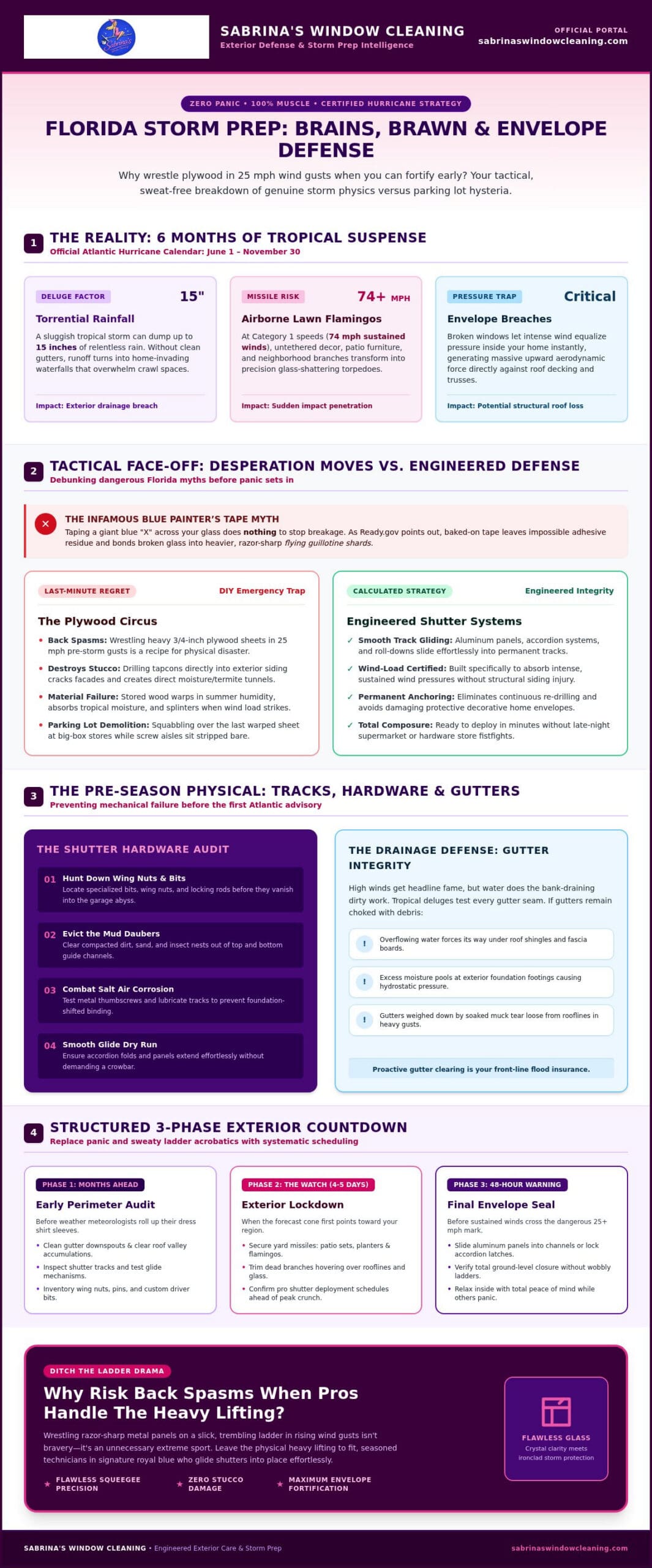
Every year, the official Atlantic calendar stretches from June 1 through November 30. That gives us six full months of tropical suspense. Somewhere around late August, local television meteorologists famously roll up their dress shirt sleeves, signaling that homeowners should immediately descend into pandemonium. Yet real tropical cyclone preparedness isn’t about buying out the hardware store’s generator aisle or hoarding enough tuna to feed a mid-sized navy. It’s about protecting the physical perimeter before the sky turns purple.
Sensible defense focuses on the actual hazards that threaten your home:
- Torrential rainfall: Tropical moisture dumps inches of water an hour, testing every gutter seam.
- Airborne projectiles: Anything left untethered outside quickly becomes a neighborhood missile. Yes, that includes plastic lawn flamingos.
- Envelope breaches: Broken windows equalize air pressure in the worst possible way, pushing up against roof trusses from underneath.
The True Cost of Waiting for the 48-Hour Cone
Waiting until a storm enters the two-day cone triggers an annual Florida circus. You get to enjoy demolition-derby driving in big-box parking lots, squabbles over the last bent sheet of OSB, and bare shelves where tapcon screws used to live. Supply chains dry up in hours. Worse yet, seasoned professional installers book up days in advance. Once watches turn into warnings, you’re on your own on that slippery ladder.
Understanding Hurricane Classifications Without Needing a Meteorology Degree
Wind scale numbers don’t tell the whole story. A lollygagging tropical storm can drop fifteen inches of relentless rain, overwhelming uncleaned gutters and flooding basements or crawl spaces. On the flip side, even a modest Category 1 system generates 74 mph sustained winds, turning a neighbor’s stray tree branch into a precision glass shatterer. True hurricane season preparation protects the home envelope against both flying debris and slow-moving deluges, regardless of the storm’s ultimate title.
Fortifying the Envelope: Window Protection, Storm Shutters, and Plywood Pitfalls
Windows do far more than offer a sunny view of your hibiscus bushes; they hold your home together when outdoor barometric pressure drops. When high winds smash through an unprotected opening, internal atmospheric pressure spikes instantly, seeking the easiest exit by pushing upward against roof decking. That is why window defense sits at the absolute heart of smart hurricane season preparation. Also, let’s lay one dangerous myth to rest: taping blue painter’s tape across your glass in a giant “X” accomplishes nothing except baking adhesive residue onto your panes under the Florida sun. As Ready.gov’s hurricane guide points out, tape does not stop glass from breaking; it merely turns a shattered window into larger, heavier, flying guillotine shards.
Why Plywood is the Desperation Move of Regret
Wrestling a sheet of three-quarter-inch plywood in 25 mph wind gusts is a fast track to back spasms. Beyond the unwieldy weight, drilling tapcons directly into your home exterior chews up decorative stucco, creating permanent entry paths for moisture and termite intrusion. Wood also absorbs water, warps over summer storage, and splinters when you need it most. By contrast, engineered aluminum panels, accordion shutters, and roll-down systems slide into permanent channels designed specifically to withstand intense wind-load pressures without destroying your siding.
The Shutter Prep Reality Check: Pre-Season Testing
Tracks and hardware demand attention long before bad weather brews in the Atlantic. Mud daubers love building nests in accordion folds, salt air corrodes metal thumbscrews, and shifted foundations can bind metal tracks. A thorough early check includes:
- Locating your wing nuts, specialized bits, and locking rods before they vanish into the garage abyss.
- Clearing dirt, sand, and insect nests from top and bottom guide channels.
- Testing each panel to ensure smooth gliding action without needing a crowbar.
If you’re upgrading or planning your setup, review our detailed hurricane shutter installation guide for hardware insights and system styles. When tracks refuse to budge, letting trained professionals handle your hurricane shutter installation ensures everything locks tight while you stay comfortably grounded.
The Drainage Defense: Clearing Gutters and Roofs Before Tropical Deluges
Tropical weather systems don’t merely rain; they unload entire atmospheric swimming pools directly over your roof. When tropical depressions crawl inland, dropping 10 to 20 inches of water over two days, your drainage system faces its ultimate structural test. Roof valleys gather this tremendous volume and channel it toward aluminum gutters at terrifying speeds. Unfortunately, Florida’s dense live oak leaves and sticky slash pine needles weave dense, felt-like mats across downspout openings. When drainage stalls out, that water does not simply vanish. It backs up under drip edges, rots fascia boards, and seeps behind stucco until your living room drywall starts weeping.
Why Clogged Gutters Turn Normal Rains into Interior Waterfalls
A standard 10-foot gutter section full of stagnant water and sodden muck weighs nearly 70 pounds. Add gale-force gusts to that dead weight, and the entire aluminum trough can rip away from your roofline, tearing out soffits on its way down. Blocked downspouts also force overflowing torrents straight down exterior walls, pooling around foundations and eroding soil right where you need stability most. Investing in proactive gutter cleaning to prevent water damage keeps these vital channels flowing cleanly, shielding your interior finishes and structural footings from unnecessary flooding.
De-Weaponizing Your Landscaping and Patio Furniture
While clearing overhead channels handles water flow, securing ground-level hazards prevents projectile catastrophes. As bulletin updates roll out from the National Hurricane Center, anything loose in your yard transforms from leisure decor into high-speed ballistic missiles:
- Trim ragged palms: Dead fronds rip free in 50 mph winds, slicing into window screens and lightweight aluminum pool cages.
- Stow patio sets: Heavy wrought-iron chairs can scoot across pavers, but resin tables and glass-top sets take flight easily.
- Anchor outdoor plants: Heavy glazed planters act like bowling balls in tropical gusts; roll them indoors or tuck them flush against sheltered lanai walls.
Executing these perimeter cleanups represents thorough hurricane season preparation at its finest. Once roof valleys are free of decaying organic sludge and patio accessories are safely tucked inside the garage, your home stands ready to divert torrential downpours without unexpected interior leaks.
The Calm-Before-the-Storm Countdown: A Realistic Timeline for Homeowners
Panic is merely the painful realization that you ran out of time to do what you already knew needed doing. Most storm checklists fail because they dump forty complex chores onto your plate the moment a spaghetti model turns red. Breaking your exterior defense and pantry stocking into distinct stages transforms a frantic scramble into quiet, methodical efficiency. When you divide the labor into manageable phases, hurricane season preparation stops feeling like an extreme sport and starts feeling like smart home stewardship.
Step 1: The Pre-Season Shakeout (May to July)
Early summer is the moment to tackle dirty exterior logistics before humidity peaks. Clear out your roof gutters and downspouts completely. Audit your storm panels, count your wing nuts, test key locks, and lubricate stubborn tracks. Take an uninterrupted 10-minute video walkthrough of every room and exterior elevation, narrating make and model details for insurance records. Most importantly, lock down trusted local service pros before summer storms crowd their seasonal calendars.
Step 2: The 72-to-48 Hour Watch Window
When the storm’s path sharpens into an approaching watch, address provisions and exterior staging without breaking a sweat:
- Fuel and funds: Top off gas tanks and pull modest cash reserves from the ATM before card readers lose connectivity.
- Clear the deck: Move hanging plants, patio chairs, yard ornaments, and fire pits into your garage or lanai.
- Deploy protection: Secure your hurricane shutters across exposed windows while breezes remain gentle and ladders stay stable.
Step 3: The 24-Hour Landfall Lockdown
Reserve the final day for quiet indoor containment. Latch and lock every window frame tightly; the mechanical lock draws the sash tight against weatherstripping, bolstering resistance against driving winds. Freeze clean water jugs in your freezer to create massive ice blocks that extend cooler life without store-bought bags. Double-check your county evacuation zone, verify local emergency radio stations, and charge power banks.
Avoid the frantic pre-storm crush entirely by booking your seasonal setup in advance. Schedule trusted exterior care and book your storm prep services today so your property stays shielded long before the first tropical warning sounds.
Ditching the Drama: Why Professional Shutter Prep Beats Ladder Heroics
There is a special circle of suburban frustration reserved for balancing a ten-foot corrugated aluminum panel while standing on the top rung of a stepladder in thirty-mile-per-hour gusts. These metal panels possess razor-sharp edges and an uncanny ability to act like metal sails the second a breeze catches them. One awkward wobble can mean a gouged wall, a cracked window, or a sudden, unplanned trip to urgent care. True hurricane season preparation should preserve your peace of mind, not land you in a hospital waiting room with five stitches and a pulled hamstring.
The Perils of Wet Aluminum and Wobbly Ladders
Every single tropical weather event triggers a quiet influx of emergency room visits before the first rain band even reaches shore. Slippery ladder rungs, sudden squalls, and heavy panels create a hazardous recipe for homeowners rushing their defense. Balancing heavy storm panels while trying to thread a tiny, corroded wing nut above your head is exhausting work. Skipping the acrobatics preserves your joints and ensures fasteners are seated with correct structural torque rather than stripped in haste.
Comprehensive Exterior Defense with Sabrina’s Window Cleaning
Handing over exterior defense transforms storm readiness from an exhausting weekend ordeal into a calm phone call. Family-owned and operated since 1989, Sabrina’s Window Cleaning brings decades of field experience to homeowners across Sarasota, Bradenton, Tampa, Naples, and Orlando. Instead of spending your weekend sweating over tracks and fasteners, our dedicated crews tackle the heavy lifting:
- Precision shutter deployment: Seasoned technicians handle tall two-story peaks, tricky second-floor tracks, and heavy storm panels without dangerous ladder heroics.
- Total perimeter clearance: Pair your shutter deployment with thorough gutter cleaning to ensure tropical deluges drain away freely from roof edges and foundations.
- Post-storm shutter removal: Once skies clear, our teams return to take down panels and stow them neatly, ensuring you don’t spend weeks living in an unlit aluminum cave.
Protecting your property envelope does not require risking your physical well-being. Partnering with seasoned local specialists guarantees that every opening is secured correctly while you focus on family safety and storm comfort.
Weather Any Forecast with Calm Exterior Confidence
Surviving another Florida summer does not mean resigning yourself to midnight plywood wrestling matches or living behind taped-up glass. True hurricane season preparation comes down to proactive choices made long before the first isobar tightens on radar screens. By clearing out clogged drainage channels early and securing your building envelope with engineered shutters, you protect both your property structure and your peace of mind.
You don’t have to tackle the dangerous heights alone. Family-owned and protecting Florida properties since 1989, our dedicated crews serve Sarasota, Bradenton, Tampa, Naples, and Orlando with full-service seasonal shutter installation, post-storm removal, and gutter cleaning. Skip the ladder acrobatics and book your professional hurricane shutter prep with Sabrina’s today. Step into this storm season organized, grounded, and ready for whatever the tropics send our way.
Frequently Asked Questions
When should I actually start hurricane season preparation in Florida?
The ideal time to begin is late spring, specifically during May and June. Tackling your exterior defense before the Atlantic heats up gives you plenty of time to service tracks, clear roof downspouts, and inventory hardware without fighting crowded store aisles. Starting early transforms a chaotic rush into calm, routine maintenance.
Do I really need storm shutters if I have modern impact-resistant windows?
No, you do not strictly require shutters if your impact glass meets Florida Building Code specifications for Wind-Borne Debris Regions. However, deploying shutters provides sacrificial protection. Impact windows can still spiderweb and crack when struck by airborne tree branches, requiring total replacement after the storm passes. Shutters keep that heavy glass intact and scratch-free.
Can I leave hurricane shutters on my home for the entire storm season?
Leaving shutters up all season is a terrible idea for several reasons. It blocks essential emergency fire escape exits, plunges your living spaces into dreary darkness, and signals to prowlers that nobody is currently home. Many Florida HOA guidelines also prohibit keeping panels mounted for extended non-storm periods, so planning for post-storm removal is essential.
Why is gutter cleaning considered a critical step in hurricane preparedness?
Clean gutters are your roof’s primary defense against massive tropical deluges. Tropical weather systems drop incredible volumes of rain that can quickly overflow pine needle damns, forcing pooling water straight upward into soffits and ceiling drywall. Clearing these channels ensures runoff routes directly away from foundation walls rather than backing into living areas.
Does taping windows with duct tape or masking tape prevent glass breakage?
Taping windows does absolutely nothing to prevent glass from shattering in high winds. In fact, it increases your risk of severe injury by turning shattered panes into huge, jagged flying daggers instead of smaller fragments. It also bakes stubborn, unsightly adhesive into the glass that requires aggressive scraping once the sun returns.
What is the difference between a hurricane watch and a hurricane warning?
A hurricane watch means sustained winds of 74 mph or higher are possible within 48 hours. A hurricane warning is far more urgent, indicating those conditions are expected inside 36 hours. Once a warning sounds, your physical exterior defense should already be finished so your family can focus on shelter, provisions, and interior safety.
Who should I call if I cannot physically install my heavy storm shutters?
Reach out to established exterior maintenance specialists like Sabrina’s Window Cleaning. Serving Florida homeowners across Bradenton, Sarasota, Tampa, Naples, Orlando, and surrounding areas since 1989, their dedicated crews manage seasonal storm shutter installation and post-storm panel removal. Handing over the heavy panels keeps you safely off wobbly ladders throughout the entire season.
Disclaimer
All articles are designed to entice you to hire Sabrina's to clean your windows, not to teach you how to clean them. They are meant for entertainment purposes only. We are not responsible for the out come of your DIY cleaning project!