

Article by
Frank Sweeney
Pollen is a tiny yellow houseguest with no manners, and a strong blast of water can make cleanup harder, not easier. For removing pollen from lanai screens in Largo, start by lifting loose pollen with a soft brush or microfiber cloth, then wash gently and rinse with light water pressure. The goal is a cleaner screen without straining the mesh.
Dry removal helps keep loose pollen from smearing into a film or collecting along screen seams. A careful approach matters, too: torn mesh, loose sections, or bent frame parts need gentle handling, not a more enthusiastic scrub.
Here, you’ll learn what professional pollen removal involves, why the condition of the screens and the amount of buildup can affect the result, and when cleaning may not be enough. We’ll also explain how a light rinse fits into the process, so you can know what to expect and spot when a screen may need attention beyond cleaning.
Key Takeaways
- Removing loose pollen before washing helps limit streaks and buildup in screen seams.
- A gentle rinse and soft cleaning materials are better suited to screen mesh than a forceful blast.
- Heavy pollen or grime may take more than one careful cleaning pass to clear.
- Torn mesh, loose spline, or bent frame parts call for gentle handling rather than aggressive scrubbing.
- Thoughtful precautions around plants, pets, and outdoor furniture help keep the cleanup focused on the screens.
When professional cleaning or repair may be needed
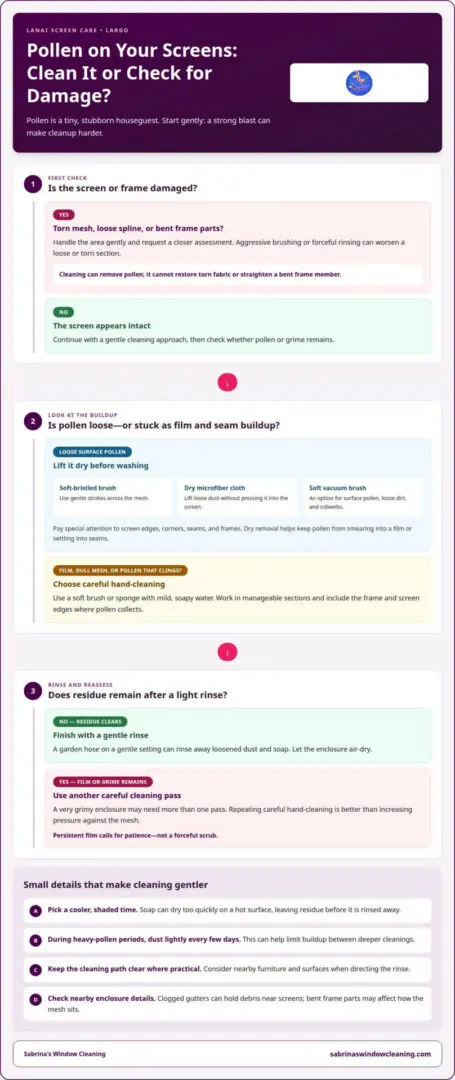
Arrange professional cleaning when pollen leaves a film, gathers in seams, or clings after a light rinse. The screen’s condition matters, too: damaged mesh needs gentler handling than an intact panel.
-
Professional Cleaning for Screen Mesh and Frames
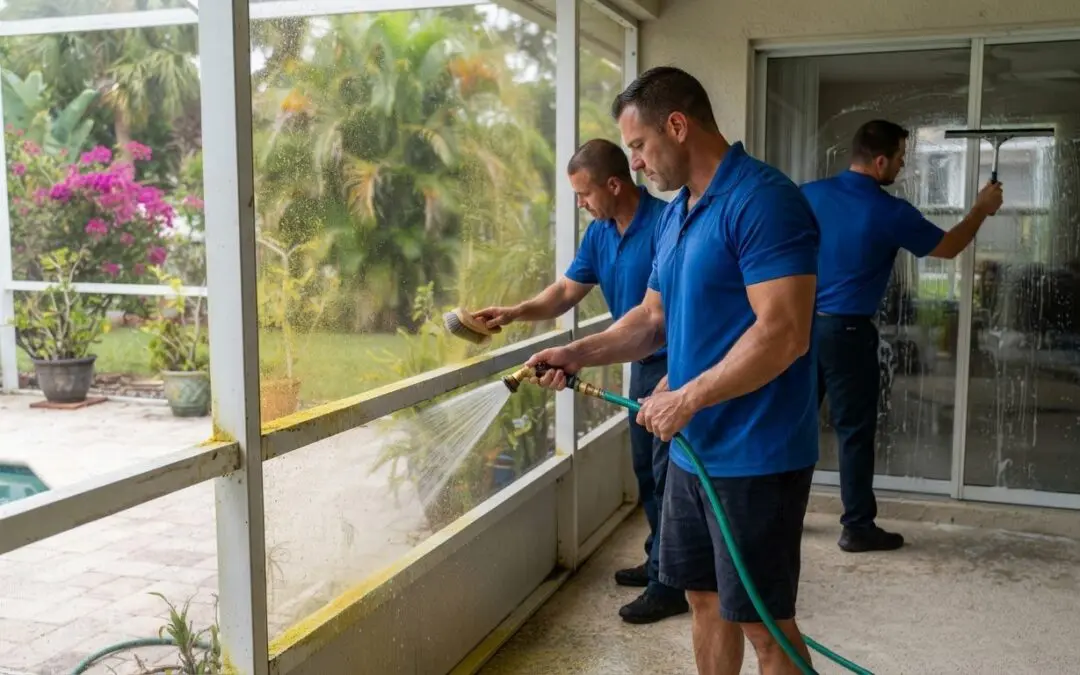
Choose professional cleaning when pollen has dulled the mesh or settled along the frame. First, remove loose debris, then clean the mesh with a soft brush or sponge and mild, soapy water. Mild soap helps lift residue without aggressive scrubbing that can strain the screen fabric.
Include the frame and screen edges in the cleaning, since pollen can collect where the mesh meets the frame. A careful cleaner works in manageable sections, rinses away soap with a gentle garden-hose stream, and lets the enclosure air-dry. Where practical, keep furniture and nearby surfaces clear of the cleaning path.
Timing helps, too. Clean when the screen surface is cool and out of direct midday sun. Soap can dry too quickly on a hot surface, leaving residue before it is rinsed away. In Largo, a shaded morning or cooler part of the day gives the cleaner more control over each section.
A very grimy enclosure may need more than one pass. Repeating careful hand-cleaning is better than increasing pressure against the mesh. Persistent pollen film calls for patient cleaning, not a forceful scrub that risks damaging the screen.
-
Assess Cleaning Frequency and Professional Help
Arrange more frequent attention during heavy-pollen periods if yellow dust repeatedly coats the screens. Light dusting every few days can help limit buildup between deeper cleanings. The right professional cleaning schedule depends on how much pollen reaches the enclosure and how quickly residue returns.
Consider professional help when pollen keeps collecting in the seams, the enclosure remains visibly grimy after cleaning, or a gentle wash does not clear the film. Heavy grime may require repeated hand-cleaning. A professional can work through the buildup in sections without treating the mesh like a patio floor.
Request a closer assessment if the enclosure has loose spline, torn mesh, or bent aluminum members. These signs point to a screen or frame problem, not simply a stubborn pollen stain. Gentle cleaning around damaged areas helps avoid adding strain; aggressive brushing or forceful rinsing can worsen a loose or torn section.
Include the surrounding enclosure in the assessment. Clogged gutters can hold debris near the screens, while bent frame parts may affect how the mesh sits. Cleaning can remove pollen, but it cannot restore torn fabric or straighten a bent member. Knowing the difference sets realistic expectations: residue calls for cleaning, while physical damage needs repair.
How professionals remove dry pollen before washing lanai screens
Professionals start by lifting loose pollen before washing begins. When removing pollen from lanai screens in Largo, this dry step helps prevent yellow residue from smearing across the mesh or settling into seams.
- Assess the dry screen before brushing. A professional checks where pollen has settled most heavily across the enclosure. Screen edges, corners, and seams can hold loose debris that may spread during washing. This initial look also identifies areas needing a lighter touch, such as mesh with a tear or loose section. Dry removal lifts surface pollen rather than pressing it deeper into the fabric.
- Lift loose pollen with a soft tool. Professionals use a soft-bristled brush or dry microfiber cloth to collect pollen from the mesh. They work gently, avoiding hard strokes across the screen. A vacuum with a soft brush attachment is another option for surface debris, including pollen, loose dirt, and cobwebs. The tool choice depends on the screen’s condition and the debris present.
- Work carefully around seams and frames. A cleaner moves across manageable areas, paying attention to places where pollen gathers along mesh edges. Removing loose material first reduces the chance that washing will carry it into seams. The frame also gets a careful pass where dust has settled. This is detail work, not a race: pressing harder doesn’t make a soft brush more useful, and rough handling can strain screen fabric.
- Adjust the approach to the pollen load. A light layer may come away readily, while thicker buildup can require a slower, more deliberate dry pass. During heavy pollen periods, light dusting every few days can help limit accumulation between professional cleanings. The cleaner distinguishes loose pollen from residue that remains attached and needs washing. This avoids unnecessary scrubbing when dry removal has done its job.
- Clear loose debris before wet cleaning starts. When removing pollen from lanai screens in Largo, professionals lift surface dust before rinsing so it doesn’t immediately become streaks. This is especially useful where pollen has collected around screen seams or across broad mesh panels. Dry removal prepares the surface for washing but doesn’t replace it. The result is a more controlled cleaning process, with less loose pollen traveling across the enclosure.
Rinsing lanai screens with light water pressure during professional cleaning
After removing dry pollen, professionals gently rinse the mesh to clear loosened dust and cleaning residue. A garden hose on a gentle setting provides control without turning the screen into a target.
- Check the screen before wetting it. A professional checks the mesh and frame for tears, loose sections, or bent components. These areas need extra care during rinsing. The cleaner also considers where water will flow, especially near furniture and porch surfaces. This brief check helps direct the rinse where it’s useful instead of sending water indiscriminately across the enclosure.
- Choose a gentle hose setting. Use a garden hose with light water pressure, not a forceful jet. A strong stream can strain screen material, so the aim is to rinse away pollen without making the mesh bow or flap. Water should flow steadily over the surface. No dramatic blast is needed; the pollen has already had its chance to be the loudest thing on the lanai.
- Rinse in manageable sections. Working on a smaller area at a time helps keep the rinse even. The cleaner moves methodically over the mesh and frame, watching for pollen or soap residue that remains. If a section still looks dusty, give it another gentle pass. This avoids rushing across the enclosure and missing pollen caught along edges or joints.
- Rinse before residue dries. When mild soap and water are part of the cleaning, rinse each section before the soap dries. Direct, hot sun can dry residue quickly, so clean while the screen surface is cool and shaded. This gives the cleaner more opportunity to remove suds before they leave marks on the mesh or frame.
- Let the enclosure air-dry. Once rinsing is complete, let the screens dry naturally. Check for remaining film and spots that need another gentle pass, rather than scrubbing a wet screen aggressively. A careful final look at the mesh, frame edges, and nearby surfaces can reveal residue the water carried down.
- Match the rinse to the screen’s condition. Intact mesh can receive a consistent light rinse, while loose or torn areas need more caution. Keep water pressure gentle throughout; increasing it to chase stubborn dirt can strain the screen. If pollen remains after rinsing, clean that area carefully rather than using a stronger blast.
Can pressure washing damage lanai screens or screen enclosures?
Yes. A high-pressure stream can tear screen fabric, loosen fasteners, or force dirt into enclosure joints. Professionals treat mesh differently from sturdy outdoor surfaces and choose the gentlest suitable method for each area.
- Separate screen mesh from the enclosure frame. Professionals assess the mesh, frame, and surrounding surfaces before pressure washing. Screen fabric needs a soft brush or sponge and light pressure, not a concentrated jet. The aluminum frame may tolerate a different approach, but directing the same force across mesh and frame risks damaging the most delicate part. Treating the enclosure as one uniform surface is a shortcut with an expensive-looking punchline.
- Keep high-pressure nozzles away from the mesh. A narrow, forceful stream can tear screen fabric or stretch a weakened area. It can also loosen the enclosure’s fasteners. Even if the mesh looks intact afterward, a loosened attachment may leave a section less secure. For pollen on the screen itself, gentle hand-cleaning with a soft brush or sponge is the safer approach.
- Prevent dirt from being driven into joints. Strong water pressure can push dirt deeper into enclosure joints instead of clearing it from the surface. Professionals use controlled cleaning to move debris away from seams and connections. A joint that looks clean outside may still hold displaced dirt if the stream forces it inward. Avoid aiming pressure directly at corners, seams, or fasteners.
- Use the lowest possible setting on the enclosure. If power washing is used on parts of a screen enclosure, start at the lowest possible setting. Excessive pressure can damage screens, so don’t raise the setting simply to speed up a stubborn area. A cautious test on a suitable frame surface helps guide the next pass. Mesh still requires a gentler method.
- Clean around damaged or unstable sections gently. Tears, loose areas, bent components, and unstable screen parts need careful treatment. Professionals avoid aggressive brushing or concentrated water near these spots. A torn corner, for example, should not receive a direct blast just because pollen has collected nearby. Work around the damage without applying extra force to the affected mesh and frame.
- Choose the method according to the surface. Pressure washing can suit some hard enclosure surfaces, but it is not a one-setting solution for the entire lanai. Screen mesh calls for soft contact and light pressure; vulnerable joints and damaged sections call for extra care. This distinction helps remove pollen without turning routine cleaning into screen repair. If pressure washing is part of a broader exterior-cleaning job, keep the mesh out of the direct spray.
Protecting Plants and Pets During Screen Cleaning
Before cleaning starts, plan where water and cleaning solutions will go. Plants, pets, and outdoor furniture each need practical consideration around the lanai.
- Identify plants beside the enclosure. Note which pots, garden beds, and leafy branches sit near the screens before rinsing. If vinegar is used on a screen enclosure, soak nearby plants afterward to reduce contact with it. Direct rinse water thoughtfully, too, to help keep cleaning residue off delicate leaves. A potted fern beside a screen, for example, may need more attention than a distant garden bed.
- Keep pets clear of the active work area. Keep pets away from the lanai while brushing and rinsing are underway. This keeps paws and noses out of the immediate work zone, where water and loosened pollen can collect. A pet resting indoors or in another part of the yard is less likely to wander beneath the screens during cleaning. Let the area settle before allowing pets back onto the wet porch.
- Move or protect outdoor furniture. Take account of chairs, cushions, and tables near the screen panels before cleaning begins. Moving furniture away from the rinse path helps limit splashes and makes screen edges easier to reach. This matters especially when treating a stained area, since bleach can harm patio furniture and may discolor aluminum. Keeping furnishings clear also prevents pollen from washing onto freshly cleaned cushions.
- Use cleaning solutions cautiously around the porch. Don’t use bleach on porch surfaces unless the manufacturer specifically allows it. Bleach can discolor aluminum and harm nearby plants, skin, and patio furniture, so careful use matters. Avoid letting bleach solution spread onto adjacent surfaces during pollen cleaning. For routine screen cleaning, mild soap and water keep the process focused on mesh and frames.
- Control rinse water and check nearby surfaces. Rinse deliberately, watching where water flows from the screen and frame. Direct porch-floor runoff toward drainage paths so pollen does not pool in low spots. Then check plant leaves, furniture, and the porch for residue or runoff. A final pass can catch the small yellow puddle hiding beside a chair, a particularly unconvincing attempt at camouflage.
- Keep surrounding glass in the cleaning plan. Pollen can also settle on nearby windows, leaving glass hazy beside a cleaner screen. For that separate surface, arrange professional window cleaning as part of broader exterior upkeep. Screen mesh and window glass call for different cleaning approaches, so each surface receives attention suited to its material.
Sabrina’s Window Cleaning
Sabrina’s Window Cleaning helps Largo property owners keep their exteriors clean and cared for. If pollen has settled across the lanai and nearby surfaces, the careful cleaning methods described above can help you know what to expect, and when screen damage needs its own game plan.
For broader exterior upkeep, Sabrina’s Window Cleaning offers window cleaning, pressure washing, soft wash roof cleaning, gutter cleaning, and hurricane shutter installation. Each service tackles a different part of the property: pollen-covered windows may call for window cleaning, while dirty hard exterior surfaces may suit pressure washing. Even pollen needs to know when it’s time to leave.
For a straightforward conversation about your exterior maintenance needs, contact Sabrina’s Window Cleaning.
Keep Your Lanai Ready for the Season
As pollen returns, treat screen care as part of keeping your outdoor space ready to use, rather than a last-minute cleanup before guests arrive. Note when the mesh starts looking dusty to plan ahead and see whether buildup returns quickly. If you’re considering professional help removing pollen from lanai screens in Largo, describe what you’re seeing, such as a persistent film or a loose-looking screen section. Those details make the conversation more useful from the start.
Cleaning is not the answer to every screen problem, and a damaged section deserves attention beyond surface care. Keeping that distinction in mind helps protect the enclosure and set a sensible next step. When you’re ready to discuss your property’s exterior maintenance, contact Sabrina’s Window Cleaning. A cleaner lanai can feel like a fresh start, without giving pollen the satisfaction of winning the season.
Frequently Asked Questions
What is the safest professional service for removing pollen from lanai screens?
A gentle approach suits pollen-covered mesh: lift loose debris, clean carefully, and avoid aggressive pressure. The method should account for the screen’s condition, especially if a panel is torn or loose. An intact section can be treated differently from a damaged corner. Matching the method to the surface avoids applying one forceful approach everywhere.
Can a professional rinse pollen off lanai screens with a garden hose?
Yes. A professional can use a garden hose on a gentle setting to rinse pollen and cleaning residue from lanai screens. Keep the stream light and controlled, rather than directing it straight at the mesh. For example, rinse a panel steadily and check whether residue remains near its edges. A forceful nozzle is no shortcut; it can strain the screen or loosen its fasteners.
What cleaners do professionals use on Florida lanai screen mesh and frames?
For routine screen cleaning, use mild soap and water with a soft sponge or non-abrasive cloth. Apply it carefully to the mesh and frames, then rinse away residue. Stronger products aren’t automatically better for pollen. Bleach can discolor aluminum and harm nearby plants or patio furniture, so mild soap is a more suitable starting point for ordinary pollen buildup.
How do professionals remove sticky or caked-on pollen from screen enclosures?
For heavier buildup, let the cleaning solution sit briefly, then wipe the area gently again. This gives the solution time to loosen residue without turning the mesh into a scrubbing project. A very grimy enclosure may need repeated hand-cleaning. A stubborn patch near a frame seam calls for patient, focused attention rather than stronger pressure.
How often should lanai screens in Largo, Florida, receive professional cleaning during pollen season?
Cleaning frequency depends on how heavily pollen reaches the enclosure and how quickly visible buildup returns. During heavy pollen periods, light dusting every few days can help control accumulation between professional cleanings. A lanai beside dense vegetation may collect pollen faster than a more exposed screen. Recurring film, dirty seams, and screen condition all help determine a sensible cleaning rhythm.
Disclaimer
All articles are designed to entice you to hire Sabrina's to clean your windows, not to teach you how to clean them. They are meant for entertainment purposes only. We are not responsible for the out come of your DIY cleaning project!