

Article by
Frank Sweeney
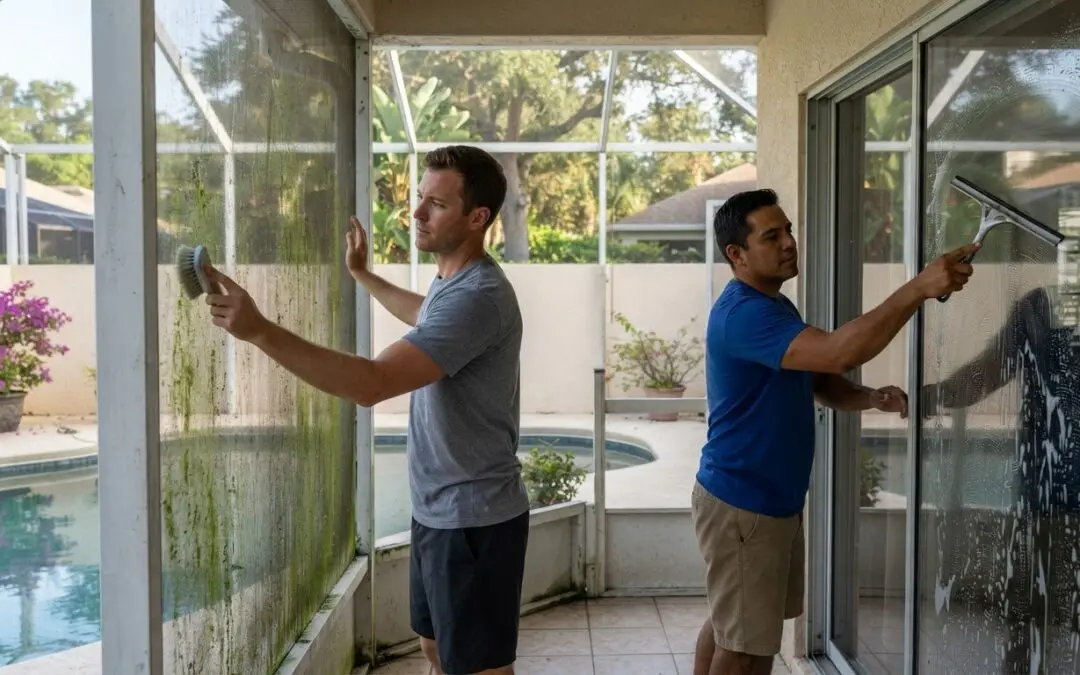
A pressure washer can damage pool-cage screens, so blasting green algae away isn’t the safest first move. For green algae removal from a pool cage in The Villages, a gentler approach is to apply a solution of one part bleach to 40 parts water, lightly scrub with a soft-bristle brush, and rinse thoroughly. Bleach needs careful handling, and the screen deserves more finesse than a driveway.
It makes sense to want a quick fix when algae turns a clean-looking enclosure green. The good news is that you can tackle light buildup without treating the mesh like it’s made of concrete. This guide explains how to clean screens carefully, when bleach may be appropriate, and why high pressure can cause trouble.
You’ll also learn what can encourage algae to return and how routine rinsing can help keep your pool cage looking fresh. No dramatic pressure-washer stunts required.
Key Takeaways
- For light algae, use a gentle cleaning method and a soft-bristle brush rather than treating delicate screen mesh like a hard surface.
- Consider how shade, nearby trees, and irrigation keep screens damp when working out why algae returns.
- Avoid excessive pressure when cleaning pool-cage screens, as it can damage the mesh.
- Rinsing screens a few times per year can help limit algae buildup and keep routine cleaning more manageable.
- Learn when DIY cleaning is practical and when professional exterior cleaning can help with stubborn buildup.
Is It Worth To Remove The Green Algae Yourself?
DIY cleaning can suit light surface growth when the mesh is intact and easy to reach. Use a gentle method, protect pool water from runoff, and choose restoration or rescreening when cleaning won’t solve the problem.
-
Assess Whether to Clean It Yourself
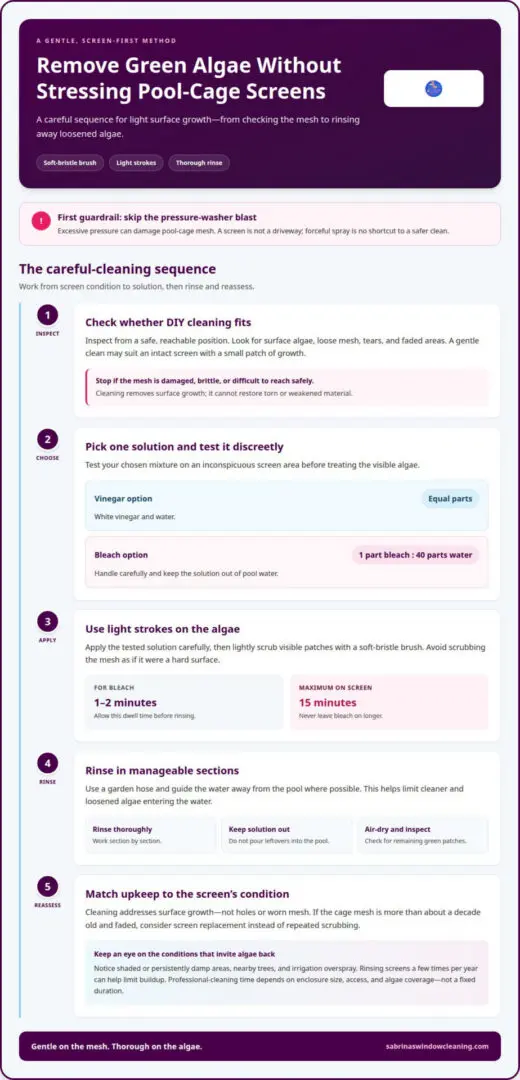
Inspect the screen from a safe, reachable position before you begin. Look for surface algae, loose mesh, tears, and faded areas. A soft brush and gentle solution may suit a sound screen with a small patch of growth. If the mesh is damaged, brittle, or difficult to reach safely, don’t scrub it. Cleaning can’t restore torn or weakened material.
-
Clean Green Algae from the Screens
Choose one cleaning solution, then test it on a discreet screen area. For a vinegar option, use equal parts white vinegar and water. Another suggested mixture is one part bleach to 40 parts water. Apply it carefully, keep it out of pool water, and use a soft-bristle brush with light strokes. For bleach, allow a minute or two before rinsing, and never leave it on the screen longer than 15 minutes.
-
Consider Professional Cleaning Timing
Estimate the work by the enclosure’s size, access, and algae coverage, rather than relying on a fixed duration. A small, reachable section takes less attention than a full cage with heavy buildup. For ongoing care, rinse screens a few times per year to help limit algae growth. Notice whether algae concentrates in shaded or persistently damp areas so you can pay closer attention there next time.
- Rinse in manageable sections with a garden hose, guiding water away from the pool where possible. This helps limit cleaner and loosened algae entering the water. Let the mesh air-dry, then look for remaining green patches before calling the job finished. Avoid pouring leftover cleaning solution into the pool. A careful rinse is less dramatic than a splashy scrub, but the pool doesn’t need a surprise chemistry experiment.
- Decide whether the screen needs cleaning, restoration, or replacement based on its condition. Cleaning removes surface growth; it won’t repair holes or restore worn mesh. If the cage mesh is more than about a decade old and faded, consider screen replacement instead of repeated scrubbing. When algae returns quickly, identify damp or shaded areas and adjust routine rinsing. Match the solution and effort to the screen’s actual condition.
Humidity, shade, trees, and irrigation as causes of algae growth
Pool-cage algae often follows a simple pattern: moisture lingers and shaded surfaces dry slowly. Trace where water lands and where sunlight is blocked to identify conditions that keep screens damp.
- Notice which screen panels stay wet longest after rain or pool splashes. Compare a sunny panel with one behind the house or beneath a roof overhang. The shaded screen may remain damp after the brighter section dries. That lingering moisture helps explain why algae appears in one area first instead of spreading evenly across the enclosure.
- Check the cage after irrigation, then look for droplets along the lower screen edges and frame. A sprinkler aimed toward the enclosure can repeatedly wet the same mesh, especially near a garden bed. Adjusting the spray direction can reduce unnecessary splashing. Observe a full watering cycle before changing the sprinkler head or its aim.
- Check nearby trees for branches that shade screens or brush against the cage. Leaves and fine debris can collect along tracks and frame joints, holding moisture against the surface. Note where debris gathers after a breezy afternoon. Keeping branches clear of the enclosure and removing loose leaves can help exposed areas dry more freely.
- Track damp spots through changing weather instead of assuming humidity affects every panel equally. Afternoon storms can leave pool-cage screens wet, so observe how quickly each section dries. Conditions in The Villages may differ, so observe your own home: note rain, shade, sprinkler overspray, and how quickly each section dries. A brief written record can reveal a recurring pattern.
- Use the pattern to guide upkeep. If algae repeatedly appears near one sprinkler or under one tree, address that moisture source alongside routine screen rinsing. Don’t trim branches without considering the tree’s health, and don’t aim irrigation onto the cage to rinse it. If nearby windows also collect tree residue, window cleaning can address that separate exterior buildup.
Risks of pressure washing pool cage screens
Excessive pressure can damage pool-cage mesh, so a pressure washer isn’t automatically a shortcut to safer cleaning. Use these steps to assess the risk before directing a forceful spray at the enclosure.
- Inspect the screen and frame before using a pressure washer. Look for holes, loose edges, sagging mesh, and sections pulled away from their tracks. Green growth can make these weak points harder to spot. A forceful stream may worsen existing damage instead of removing algae cleanly. If a panel looks loose or torn, don’t spray it.
- Choose a garden hose and soft brush for algae on delicate mesh. A hose provides a gentler rinse, while a soft-bristle brush lets you work directly on visible patches. Start in an inconspicuous area and use light strokes. If the mesh moves sharply, catches on the brush, or looks strained, stop. A screen isn’t a driveway, despite what a powerful spray might suggest.
- Avoid directing a pressure-washer stream at screen panels unless the method is suitable for that surface. Excessive pressure can damage a pool screen. Don’t assume that standing farther back makes every spray safe. Watch how the mesh responds and stop immediately if it flexes, flutters, or shifts under the water.
- Protect nearby parts of the enclosure while rinsing. Aim water away from screen edges, doors, and places where mesh meets the frame. A forceful stream at one seam can concentrate stress in a small area. If algae sits along a frame joint, use a cloth or soft brush instead of chasing it with a narrow spray. Gentle detail work beats a surprise repair.
- Check the pool and surrounding area before and after cleaning. Water can carry loosened algae and cleaner toward the pool, so control runoff and rinse carefully. Avoid spraying through the screen toward pool furniture, plants, or items that could be disturbed. Afterward, inspect the panel from both sides where accessible. Look for new tears, loose edges, or mesh that no longer sits flat.
After applying a cleaning solution, let it sit on the pool-cage screen for several minutes before brushing. Rinse the screen with a garden hose, then let it air-dry.
How to prevent algae from returning on pool cage screens
A repeatable care routine helps you catch fresh buildup before it spreads across more screen panels.
- Set a calendar reminder to rinse the pool-cage screens a few times per year. Use a garden hose and work methodically across the enclosure so no panel gets skipped. Pay attention to lower edges, frame corners, and the door area, where residue can collect. Regular rinsing helps remove surface grime before it becomes a more stubborn cleaning job.
- Inspect the enclosure after heavy rain or when algae becomes visible. Look for new green patches, dirt streaks, and leaves caught against the mesh. Note which panels show buildup, then revisit those areas during the next rinse. A quick visual scan can help distinguish one dirty spot from a recurring pattern across the cage.
- Keep screens clear of loose leaves and other debris. Remove material gently instead of grinding it into the mesh with a rough brush. Check frame joints and door tracks, where debris can collect out of sight. Clearing those areas makes it easier to rinse the surface and helps prevent a small pile of leaves from becoming a damp, messy decoration.
- Check the enclosure after irrigation or pool activity leaves visible splashes. If one section repeatedly gets wet, see whether algae returns there first. Adjusting the sprinkler’s direction may reduce overspray onto the screen. For pool splashes, note the affected panel and include it in your routine rinsing. These observations help target care instead of treating every panel alike.
- Rinse regularly rather than waiting until green growth covers a broad area. Direct the hose across the screen without forcing water into seams or stressing loose mesh. If a patch remains, treat that spot carefully instead of increasing pressure across the whole enclosure. A focused approach protects the screen and keeps routine upkeep manageable.
- After cleaning, check the mesh in daylight. Look for remaining green marks, debris, or damp areas that persist. Record their locations in a simple home-maintenance note, such as “north-side corner” or “beside the pool door.” Clear notes make your next inspection quicker and help you see whether the same spot needs attention again.
Rinse the cleaned pool screen with a garden hose, then let it air-dry. This is a simple final step after removing buildup.
How long does professional pool cage cleaning take and how often should it be done
Cleaning time depends on the enclosure, access, and buildup, not a universal clock. Use these steps to estimate the work and plan sensible upkeep.
- Assess the enclosure’s size and layout before estimating the work involved. A compact cage with clear access differs from a large enclosure with several sections, high panels, or tight corners. Each area adds surfaces to inspect, clean, and rinse. Note whether doors, furniture, landscaping, or pool equipment limit access. These practical details matter more than a simple calendar estimate.
- Consider the screen’s condition and how widely algae has spread. Light growth on a few reachable panels takes less attention than widespread buildup around the frame and lower edges. Loose mesh, stubborn residue, or debris caught in joints may also need careful handling. A thorough process includes checking the result, not just spraying until the green disappears from view.
- Use the cleaning method as another timing factor. Gentle brushing and controlled rinsing take focused effort across each affected panel. Difficult access may slow the process, since careful work matters more than rushing through a high or narrow section. Avoid assuming that powerful equipment automatically saves time; excessive pressure can damage screen mesh and create a bigger repair concern.
- Plan to rinse routinely a few times per year to help limit algae growth. The right schedule also depends on visible buildup and conditions around the enclosure. Inspect shaded panels after wet weather and check areas exposed to sprinkler overspray. If the same corner turns green between rinses, address the source of recurring moisture rather than simply cleaning more often.
- Review the screens after each rinse and plan the next check according to what you see. A clean, sunny panel may need less attention than a shaded section beneath tree branches. Record problem areas, such as “near the pool door” or “under the oak,” to make follow-up checks useful. This simple record helps you spot recurring growth without cleaning every panel unnecessarily.
- Look beyond the enclosure if algae and outdoor residue also collect on nearby glass. For example, screens beside a patio window may share exposure to irrigation spray or tree debris. Schedule window cleaning to address buildup on the glass while keeping pool-screen upkeep focused on the mesh.
Sabrina’s Window Cleaning
Sabrina’s Window Cleaning helps homeowners care for exterior surfaces, including through pressure washing for suitable surfaces such as driveways and siding. If algae is part of broader exterior buildup, pressure washing may help with those hard surfaces. Pool-cage mesh needs gentler handling than a driveway, so use screen-safe cleaning practices rather than treating every surface the same way.
For a well-kept property, Sabrina’s Window Cleaning also provides window cleaning, soft wash roof cleaning, gutter cleaning, and hurricane shutter installation. These services can support a broader exterior-care routine without treating every surface the same way. Contact Sabrina’s Window Cleaning to discuss your home’s exterior maintenance needs.
Keep Your Outdoor Space Ready to Enjoy
A pool cage is part of the outdoor space you use, not just a frame around the water. Treat lingering algae as a cue to consider what keeps the area damp and how to care for its different surfaces. A thoughtful approach protects the enclosure from rough treatment while keeping the rest of your home’s exterior in view. For green algae removal from a pool cage in The Villages, match your method to the mesh’s condition and avoid turning extra pressure into an avoidable repair.
Sabrina’s Window Cleaning can help with broader exterior upkeep through window cleaning, pressure washing, and hurricane shutter installation. Each addresses a different part of caring for your property, so the right conversation can start with the areas you want maintained and the concerns you’ve noticed.
For a friendly conversation about your exterior maintenance needs, contact Sabrina’s Window Cleaning today. Take the next step toward a cleaner, more comfortable outdoor space.
Frequently Asked Questions
Can You Use Bleach?
Yes, a diluted bleach solution is one suggested option for pool-screen algae. Mix one part bleach with 40 parts water, apply it carefully, and rinse after a minute or two. Don’t leave it on the screen longer than 15 minutes. Equal parts white vinegar and water offer another option. Never combine cleaners; chemistry experiments belong in a lab, not beside your pool.
How to remove green algae from a pool cage safely
Check the mesh for tears or loose edges, then choose a gentle cleaner for sound screens. Apply it to a small area and brush lightly with a soft-bristle brush. Rinse with a garden hose, directing runoff away from the pool where possible. For green algae removal from a pool cage in The Villages, work in sections. The screen needs careful cleaning, not a wrestling match.
Best cleaners for algae on pool cage screens and frames
For screens, mild soap and water or equal parts white vinegar and water are gentle starting options. A diluted bleach mixture, one part bleach to 40 parts water, is another suggested choice. Use a soft brush on mesh and a cloth for frame corners. Test the cleaner on a small area, then rinse it thoroughly. Nobody wants yesterday’s cleaner drying in today’s screen seams.
Can pressure washing damage pool cage screens or aluminum frames?
Yes, excessive pressure can damage pool-screen mesh. A forceful stream aimed at a loose edge or seam can worsen an existing weakness. Choose a garden hose and soft brush to clean screens instead. A setting suitable for a driveway may not suit a delicate panel. Screens aren’t auditioning for a concrete-cleaning contest.
Pool cage algae removal companies serving The Villages Florida
Sabrina’s Window Cleaning serves The Villages and provides exterior maintenance, including window cleaning and pressure washing. Its pressure-washing service covers driveways, siding, and other exterior surfaces. For green algae removal from a pool cage in The Villages, use screen-safe cleaning practices rather than assuming pressure-washing methods suit mesh. A screen is a much less enthusiastic target for a powerful spray than a driveway.
DIY vs professional pool cage algae removal cost and results
DIY cleaning uses supplies such as a soft brush, hose, and cleaning solution; the effort depends on access and the spread of algae. Professional pricing depends on the work and property conditions, with a quote provided after a request. Results also depend on screen condition: cleaning can remove surface growth, but it won’t repair worn mesh. A scrub brush is handy, but it isn’t a screen-repair superhero.
What causes green algae on pool cages in Central Florida?
Algae tends to appear where screens stay damp, especially in shaded areas. Trees can shade mesh and leave debris, while irrigation may repeatedly wet one panel. Check the enclosure after watering and compare shaded sections with sunnier ones. In Tampa Bay, afternoon storms soak screens daily from June through September, though conditions vary across Central Florida. Algae, it seems, appreciates a shady, damp spot.
Are bleach or chlorine cleaners safe for pool cage screens, plants, and pets?
A diluted bleach mixture is a suggested screen-cleaning option, but keep runoff away from pool water, plants, and pets. Use one part bleach to 40 parts water, apply carefully, and rinse thoroughly. Keep pets away from the work area and wet runoff. Never mix bleach with vinegar or other cleaners. Curious noses and cleaning solutions should keep their distance from each other.
Disclaimer
All articles are designed to entice you to hire Sabrina's to clean your windows, not to teach you how to clean them. They are meant for entertainment purposes only. We are not responsible for the out come of your DIY cleaning project!