

Article by
Frank Sweeney
Community pressure washing helps an HOA keep shared spaces and exterior surfaces clean, welcoming, and in line with neighborhood standards. HOA pressure washing services in The Villages can address dirt, mildew, mold, dust, and loose paint on suitable surfaces. Choosing the right method matters: not every material should be cleaned like a concrete driveway.
A tidy entrance and clean walkways make a difference to residents and visitors alike. Simply turning up the pressure is not the answer. Surface type, buildup, and nearby residents all matter when planning the work.
This article explains why HOAs hire community pressure washing, how regular cleaning can support curb appeal and resident satisfaction, and what to consider when choosing services and equipment. You’ll also learn which grime can be removed and why softer washing may suit delicate surfaces better than a high-pressure spray. A little care can leave the community looking fresh without making the landscaping feel like it’s next in line for a rinse.
Key Takeaways
- Review HOA standards for shared areas and exterior surfaces, including driveways, walkways, roofs, and facades, so maintenance priorities are clear.
- Address visible buildup promptly; unresolved violations may lead to formal warnings or fines, with persistent non-compliance carrying more serious consequences.
- Match the cleaning method to the surface: delicate siding and painted details need a gentler approach than concrete.
- Plan community cleaning around resident access, parking, and walkways to keep the work organized and reduce disruption.
- Learn which common buildup pressure washing can remove and when Sabrina’s Window Cleaning’s pressure washing service may fit an HOA’s needs.
1. What Happens If You Ignore HOA Pressure Washing Rules?
The Villages HOA rules for pressure washing homes and common areas are set out in the governing documents for each community. These standards may address landscaping, exterior maintenance, driveways, walkways, roofs, and facade cleanliness. Review the relevant rules before scheduling work.
Ignoring a notice can escalate a simple cleanup into a formal compliance issue. An initial violation notice may set a deadline for compliance, and continued non-compliance may bring fines or, in persistent cases, a property lien. Treat the notice as a task with a deadline, not as decorative paperwork.
For a contractor’s license, insurance, and HOA approval, follow applicable licensing rules and the community’s governing documents. HOA guidance recommends insured and certified contractors, while approval steps depend on the association’s procedures.
Plan the work to protect landscaping, vehicles, residents, and property. Before washing a driveway, for example, move parked cars away from the work area and identify plants that need protection. Boards or property managers can coordinate resident notices, access, parking, and walkway restrictions to prevent surprises while equipment is in use.
Choose a cleaning method that suits the surface and the buildup. Excessive pressure can damage siding, painted details, or landscaping, while untreated grime can leave shared walkways looking neglected. A property manager can identify priority areas and separate concrete paths from more delicate exterior finishes in the work plan.
Keep property-sale notices in their proper context. A foreclosure sale of a privately owned home differs from a sale of association-owned property. In either case, identify the property involved, review the relevant HOA documents, and follow the procedures that apply. A vacant home may still be subject to exterior upkeep under community standards, so a change in occupancy does not automatically remove those expectations.
For community projects, boards should record the agreed scope, resident communications, access arrangements, and completion notes. These records help property managers track which driveways, roofs, walkways, or commercial common areas were addressed. If a notice identifies a particular stain or surface, match the cleaning plan to that location rather than treating every exterior like one large driveway.
2. Community appearance and resident satisfaction
A clean entrance shapes the first impression of an HOA community. Residents see it during daily errands, and visitors notice it before reaching a home. Regular cleaning helps shared spaces look cared for instead of allowing grime to build up unnoticed. When considering HOA pressure washing services in The Villages, start by identifying which shared areas residents and visitors see and use most.
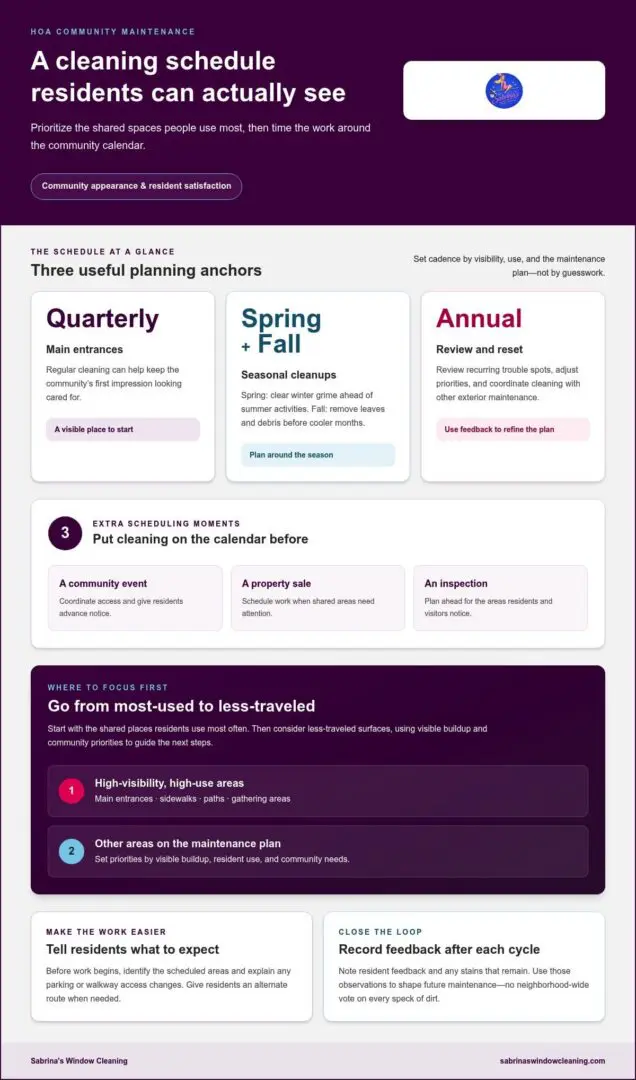
Start with the places residents use most often. Prioritize main entrances, sidewalks, paths, and gathering areas, then consider less-traveled surfaces. Quarterly cleaning for main entrances can help maintain curb appeal. For other areas, set priorities based on visible buildup, resident use, and the community’s maintenance plan. This avoids focusing on a tucked-away corner while the entrance makes a poor first impression.
Timing matters, too. Spring cleaning can clear winter grime before summer activities, while fall cleaning removes leaves and debris ahead of cooler months. HOAs may also schedule work before a community event, property sale, or inspection. Planning around these dates gives residents advance notice and helps the board coordinate access. HOA pressure washing services in The Villages can be scheduled as part of this plan when shared surfaces need attention.
Resident satisfaction often comes down to practical details. A stained walkway near a mailbox may draw more concern than a similar stain in a less visible spot. Ask property managers to collect location-specific feedback, then compare it with the community’s maintenance priorities. This helps distinguish an isolated concern from an issue affecting shared spaces and daily routines. The goal is a clear, considered plan, not a neighborhood-wide vote on every speck of dirt.
Clear communication makes cleaning easier for residents. Before work begins, tell them which areas are scheduled and whether parking or walkway access will change. A notice can identify the affected entrance, explain temporary restrictions, and suggest another route. Clear directions help residents plan ahead instead of encountering an unexpected closure during a morning walk.
Annual planning gives boards a chance to review recurring trouble spots, adjust priorities, and coordinate cleaning with other exterior maintenance. Roof and gutter cleaning can also be scheduled annually or as the HOA requires. For home exteriors, professional window cleaning can complement tidy shared spaces and help windows look cared for.
After each cleaning cycle, record resident feedback and note which areas still show stains. Use those observations to guide future maintenance. A prioritized schedule helps keep the community looking consistent and prevents the upkeep list from becoming everyone’s least favorite neighborhood reading.
3. Considering service offerings and equipment
Match the cleaning method to the surface, buildup, and work area. Soft washing is recommended for vinyl siding, while lower pressure suits siding, painted areas, and delicate features. Pressure washing works for many jobs; power washing heats the water and is reserved for situations that call for it. Choose the method based on the surface, not the machine.
Roofs, siding, pavers, and screened lanais each need a suitable approach. Soft washing is gentler for roofs and vinyl siding; painted details and delicate surfaces call for lower pressure. Pressure washing can address deep stains on concrete walkways. Take care around paver joints, screens, and nearby finishes rather than treating them like bare concrete.
Equipment choice involves more than selecting a machine. The operator needs to control where water travels and how it reaches each surface. A broad concrete path and a painted trim board have different cleaning needs. A suitable nozzle and controlled pressure help direct the wash, while working distance and angle affect the force applied to the material. More pressure is not a shortcut if it risks damage.
For an HOA neighborhood, map the work before equipment arrives. Separate homes, shared walkways, clubhouse exteriors, and other common surfaces in the scope. Note delicate finishes and areas with visible buildup, then match each location to an appropriate cleaning method. This helps homeowners understand what will be cleaned and gives property managers a clear plan for coordinating upkeep.
Power washing and pressure washing are not interchangeable for every task. Power washing heats the water, while pressure washing uses pressurized water without added heat. Many HOA cleaning jobs can use pressure washing; heated water is useful only when the job calls for it. The key considerations are the surface and the soil, not which machine sounds most impressive.
Before work starts, the board or manager should set clear goals with the cleaning team. Identify priority surfaces, discuss resident access, and plan around staff activity to limit disruption. A notice can explain which areas are scheduled and whether access will change. For example, residents who use a screened lanai or shared path should know when that area is being cleaned.
4. Removing mold, mildew, dirt, dust, and loose paint
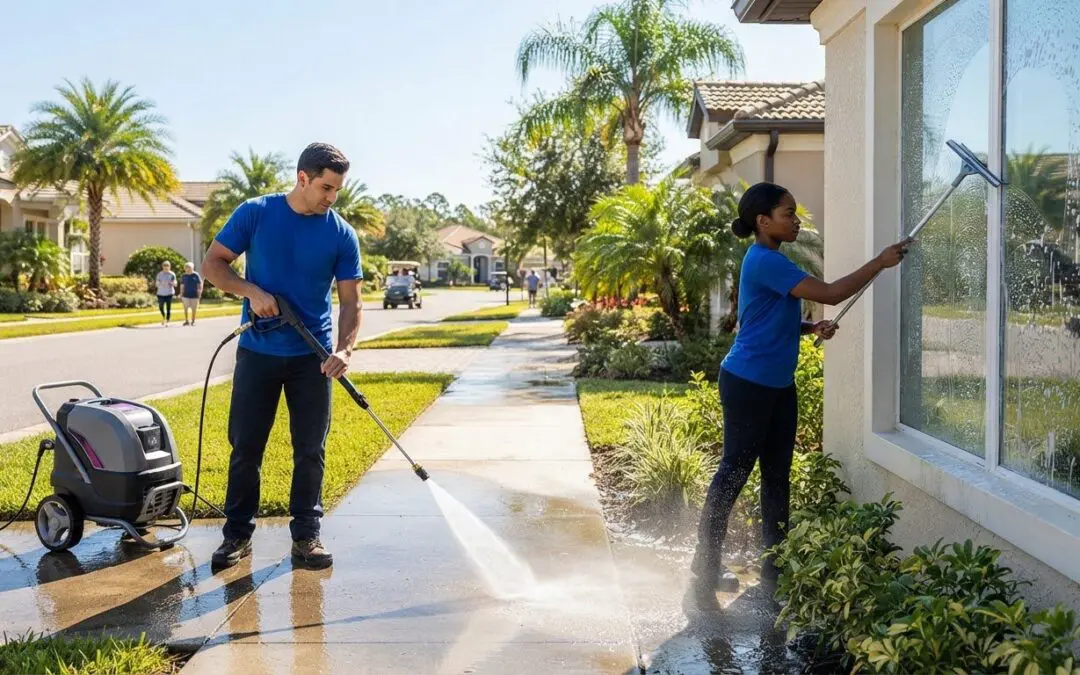
Pressure washing uses a high-pressure water spray to remove surface impurities from suitable community surfaces. On a concrete walkway, it can lift deep stains and accumulated dirt that dull the path. Siding needs a more careful approach. Note the material and its condition first, since pressure suitable for concrete can damage a more delicate finish.
Mold and mildew often appear on shaded or damp exterior areas, while dust and dirt collect on exposed surfaces. Regular pressure washing can clear visible buildup from suitable materials and help maintain a consistent appearance. A fence with mildew, for example, needs a different approach from a concrete entrance with ground-in grime. Match the method to both the surface and the stain.
Painted trim calls for a gentle approach. Soft washing is recommended for painted trim to help preserve the finish, while lower pressure suits siding, painted areas, and delicate features. Identify loose or peeling paint before cleaning. Washing can remove loose paint, but it does not replace surface preparation or repainting when the coating has failed.
Cleaning also matters before an HOA exterior painting project. Pressure washing is an important first step because it removes surface debris and helps coatings retain their qualities. Dirt left on a wall, for example, can interfere with a clean painting surface. Schedule washing before coating work, then have the cleaned areas inspected and prepared for the next stage.
Concrete paths, fences, and decks show different signs of buildup. Deep stains on a walkway may need focused cleaning, while fences and decks can accumulate dirt, mildew, and peeling paint. HOA requirements commonly expect these surfaces to remain free of such buildup. A practical inspection records the affected location and surface condition so the cleaning plan targets actual problem areas.
Moist conditions deserve attention during maintenance reviews because they can contribute to oxidation. Look closely at damp exterior areas and note where mildew or discoloration returns. Some forms of mold may be serious enough to require closing affected buildings, so do not treat every growth as ordinary surface grime. Identify the affected area and respond according to its condition.
After washing, inspect the surface for remaining stains, loose coating, or missed buildup. Compare the result with the association’s original walkthrough notes. If a stain remains, consider the surface material and condition before deciding what to do next; simply increasing pressure may cause damage. This final review keeps cleaning focused, protects exterior finishes, and gives the HOA a clearer maintenance record.
5. Which pressure washing companies serve HOA communities in The Villages, Florida?
HOAs in The Villages can assess pressure washing companies by their experience with community-scale work, clearly defined scopes, and resident coordination. A shared-property project may include entrances, paths, clubhouse exteriors, and other common surfaces. The right service provider should explain how each area will be cleaned without treating an entire neighborhood as one oversized driveway.
Start by reviewing evidence of past work. Read online feedback and references from previous clients, especially communities with similar exterior surfaces. Neighboring associations may also share useful experiences. Compare examples that reflect the work your board needs, such as cleaning concrete paths alongside more delicate exterior finishes.
Insurance and certification matter in HOA planning. Association guidance recommends hiring insured and certified pressure washing companies to help address potential liabilities. Those credentials do not replace a detailed scope, though. The board still needs to know which surfaces are included, how resident access will be managed, and what the work excludes.
Put expectations in writing. A detailed contract should describe the work scope, pricing, and service terms to help prevent misunderstandings about responsibilities. Specify whether the project covers shared walkways, entrance features, or clubhouse exteriors. Clarify how the team will handle resident notices and temporary access restrictions. Clear wording may be less exciting than a spotless path, but it is better than a dispute about what was included.
Cost should not be the only deciding factor. Compare the planned work and service terms alongside the quoted amount, and review unusually low quotes carefully. A low figure may reflect a narrower scope or lower-quality service. Check that each proposal covers the same surfaces and tasks before comparing them, so the board is not weighing a full-community plan against a partial rinse.
Before work begins, coordinate with the property manager on resident communication, parking, and walkway access. A useful notice identifies affected areas and explains any temporary restrictions. The board can also arrange a completion review, noting treated surfaces and remaining concerns. These steps help residents understand what is happening and give managers a practical project record.
For a community project, organize the decision around scope, protection, communication, and documented terms. Then compare proposals against those needs rather than choosing by a single detail. If your association is planning exterior cleaning, discuss your community’s cleaning needs as a practical next step.
Sabrina’s Window Cleaning: Window Cleaning
Sabrina’s Window Cleaning helps property owners and associations address exterior upkeep with pressure washing and window cleaning. Turn to the team when shared surfaces need attention or exterior windows are clouded by dust and grime. Soft Wash Roof Cleaning and Hurricane Shutter Installation are also available for related property-care needs. A clean exterior doesn’t need to make a grand entrance; it just needs to look thoughtfully maintained.
For an HOA, clear priorities make the next step easier. Identify which surfaces need cleaning, then plan the work around the community’s maintenance goals. For a home, window cleaning can complement pressure washing by refreshing another visible part of the exterior.
Contact Sabrina’s Window Cleaning to discuss your community’s exterior cleaning needs, or visit sabrinaswindowcleaning.com.
Set Up Your Community’s Next Exterior-Care Step
Strong neighborhood upkeep starts with a plan that fits the property, not a one-size-fits-all schedule. For HOA pressure washing services in The Villages, identify the areas residents notice most, agree on priorities, and coordinate access with the people who use those spaces. A well-planned project can make exterior maintenance easier to manage without turning the schedule into another full-time board position.
Sabrina’s Window Cleaning offers Pressure Washing and Window Cleaning for exterior upkeep, along with Hurricane Shutter Installation. Matching the service to the task helps keep the plan focused, whether the priority is a shared surface, clear windows, or storm preparation. No need to make the community’s maintenance list longer than it has to be.
Give your board or property manager a clear next step: outline the areas that need attention and discuss the work with a local team. Contact Sabrina’s Window Cleaning today to talk through your community’s exterior-care needs and move toward a cleaner, more welcoming neighborhood.
Frequently Asked Questions
Why Hire a Community Pressure Washing Company?
A community-focused cleaning team can plan work around shared spaces, resident access, and different exterior materials. A neighborhood entrance, concrete path, and painted trim, for example, each need distinct handling. Coordinated service also gives the board one project scope to review instead of arranging work area by area. That can simplify communication, help residents understand temporary access changes, and keep maintenance decisions tied to the association’s priorities.
What Areas Do HOAs Require Homeowners to Keep Clean?
HOA standards commonly address home exteriors, driveways, walkways, roofs, facades, landscaping, and shared amenities. The exact boundaries depend on the community’s governing documents. A homeowner might be responsible for a driveway and siding, while the association manages a clubhouse entrance or shared path. Compare the maintenance rules with the property map to distinguish owner responsibilities from common-area duties before arranging cleaning.
How To Choose Pressure Washing Services For Your HOA?
Choose a service that can describe its work scope, surface-specific approach, and resident coordination plan in writing. Have the board compare proposals that cover the same locations, such as the clubhouse entrance and community paths. Review references and online feedback, and consider insurance and certification. Before approving work, document who manages resident notices, access arrangements, and the final walkthrough so expectations are clear on both sides.
How do I know what my HOA requires?
Read your community’s declaration, covenants, rules, and exterior-maintenance notices. Look for language about cleanliness, owner-maintained areas, and approval procedures. If a notice identifies a concern, match its wording to the specific surface, such as siding or a driveway. Keep a copy of the relevant rule and any response you send. This creates a useful record if the association later asks about the correction.
What Happens If You Ignore HOA Pressure Washing Rules?
Ignoring an HOA cleaning notice can lead to further enforcement, including formal warnings or fines; persistent non-compliance may result in a property lien. Don’t let the notice become the community’s longest-running piece of correspondence. Read the cited rule, identify the affected area, and respond through the association’s stated process. If work is complete, keep a dated record and clear photographs showing the relevant surface.
What pressure washing services do HOA vendors in The Villages offer?
HOA vendors may handle exterior cleaning for homes and shared property, while Sabrina’s Window Cleaning offers Pressure Washing and Window Cleaning, plus Soft Wash Roof Cleaning, Gutter Cleaning, and Hurricane Shutter Installation. Its Florida service locations include The Villages, Leesburg, Orlando, Tampa, Ocala, Belleview, Mount Dora, Eustis, Winter Garden, Bradenton, Sarasota, Port Charlotte, Punta Gorda, Fort Myers, Naples, West Palm Beach, Boca Raton, Largo, and Clearwater.
What surfaces and common areas do HOAs in The Villages typically have pressure washed?
Common targets include concrete driveways, sidewalks, paths, building facades, siding, fences, decks, and clubhouse exteriors. The HOA’s maintenance plan determines which locations take priority. A community may focus on a frequently used entrance while homeowners maintain their own driveways, for example. A site walk helps distinguish shared property from private surfaces and identify material differences before setting the cleaning scope.
How do pressure washing companies in The Villages compare on pricing, reviews, and service?
Compare written quotes only after matching the scope, surfaces, access needs, and service terms. The quote reflects the project, including the areas involved, their condition, and the work required. Reviews and references can provide context about previous work, while the proposal shows what the HOA is buying. A low quote is not useful if it leaves key areas out.
Disclaimer
All articles are designed to entice you to hire Sabrina's to clean your windows, not to teach you how to clean them. They are meant for entertainment purposes only. We are not responsible for the out come of your DIY cleaning project!