

Article by
Frank Sweeney
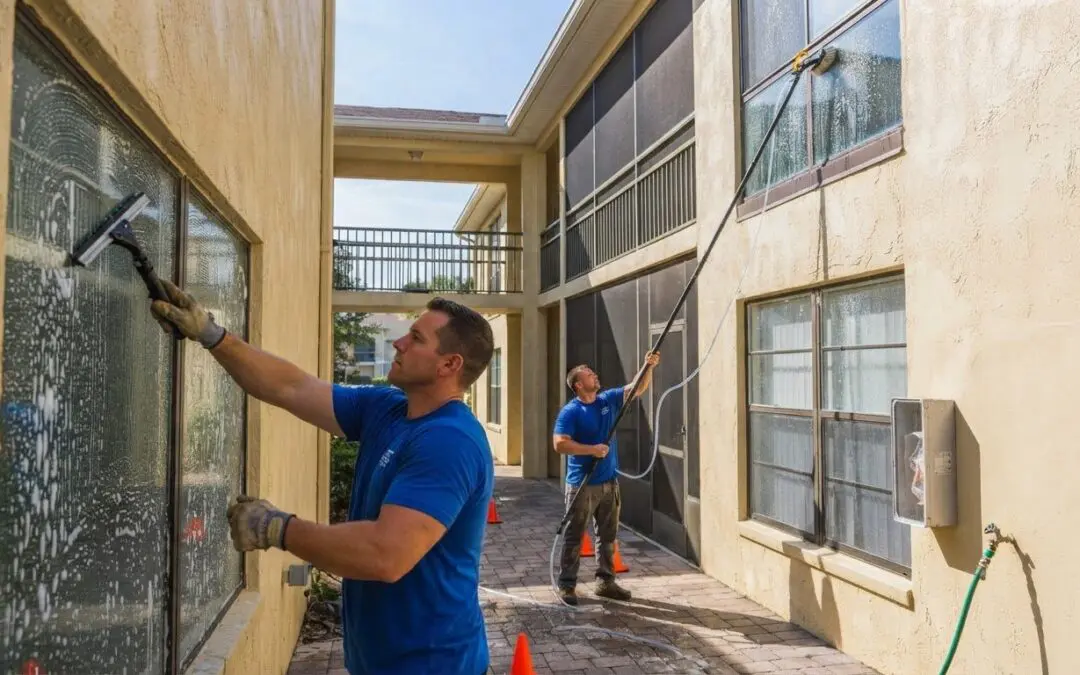
A condo cleaning bid isn’t a neat per-unit number you can pull from a spreadsheet. For exterior cleaning for condo associations in Eustis, pricing depends on the project scope, including building height, the number of sides and windows, water access, and how easily crews can reach the areas being cleaned. The quote reflects the property, not just the unit count.
That makes sense: a low-rise building with clear access is a different job from a taller property with hard-to-reach walls and extensive glazing. Clean exteriors do more than improve curb appeal; regular care helps manage grime and organic growth on shared surfaces. A little upkeep is less dramatic than waiting until the building looks like it’s auditioning for a moss documentary.
This article explains what shapes a bid, which building surfaces and shared spaces can be cleaned, and what to consider when hiring a contractor. You’ll also learn why regular exterior care matters, so your association can plan work around the property’s actual needs rather than rely on a one-size-fits-all per-unit figure.
Key Takeaways
- Building height, sides, windows, water access, and work-area access all shape a cleaning bid; a per-unit figure alone may not tell the full story.
- A clear project scope helps account for different exterior surfaces and the cleaning approach each one needs.
- Shared entrances, walkways, courtyards, and other outdoor areas can be part of an association’s exterior cleaning plan.
- Regular cleaning can help reduce grime and biological buildup while helping preserve exterior materials.
- Consider how the proposed work fits the property’s surfaces, shared spaces, and residents’ routines.
Comparing bids by building sides, height, windows, water, and access
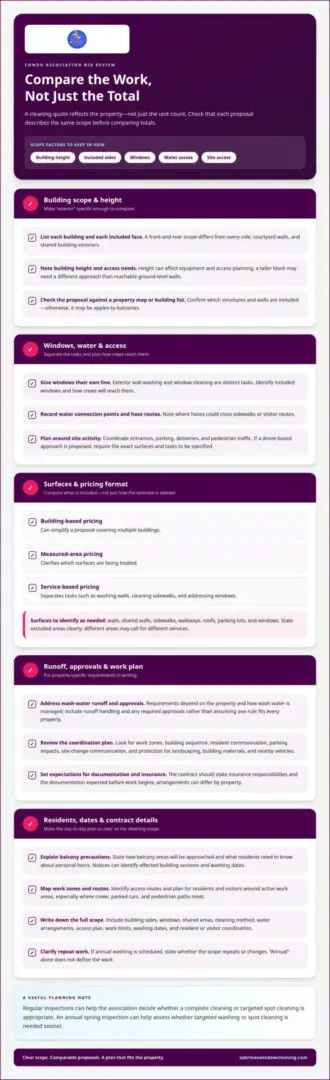
Compare written scopes, not just totals: building sides, height, windows, water access, and accessibility can all change the work. For exterior cleaning for condo associations in Eustis, matching these details makes proposals easier to evaluate.
Pressure-washing permits and environmental requirements depend on the property and how wash water is managed. Include runoff handling and any required approvals in the written scope rather than assuming one rule applies to every Eustis property.
Condo exterior cleaning may be priced by building, measured surface area, or listed service. The estimate depends on the project: building height, included sides, windows, water access, and access conditions all help shape the quote.
Compare the work each proposal describes, not just the company name. For Eustis-area buildings, look for clear scope details covering walls, sidewalks, walkways, roofs, or parking lots as needed. These areas may call for different services.
A contract should identify the included building sides, windows, shared areas, cleaning method, water arrangements, access plan, and work limits. It should also explain how washing dates and resident or visitor access will be coordinated. A well-defined plan for exterior cleaning for condo associations in Eustis gives the board a clearer basis for approval.
Building Scope and Height
Ask each proposal to identify the building faces included, rather than saying only “exterior.” A bid covering the front and rear differs from one covering every side, courtyard wall, and shared building exterior. Height also affects equipment and access planning. For example, a taller block may need a different approach than a low-rise building with reachable ground-level walls.
Match the scope against the property map or building list. If the association has several structures, make sure the proposal distinguishes them and identifies which walls will be washed. This avoids comparing a complete-building scope with a partial one, a classic apples-to-balconies situation.
Window, Water, and Access Needs
Windows deserve their own line in a bid: exterior wall washing and window cleaning are distinct tasks. Confirm which windows are included and how crews can reach them. Water access matters too. Note available connection points and any places where hoses could cross sidewalks or visitor routes.
For urban buildings, coordinate entrances, parking, deliveries, and pedestrian traffic before work begins. A drone-based exterior cleaning approach may be considered when access is challenging, but the proposal should specify the exact surfaces and tasks involved. A drone is not a magic wand with propellers.
Pricing and Contract Scope
Building-based pricing can simplify a multi-building proposal, while measured-area pricing clarifies which surfaces are treated. Service-based pricing separates tasks such as washing walls, cleaning sidewalks, and addressing windows. Compare what each format includes, not just its label, and make sure excluded areas are clearly stated.
Have the contract name shared walls, sidewalks, and walkways individually. Include water arrangements, access coordination, washing dates, and plans for resident and visitor routes. If the association schedules annual washing, state whether the scope repeats or changes; “annual” alone doesn’t define the work.
Contractor qualifications for multi-residential work
For a multi-building property, look for a proposal that includes a coordination plan. It should identify work zones, resident communication, parking impacts, and how crews will protect nearby materials.
Florida condo maintenance duties depend on the association’s governing documents and state law. The contract should also set out insurance responsibilities and the documentation the association expects before work begins, without assuming one coverage arrangement suits every property.
Regular inspections can help an association decide when a complete cleaning or targeted spot cleaning is appropriate. An annual spring inspection can help the association decide whether targeted washing or spot cleaning is needed sooner.
Assessing a Contractor’s Work Plan
For multi-residential work, review how the cleaning team will sequence buildings and communicate site changes. A plan might separate wall washing from sidewalk work, helping residents understand which areas are affected each day. It should also describe how workers will protect landscaping, building materials, and nearby vehicles.
Ask for a written scope that identifies the surfaces, cleaning approach, access points, and work limits. This gives the board a practical basis for reviewing the proposal and discussing site-specific needs at a meeting. A vague promise to “clean the property” leaves too much room for different interpretations.
Resident and Balcony Precautions
Balconies can hold furniture, plants, and other personal items. The work plan should explain how balcony areas will be approached and what residents need to know before crews arrive. A notice, for instance, can name affected building sections and washing dates, rather than leaving residents to guess from the sound of equipment.
Parking needs the same care. Identify work zones and access routes in advance, especially where crews, parked cars, and pedestrian paths meet. Clear directions help residents and visitors move around active work areas without turning a routine cleaning day into a game of “find the open entrance.”
Scheduling With Residents in Mind
Wash Authority recommends scheduling condo washing in the off-season when buildings are less occupied. The best timing still depends on the property and resident calendar. Coordinate dates with building access, shared-space use, and other planned maintenance.
Send residents notice of washing dates before the crew arrives. Include the affected buildings, expected access changes, and any balcony or parking preparations. A board can review the plan at a meeting, then distribute one consistent update. For a defined pressure washing scope, clear scheduling details help the association coordinate the work and resident expectations.
Professional cleaning of vinyl siding, brick, stone, and stucco
One cleaning approach doesn’t suit every condominium exterior. Vinyl siding, brick, stone, stucco, painted surfaces, and concrete sidewalks each require attention to their material and condition. A professional project starts by identifying these surfaces, then adjusting pressure and cleaning solutions to suit them. This addresses each surface appropriately instead of treating the whole property like one giant, identical wall.
Match the Cleaning Approach to the Surface
Vinyl siding has joints and overlapping panels, while brick and stone have textured faces and mortar lines. Stucco has a different finish. These differences matter during washing, so the cleaning approach should account for the material being treated. A method suited to one surface shouldn’t automatically be applied to another.
For example, a building may combine vinyl siding on upper walls with brick around its entrance. A useful project scope identifies both materials instead of calling everything “exterior walls.” That gives the crew a clear basis for adjusting pressure and cleaning solutions across the property.
Stone should also be identified separately from brick in the scope. Naming the surfaces helps the association understand which areas are included and keeps the work plan clear. Boards can use these descriptions when discussing project boundaries or reviewing completed areas.
Include Painted Surfaces and Concrete
Painted surfaces and concrete sidewalks may also be part of an exterior cleaning project. A building’s painted trim, for instance, differs from adjacent stone or siding. Listing each surface helps prevent a broad wall-washing description from obscuring what the crew is expected to clean.
Sidewalks bring their own practical considerations. A scope can identify which concrete paths are included, such as the walkway from a parking area to a shared entrance. Naming that route distinguishes it from other concrete elsewhere on the property.
Roofing is a separate surface and should be described as its own task when included. A roof’s material and cleaning needs differ from nearby stucco or siding. Keeping roofing separate in the scope helps avoid treating every exterior surface as though it belongs in one washing category.
Make the Scope Useful to the Association
A clear scope connects materials to locations. It might identify vinyl siding on one building, brick at the entrance, stucco on another wall, and concrete sidewalks along shared paths. This detail gives boards and property managers a practical way to discuss what the project covers.
Before work begins, the cleaning plan should account for the surfaces named in the scope. Pressure and cleaning solutions are adjusted to suit the material being cleaned. This surface-specific approach matters across a property with mixed materials, where one building can present several different cleaning needs.
For condo associations in Eustis, precise surface descriptions make a proposal easier to understand and compare. “Clean the exterior” leaves room for confusion; “wash the vinyl siding and brick entrance” gives the project a much clearer starting point.
Entrances, courtyards, and shared outdoor spaces
A condo association’s shared exterior includes more than building walls. Entrances, courtyards, pedestrian walkways, parking areas, and dumpster or service areas can all be included in a cleaning scope. Naming each space helps boards distinguish surface cleaning from repairs and keeps the project focused on places residents and visitors use, without sending the cleaning crew on a tour of every “common area” in town.
Map the Shared Areas
Start with a property map or building list. Mark each entrance, courtyard, walkway, parking area, and service zone that needs attention. A path from a parking space to a shared entrance, for example, is clearer in the scope than a broad request to clean “common areas.” Specify which buildings and outdoor spaces are covered, so nobody has to guess where the cleaning adventure ends.
Condominium shared elements may include the exterior, shared roofs, hallways, stairwells, and landscaped grounds. A cleaning plan should identify the relevant exterior surfaces and outdoor areas, not imply that every shared element receives the same treatment. Dumpster and service areas also deserve specific mention because they are distinct work zones from a main entrance or courtyard, and, unlike courtyards, they rarely win the neighborhood beauty contest.
Keep Cleaning and Inspection Distinct
Cleaning can remove surface grime, but it doesn’t repair cracks or uneven concrete; a pressure washer is not a tiny construction crew. HOA boards should inspect sidewalks and walkways for cracks, potholes, and uneven surfaces that could cause trips or falls. Those routes merit inspection after storms or periods of freezing weather. A cleaning scope shouldn’t be mistaken for a repair plan.
Shared decks, patios, and awnings need separate attention. Inspect them for rot, rust, and loose fasteners rather than assuming washing resolves those concerns. The same distinction applies to lighting: shared fixtures need regular cleaning, while bulbs may need replacement. Listing these items separately helps the association keep maintenance tasks clear, and keeps “clean the light” from being mistaken for “make the light work.”
Make High-Traffic Spaces Part of the Plan
Entrances and walkways see regular resident and visitor traffic. Scheduling their cleaning requires attention to access, especially where a path serves as the main route into a building. Courtyards and shared patios also need clear boundaries in the work plan, so residents know which outdoor spaces are included. A clear plan helps everyone avoid the classic surprise: discovering the patio was “included” only in someone’s imagination.
- Entrances: Identify the building doors and adjacent pedestrian areas.
- Walkways: Name paths connecting buildings, parking, and shared spaces.
- Courtyards and patios: Define the outdoor surfaces included in washing.
- Service areas: Mark dumpster and access zones separately.
Common areas and shared elements are generally maintained by the association, while homeowners retain separate responsibilities. Governing documents can define those boundaries. Clear descriptions help boards connect a cleaning project to their maintenance plans and consider curb appeal alongside property value, without treating appearance as a substitute for sound surfaces. After all, a spotless walkway is lovely; a spotless walkway with a surprise pothole is less so.
Why condo association exterior cleaning matters
Exterior maintenance is more than a curb-appeal exercise. Condominium walls can develop stains, mold growth, and discoloration without regular cleaning, nature’s way of leaving its mark, whether invited or not. On a shared property, those changes affect common areas residents use every day. Cleaning also makes it easier to see a surface’s condition, though washing cannot replace repairs or inspections. Think of it as a fresh look, not a magic wand.
Cleaning Supports Material Care
Regular exterior cleaning helps reduce mold and algae buildup and helps preserve building materials. That matters for surfaces exposed to Eustis weather, including siding, painted areas, walkways, and shared roofs. Dirt and organic growth can make early changes harder to spot. A cleaned wall, for example, may make peeling paint or a crack easier to notice during a later inspection, one less thing for grime to keep under wraps.
Cleaning isn’t a demand for an annual full-building wash. A complete building cleaning is recommended at least every 10 to 20 years, while spot cleaning may address localized buildup between larger projects. An annual spring inspection can help the board identify which areas need attention, rather than scheduling the same work automatically every year. Even buildings deserve a checkup before grime starts acting like it owns the place.
Pair Washing With Condition Checks
Condo boards are responsible for maintaining common elements in most associations, including the building exterior. Shared elements can include roofs, hallways, stairwells, and landscaped grounds. Since governing documents define maintenance responsibilities, boards can use them to distinguish association areas from individually maintained property, a useful way to avoid sending the cleaning crew to someone else’s patch of kingdom.
During exterior reviews, note peeling paint, cracks, or mold on shared painted surfaces and siding. Those observations can help the association schedule repairs or replacement before deterioration worsens. A pressure-washed surface isn’t a repaired surface; keeping the tasks distinct prevents a fresh appearance from giving maintenance needs a convincing disguise.
Build Cleaning Into Seasonal Maintenance
Seasonal gutter and downspout cleaning helps direct rainwater away from buildings. An inspection, for example, can note whether leaves or other debris are obstructing drainage, then schedule cleaning as part of the association’s maintenance plan. The practical goal is to keep water moving away from the structure, not simply make gutters look tidy. Leaves may be charming on trees; gutters have different opinions.
Pair that task with a spring exterior inspection. The board can record stained walls, algae growth, or discoloration, then decide whether the property needs targeted washing or broader work. This creates a practical sequence: inspect, identify affected surfaces, schedule suitable cleaning, and keep repair needs on a separate list. In other words, give dirt the boot without letting repairs slip out the back door.
For condo associations in Eustis, the takeaway is simple: use cleaning to manage buildup and support material care, not as a substitute for inspection. Plan exterior cleaning for shared surfaces as part of a maintenance schedule that also tracks repairs.
Sabrina’s Window Cleaning
Sabrina’s Window Cleaning helps property managers and association boards plan exterior care with pressure washing, window cleaning, soft wash roof cleaning, gutter cleaning, and hurricane shutter installation. For a condo property, these services can tackle different parts of an exterior maintenance plan, from shared walls and windows to roofs and gutters, because grime rarely sticks to just one spot. The right scope depends on the surfaces and areas the association wants cleaned and how the work fits its maintenance priorities.
When the board is ready to discuss exterior cleaning for a condominium community, Sabrina’s Window Cleaning can help define a suitable service scope. Contact Sabrina’s Window Cleaning to discuss your property’s exterior cleaning needs, and give that grime a polite notice to leave.
Set the Next Step for Your Community
Give your association a practical starting point: decide what a successful exterior maintenance plan should accomplish for residents and the property. That might mean refreshing the community’s appearance, keeping shared spaces presentable, or planning cleaning alongside other maintenance priorities. A clear goal helps the board make decisions for the whole community, not just the most visible wall.
For exterior cleaning for condo associations in Eustis, the next step is a conversation grounded in your property’s priorities. Share the areas you want addressed, the outcome you’re aiming for, and any scheduling considerations that matter to residents. From there, you can discuss a suitable scope with the community’s needs in view. No grand cleaning strategy needs a cape; it needs a clear purpose and a sensible next move.
Contact Sabrina’s Window Cleaning to discuss your association’s exterior cleaning needs and take the next step toward a plan that fits your community.
Frequently Asked Questions
Do you offer per-unit pricing for condo associations?
Pricing depends on the property and project scope, so a per-unit figure isn’t a universal rate, no one-size-fits-all price tag here. Building height, included surfaces, window work, water access, and access conditions can all affect the quote. For board planning, describe the buildings and shared areas involved, then request a scope-based quote. That gives the association a clearer basis for understanding the work than dividing a total by unit count alone (math is helpful, but it doesn’t tell the whole story).
How do you present pricing for condo board approval?
Present the quote with a defined scope and the project’s cost factors, rather than a total without context. A board packet can identify the buildings, surfaces, windows, and shared areas covered, alongside access and scheduling details. For example, separate wall washing from window cleaning so board members can see which tasks are included. A clearly organized scope makes discussion more useful at a board meeting, and helps keep “What exactly are we paying for?” to a minimum.
What Does HOA Exterior Maintenance Mean?
HOA exterior maintenance means caring for the property’s shared exterior elements, as defined by the association’s governing documents. These may include building walls, shared roofs, sidewalks, and landscaped grounds. An association might arrange cleaning for a common walkway while an owner handles a separate area assigned to them. Governing documents help establish responsibility, so maintenance plans should reflect the property’s actual boundaries, not whoever happens to have the nearest garden hose.
Will cleaning disrupt residents or damage personal property on balconies?
Cleaning can affect access around active work areas, so the work plan should explain timing and affected locations. Residents can receive notice describing the buildings involved and any access changes. Balcony furniture and plants are personal items, so association communications should explain any preparations residents need to make. A notice can identify the affected building section and dates, rather than leaving residents to discover the work underway, and wonder why their balcony has become a surprise obstacle course.
What exterior cleaning services are available for condo associations in Eustis, Florida?
Sabrina’s Window Cleaning offers window cleaning, pressure washing, soft wash roof cleaning, gutter cleaning, and hurricane shutter installation. For an Eustis association, the appropriate service depends on the property’s needs. Window cleaning addresses glass, while pressure washing can clean exterior surfaces. Roof and gutter cleaning cover different parts of an exterior maintenance plan; roofs and gutters, it turns out, have separate job descriptions. The association can describe its priorities to help define a relevant service scope.
How can condo associations compare exterior cleaning bids and verify contractor credentials?
Compare proposals by matching the same buildings, surfaces, and tasks across each scope. Look for clear details on access, scheduling, and shared areas included. Organize the contractor’s business and insurance documentation with the proposal, then compare the submitted materials against the association’s own requirements. This keeps board review grounded in the project scope and the records needed for its approval process, less apples-to-oranges, more apples-to-apples.
What precautions protect landscaping, residents, pets, and building surfaces during cleaning?
A site plan can identify landscaping, resident routes, pets’ outdoor areas, and surfaces needing a material-appropriate cleaning approach. The crew can use that plan to coordinate work zones and access with property management. For example, mark garden beds beside a walkway and note the route residents use to reach an entrance. Clear resident notices can explain timing and affected areas, helping people plan around the work without assuming every space stays open. Even the most enthusiastic dog walker appreciates a heads-up.
Disclaimer
All articles are designed to entice you to hire Sabrina's to clean your windows, not to teach you how to clean them. They are meant for entertainment purposes only. We are not responsible for the out come of your DIY cleaning project!