

Article by
Frank Sweeney
Can a commercial building prepare for hurricane season without crossing its fingers and hoping for the best? Yes. A commercial property exterior maintenance plan in Tampa helps organize exterior upkeep before storm season puts a property under pressure. Fingers crossed are fine for a lottery ticket, but less useful as a maintenance strategy.
Tampa property owners know that weather can make exterior upkeep a moving target. A thoughtful plan brings the work into focus, with priorities shaped around the building rather than a one-size-fits-all checklist. The goal is practical preparation, not a promise that any property can outargue the forecast.
Here, you’ll learn how plans can be tailored to different commercial properties, what contractor qualifications matter, and how service areas affect planning in Tampa. You’ll also see how exterior maintenance needs fit into hurricane-season preparation, so you can make informed decisions and keep the next steps clear.
Key Takeaways
- Shape an exterior maintenance plan around the property’s condition, materials, and preparation priorities rather than relying on a generic checklist.
- Factor in Tampa’s salt air, humidity, intense sun, and heavy-rainfall season when setting maintenance priorities.
- Learn what contractor qualifications and planning practices help keep commercial exterior work organized and suited to the property.
- Consider how property type and service area can affect which exterior tasks belong in a maintenance plan.
- See how window cleaning, pressure washing, soft wash roof cleaning, and hurricane shutter installation can support exterior upkeep and storm-season preparation.
Customized maintenance plans based on property needs
A commercial property exterior maintenance plan in Tampa should reflect the building, its site, and seasonal priorities. Include a site assessment, property details, applicable plan references, and the specific exterior areas that need monitoring.
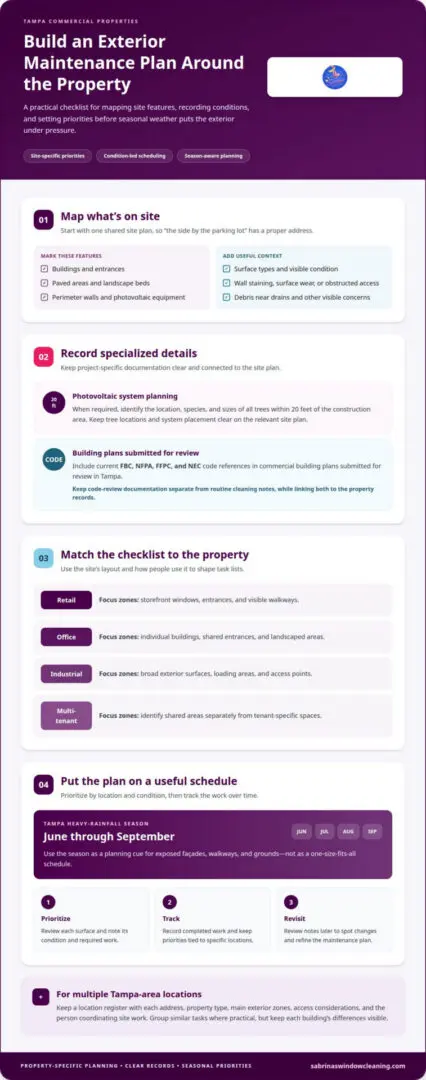
Start with a site plan identifying buildings, entrances, paved areas, landscape beds, perimeter walls, and photovoltaic equipment. Marking these features gives the maintenance team a shared map instead of leaving everyone to interpret “the side by the parking lot.” Note surface types and visible conditions, such as wall staining or debris near a drain. These details help distinguish routine cleaning from issues that need closer attention.
Photovoltaic systems call for careful site documentation. Tampa photovoltaic system plans must identify the location, species, and sizes of all trees within 20’ feet of the construction area when required. Keep that information connected to the relevant site plan, so tree locations and system placement are clear in the same project record. A distinct plan helps avoid overlooking how nearby landscape features relate to the construction area.
Property Assessment and Plan Customization
Turn site details into a prioritized maintenance schedule. Review each exterior surface, note its condition, and record the work needed. For example, a property with marked windows and stained pavement may need separate cleaning priorities. Tampa’s weather and each building’s exposure also inform timing. A clear record helps property managers track completed work and spot changes during later reviews.
Perimeter Wall Maintenance Planning
Show perimeter walls as distinct features on the site plan, recording their locations and visible condition. During an assessment, note staining, surface wear, or obstructed access. These observations define the maintenance task and make it easier to revisit the same wall sections later. A wall beside a landscape bed, for example, may need different attention from one facing a paved entrance.
For commercial building plans submitted for review in Tampa, include current FBC, NFPA, FFPC, and NEC code references. Keep this documentation separate from routine cleaning notes, while linking both to the same property records. These references apply to submitted building plans, not as a substitute for describing exterior upkeep. Keeping the records distinct helps teams organize plan-review information and day-to-day maintenance.
Use the assessment to set priorities by location and condition, then record the work and revisit those notes during the next review. A landscape bed beside a perimeter wall, for instance, can be logged separately from a photovoltaic system or a paved entrance. This level of detail keeps the plan specific to the property and gives facility teams a practical way to track appearance, maintenance needs, and weather-related preparation without relying on a generic checklist.
Commercial property types and service areas
A retail plaza, office building, and warehouse each have different exterior priorities. Their layouts, surfaces, entrances, and grounds shape the maintenance tasks to include. A storefront may need attention to customer-facing glass and walkways, while a warehouse has different exterior zones to consider. A generic checklist may look tidy on paper, but buildings rarely follow the paperwork.
Group properties according to how people use them and how each site is arranged. A storefront may have a prominent entrance, paved paths, and landscaped areas. An office complex may contain several buildings and shared outdoor spaces. A warehouse may have loading areas and employee entrances. These distinctions help create practical task lists that match each property’s layout.
- Retail properties: Note storefront windows, entrances, and visible walkways. These shape a visitor’s first impression.
- Office properties: Map individual buildings, shared entrances, and landscaped areas. The layout can affect how work is coordinated.
- Industrial properties: Record broad exterior surfaces, loading areas, and access points. Their placement helps define the work zones.
- Multi-tenant properties: Identify shared areas separately from tenant-specific spaces. Clear boundaries prevent a shared entrance from becoming everyone’s “someone else’s job.”
Start service-area planning with each property’s address and the work needed there. For a portfolio with Tampa-area locations, list each site separately and note its property type, exterior features, and priorities. This creates a consistent approach without assuming every address needs identical services. A shared map is useful; a copy-and-paste plan is less so.
Plan for seasonal conditions as well as site use. Tampa’s heavy-rainfall season runs from June through September. That timing can help property teams organize upkeep for exposed façades, walkways, and grounds. Record priorities by location and consider access when scheduling work. The calendar is a planning cue, not a magic wand that makes every property identical.
For properties across the Tampa area, keep a location register with each address, property type, main exterior zones, access considerations, and the person coordinating site work. Group similar tasks where practical, while keeping each building’s differences visible. A nearby retail center and office building may share a service area, but their task lists shouldn’t be twins just for convenience.
For a property-specific conversation about commercial exterior upkeep, use the building’s address, type, and key exterior areas as a practical starting point.
Maintenance strategies should never be copied wholesale across sites. Salt air, humidity, and intense sun exposure present unique challenges for commercial properties in the Tampa Bay area. Keeping those conditions in view can help teams compare sites by exposure as well as use, then note where exterior zones may call for closer attention. A location register can make those distinctions easier to coordinate.
Maintenance contractor qualifications
Compare commercial maintenance contracts by scope, work methods, scheduling, reporting, and responsibility for each task. For a Tampa retail property, a clear agreement distinguishes exterior cleaning from repairs, identifies the included areas, and explains how completed work is documented. This helps property managers compare what each plan covers, not just how polished its cover page looks.
Qualifications should relate directly to the work being performed. Relevant experience, staff preparation, equipment, and written procedures show how the work fits a property’s surfaces and access conditions. For example, a contract covering a tall retail façade should describe the work area and access approach. A plan for a low-rise office should define its own scope rather than borrow the retail example.
Address insurance and liability clearly in the agreement. Identify the contractor’s responsibility, the property’s responsibility, and how insurance documentation relates to the scheduled work. Also consider potential exposure around public entrances, parked vehicles, and tenant spaces. These are practical risk categories to document, not a substitute for legal advice or a statement of specific Tampa requirements.
Safety planning should account for site activity and changing conditions. At a retail entrance, schedule work and plan access around customer flow. The agreement can describe how work zones are identified, how affected areas are communicated, and how weather-related changes are handled. Clear procedures help teams coordinate before technicians arrive.
- Scope: Name the exterior areas and tasks included, such as façades, walkways, or parking-side surfaces.
- Work records: Set out what completion notes describe, including the area addressed and any visible condition needing follow-up.
- Responsibility: Clarify who coordinates access, communicates with tenants, and records incidents or interruptions.
- Insurance documents: Identify which insurance records relate to the work and where they are kept.
- Schedule changes: Explain how the plan handles weather delays or conflicts with site operations.
Compare contracts side by side. A plan that says only “exterior maintenance” leaves room for different interpretations; one that names locations, tasks, records, and responsibilities is easier to manage. Keep repairs distinct from cleaning, and document how newly observed conditions move into follow-up. This structure lets property teams evaluate the actual scope without mistaking polished wording for a complete plan.
For a Tampa commercial property, a practical qualification checklist includes relevant work methods, defined responsibilities, appropriate insurance documentation, and safety procedures suited to the site. The company performing the work should be able to explain how the agreed tasks will be completed and documented. Clear scope belongs in the plan before work begins.
Maintenance for different commercial property types
A retail plaza, office, and warehouse each have different exterior priorities. A tailored plan connects maintenance tasks to the building’s use, layout, materials, and visible condition. For example, a customer-facing storefront may prioritize clean windows and an orderly entrance. A warehouse plan may focus on broad exterior surfaces and areas around loading access. Buildings rarely fit neatly into one template.
For retail properties, start with the spaces customers encounter first: storefront glass, entrances, walkways, and nearby landscape beds. Record each area separately, then note whether the priority is appearance, debris removal, or routine cleaning. If several tenants share an entrance, identify it as a common area. This simple distinction prevents a shared walkway from becoming the maintenance equivalent of a hot potato.
Office properties often have different patterns of use. A site with multiple buildings may need a separate exterior task list for each entrance, façade, and shared outdoor area. A property manager can group similar tasks across buildings while retaining location-specific notes. For instance, a shaded entrance and an exposed façade may have different cleaning needs, even within the same office complex.
Warehouse plans should reflect the building’s working layout. Note exterior walls, loading areas, employee entrances, and paved vehicle routes. Distinguish routine cleaning from repairs so the maintenance record doesn’t confuse surface appearance with structural work. Keep landscape areas and access points on the same site record, but list them as separate zones.
- Retail: Prioritize customer-facing windows, entrances, walkways, and nearby landscape beds.
- Office: Record each building’s entrances, façades, and shared outdoor spaces.
- Warehouse: Map loading areas, employee access, paved routes, and broad wall surfaces.
- Multi-tenant property: Separate shared spaces from areas assigned to individual tenants.
Tampa’s climate also belongs in the planning conversation. Commercial window washing in Tampa is recommended at least twice a year. Use that interval as a planning reference for glass, then adjust the broader schedule to the property’s condition and use. A busy retail entrance, for example, may need a different cleaning rhythm from a less-used service area.
To keep your exterior maintenance plan useful, assign every task to a specific zone and record what completion means. “Clean the entrance” is less clear than naming the storefront glass, doorway, and adjacent walkway. This detail helps property teams track appearance, coordinate debris removal, and identify when a separate repair needs attention. The climate provides context; the property’s layout determines where the work belongs.
Tampa commercial property and facility maintenance
Effective facility maintenance turns observed wear into scheduled work instead of waiting for an exterior problem to become the main attraction. In Tampa, organize upkeep around the property’s condition, use, and changing weather.
Exterior Inspection and Maintenance Frequency
Set review timing according to each surface’s condition, exposure, and use. Check façades, sidewalks, parking areas, landscape beds, and drainage paths, then record visible changes. Busy entrances or exposed surfaces may need attention sooner than sheltered areas. Schedule additional reviews after disruptive weather, and use dated notes to track changes in staining, debris, or wear since the previous visit.
Choosing Tampa Maintenance Contractors
A useful exterior maintenance plan defines tasks, schedules, work areas, and reporting. Compare proposals by checking whether each explains the included work, how completion is documented, and who coordinates access. The scope should match the property’s needs, with insurance records and safety procedures clearly addressed. A neat proposal is helpful, but it still needs to explain what happens on site.
Roof, Gutter, and Drainage Maintenance
Keep roof observations, gutter condition, and drainage paths in the property’s maintenance record. Note visible debris, blocked outlets, or water collecting near a doorway, sidewalk, or parking area. Schedule gutter cleaning to remove accumulated material, then record any follow-up concerns separately. Gutters aren’t known for appreciating leaf confetti, so keeping them clear belongs on the upkeep list.
For commercial building plans submitted for review in Tampa, include current FBC, NFPA, FFPC, and NEC code references. These references apply to submitted building plans, not routine exterior maintenance records. Keep plan-review documents distinct from notes about a stained façade or obstructed walkway, so facility teams can find the right information for each task.
Grounds and hard surfaces benefit from attention by location. Record landscape condition, sidewalk obstructions, parking-lot wear, and visible façade staining as separate items. Mulching commercial landscape beds can reduce water and pesticide needs and help control weeds. Sealcoating adds a protective layer over asphalt that can help reduce environmental exposure and improve a parking lot’s appearance. Different surfaces call for different work, not one universal “make it tidy” button.
Use a property log to connect observations with assigned work and completed tasks. For example, a note identifying debris near a particular downspout gives the maintenance team a clear place to focus. To address gutter buildup, arrange gutter cleaning as part of the property’s exterior upkeep.
Different surfaces need different care. CSG says pressure washing methods are intended to help keep properties clean longer and prevent building materials from deteriorating.
Sabrina’s Window Cleaning
Sabrina’s Window Cleaning can help a commercial property look its best and get ready for the seasons with window cleaning, pressure washing, soft wash roof cleaning, gutter cleaning, and hurricane shutter installation and removal. Choose the services that suit your property’s exterior priorities and storm-season plans, no crystal ball required.
For example, property managers can schedule window cleaning for customer-facing glass, pressure washing for suitable exterior surfaces, or soft wash roof cleaning as part of roof care. Gutter cleaning helps keep drainage flowing, while hurricane shutter installation and removal can join the storm-season prep checklist. Each task can fit alongside the site’s priorities and existing maintenance schedule, without turning the calendar into a game of Tetris.
Contact Sabrina’s Window Cleaning to discuss your commercial property’s exterior maintenance needs.
Make the Next Step a Practical One
A commercial property exterior maintenance plan in Tampa is easier to act on when you choose a clear first priority. That might mean scheduling exterior cleaning, organizing storm-season preparation, or tackling a task that’s been lounging on the calendar for a while. Start with the work that best fits the building’s current needs, then plan the next steps around it, one item at a time, no clipboard cape required.
Sabrina’s Window Cleaning offers window cleaning, pressure washing, soft wash roof cleaning, gutter cleaning, and hurricane shutter installation and removal to support commercial exterior upkeep. These services can fit into a broader plan for maintaining a property’s appearance and preparing its exterior for storm season.
If you’re ready to discuss the exterior work your property needs, contact Sabrina’s Window Cleaning. A thoughtful next step can help turn a maintenance list into a plan you can put into motion, without needing to wrestle the whole list at once.
Frequently Asked Questions
Do you prepare commercial properties for hurricane season in Tampa?
Yes. Sabrina’s Window Cleaning provides hurricane shutter installation and removal to support storm-season preparation, because shutters are easier to manage before the forecast starts making demands. Coordinate shutter work with the commercial property’s site schedule and priorities. For buildings in Tampa, record the areas that need attention and the timing of planned work. Shutters are one part of preparation, not a promise that a property will be unaffected by a storm.
What are typical costs for commercial exterior maintenance in Tampa?
Costs depend on the property and the work included, and are provided after a quote request. Relevant factors include the building’s size, the surfaces involved, access conditions, the tasks selected, and how often work is scheduled. For example, a plan covering multiple building façades differs from one focused on a single entrance. A clear scope helps connect the quote to the actual property needs, and keeps surprises off the invoice.
What hurricane and storm-preparation tasks should a Tampa commercial property maintenance plan include?
Include shutter installation where needed, gutter cleaning, and a written record of exterior areas that need attention before storm season. Assign responsibility for scheduling, documenting completed work, and noting visible changes after a storm. For example, record the condition of gutters and entrances before seasonal work, then note any debris or new concerns afterward. These steps organize upkeep without suggesting any checklist can prevent storm damage (even the most impressive checklist can’t boss a hurricane around).
What Florida building codes and regulations affect commercial exterior maintenance in Tampa?
Commercial building plans submitted for review in Tampa must include current FBC, NFPA, FFPC, and NEC references; these apply to plan review, not routine cleaning notes. Related requirements include tree details for photovoltaic plans when required and a design wind loads report for commercial sign applications. In other words, the paperwork has its own storm-prep plan.
Disclaimer
All articles are designed to entice you to hire Sabrina's to clean your windows, not to teach you how to clean them. They are meant for entertainment purposes only. We are not responsible for the out come of your DIY cleaning project!