

Article by
Frank Sweeney
The fastest way to make cleaning vinyl siding a bigger project is to start with too much pressure. That green patch may look like it needs a stern talking-to, but vinyl can be damaged by an overly forceful wash. A gentle approach is usually the smarter first move, and a pressure washer isn’t automatically the right tool just because it’s powerful.
It’s understandable to want a method that removes stains and organic growth without harming the siding, or having the grime return before you’ve put the bucket away. This guide walks you through a practical cleaning sequence, how to choose a suitable method, and what to consider before using a pressure washer. You’ll also learn when it’s wise to stop and ask a professional rather than keep scrubbing and hope for the best. Clean siding is the goal; surprise renovations are not.
Key Takeaways
- Identify what you’re seeing on the siding before choosing how to clean it. Dirt, pollen, and organic growth may call for different considerations.
- For cleaning vinyl siding, follow the manufacturer’s care guidance and take a measured, gentle approach rather than letting enthusiasm do the scrubbing.
- A pressure washer isn’t automatically suitable for every vinyl home. Check the siding maker’s instructions before deciding whether to use one.
- For stubborn marks, consult both the siding care guidance and cleaner label before spot-treating. Guesswork is better left to crossword puzzles.
- Consider professional help if access is difficult, buildup persists, the siding seems damaged, or you’re unsure how to clean it safely.
Cleaning Vinyl Siding: What Causes the Dirt, Stains, and Green Buildup?
Cleaning vinyl siding starts with a look, not a spray. Vinyl siding is a plastic exterior cladding made primarily from PVC, as outlined in this Vinyl siding overview. Like other exterior surfaces, it can collect ordinary dirt, pollen, organic growth, or a dull film from exposure. These may look similar from a distance, but the cause can affect which care instructions and cleaning methods are appropriate.
Florida’s humid weather and shaded exterior areas make it useful to inspect places that stay damp or get less direct sun, such as walls beside dense landscaping or beneath overhangs. That doesn’t confirm what a mark is; it simply points out where buildup may be more visible. Ordinary surface dirt often looks like a removable coating, while persistent or changing buildup deserves a closer look before you reach for a stronger cleaner.
How to tell dirt, algae, mildew, and chalking apart
Loose dust or pollen may appear as a light film, while green, dark, or patchy areas can be consistent with organic growth. A dull, powdery appearance may suggest chalking or another surface change. These are clues, not diagnoses: color and texture alone can’t reliably identify the cause. Shade, moisture, and exposure can also make one wall look dirtier than another. Check the siding manufacturer’s care instructions before choosing a cleaner.
Why a small test area can prevent a bigger mess
Before cleaning a broad section, try the selected method in an inconspicuous spot, following the siding maker’s guidance and any cleaner-label directions. Check the area afterward for a color change, surface marks, or material that appears loosened. If anything seems altered, stop rather than expanding the test. Vinyl siding generally prefers a careful introduction, not a surprise experiment with the whole side of the house.
Pay attention to how widespread the buildup is and whether it changes after a cautious test. A small patch that looks removable may be straightforward to assess; widespread staining, persistent marks, or siding that appears worn calls for more care. The aim isn’t to name every stain with certainty. It’s to gather enough clues to choose a safe next step, or recognize when guessing could do more harm than good.
How to Clean Vinyl Siding Safely: A Simple Step-by-Step Method
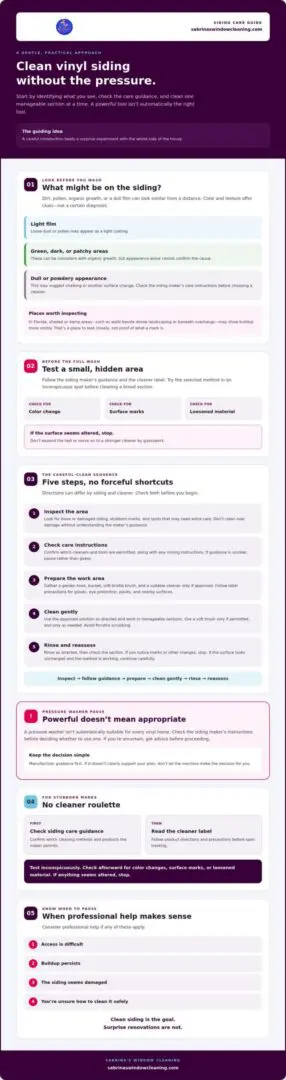
A careful wash is a series of small decisions, not a race to make every wall sparkle at once. Before cleaning vinyl siding, check the siding maker’s care instructions and the cleaner label. Directions can differ, so don’t assume a method that worked on another home is suitable for yours.
- Inspect the area. Look for loose or damaged siding, stubborn marks, and spots that may need extra care. Don’t clean over damage without understanding how the manufacturer recommends handling it.
- Check the care guidance. Confirm which cleaners and tools are permitted, along with any rinsing instructions. If the guidance is unclear, pause rather than guess.
- Prepare the work area. Gather a garden hose, bucket, soft-bristle brush, and a suitable cleaner only if the maker approves it. Wear gloves or eye protection when the cleaner label calls for them, and protect nearby plants and surfaces as the label directs.
- Clean gently. Apply the approved solution according to its directions, working in manageable sections. Use a soft brush only if permitted, and only as needed. Avoid forceful scrubbing.
- Rinse and reassess. Rinse as directed by the siding maker, then check the cleaned section. If the surface looks unchanged and the method is working, continue carefully. If you notice marks or other changes, stop.
What to gather before washing vinyl siding
Keep supplies simple: a garden hose, bucket, soft-bristle brush, and manufacturer-approved cleaner if one is needed. Check labels before use, and follow their precautions for handling products and protecting nearby surfaces. Having the instructions close at hand is less dramatic than improvising, but much kinder to the siding.
A careful wash-and-rinse routine
Test the selected method in an inconspicuous area first, following the same care and label directions you’ll use on the larger surface. Look for color changes, surface marks, or loosened material before moving on. If the test area looks sound, clean one manageable section at a time and rinse it as instructed before continuing. Inspect, follow the care guidance, prepare, clean gently, rinse, and reassess; a steady sequence beats a forceful shortcut.
If you’re uncertain whether pressure washing is appropriate, get advice before proceeding. Sabrina’s Window Cleaning offers pressure washing services. Ask whether the service and proposed method are suitable for your siding before arranging work.
Pressure Washing Vinyl Siding: When to Pause and Check First
A pressure washer isn’t automatically the right tool for every vinyl home. Its power can make exterior cleaning feel quick and satisfying, but the wrong approach may push water where it shouldn’t go or affect the siding’s surface. The safe choice depends on the specific product and its care instructions, not on a universal setting or distance.
Before using powered equipment, check the siding manufacturer’s instructions and follow its guidance for your exact product. Recommendations vary. For example, CertainTeed says it does not recommend power washing its vinyl or polymer siding, citing possible moisture intrusion, damage, or discoloration. That is a manufacturer-specific warning, not a rule that automatically applies to every brand. If you can’t identify the siding or find its care instructions, pause before cleaning vinyl siding with powered equipment.
Hand washing versus powered washing
Hand washing offers more direct control over where water and cleaning effort go, though it may take more time and physical work. Powered washing may cover areas faster, but it requires extra care and may not suit the siding maker’s guidance. Neither approach is best for every home. Sabrina’s offers pressure washing, so ask whether the service is suitable for your siding before proceeding.
Warning signs that mean stop cleaning
Stop if a panel appears loose, water enters an opening, or the siding’s surface changes during cleaning. Don’t aim water toward seams, vents, or other openings. If the area is difficult to reach, the siding looks damaged, or you’re unsure how the manufacturer’s instructions apply, don’t turn the job into a test of your nerve.
- Loose or damaged panels: Pause and seek experienced advice before washing around them.
- Water entering an opening: Stop the spray. Don’t continue in the hope that the next pass will somehow be drier.
- Changes to the surface: Stop if you notice marks, discoloration, or other unexpected effects.
Choosing a cleaning method means weighing control, effort, and the siding’s condition. If hand washing seems manageable and the manufacturer permits it, it may be a practical option. If access is difficult or the care guidance rules out powered washing, don’t improvise with stronger equipment. A cautious pause is much less trouble than an exterior that needs a different kind of attention.
How to Handle Stubborn Stains on Vinyl Siding Without Guesswork
A mark that remains after gentle cleaning can tempt you to scrub harder or reach for a stronger product. Resist the urge to turn stain removal into a chemistry experiment. The mark’s appearance may offer clues, but it doesn’t confirm what caused it. Before spot treatment, check both the siding manufacturer’s care instructions and the cleaner’s label to make sure the product and approach are suitable.
What to do about algae- or mildew-looking patches
Green, dark, or patchy areas may be consistent with organic growth, but appearance alone can’t identify the substance. Look for patterns: areas that stay damp or receive less sun may be worth inspecting closely. Then follow the care guidance for your specific siding and the cleaner-label directions. Don’t mix cleaning products or use a stronger treatment unless the manufacturer’s instructions support it. There’s no need to play backyard chemist.
How to respond to stains that will not lift
If a persistent mark doesn’t improve with a permitted, gentle cleaning method, stop and reassess. Repeated scrubbing can leave surface marks, while an unapproved stronger cleaner may create a new problem without addressing the original one. The stain might need closer assessment, particularly if the siding’s color or texture also looks changed.
- For visible dirt or pollen: Follow the siding maker’s general cleaning instructions rather than treating every discolored area as a stain.
- For green or dark patches: Note whether they appear in damp or shaded spots, but treat that pattern as a clue, not a diagnosis.
- For a mark that persists: Stop escalating. Check the care instructions or seek experienced advice before trying another product or method.
Careful cleaning vinyl siding means knowing when not to keep going. A mark that won’t lift may have a cause that ordinary washing can’t resolve, and more force isn’t automatically more effective. For broader exterior-cleaning context, see the guide “Pressure Washing Sarasota: Give Your Home the Just-Scrubbed Glow Since 1989.” If you’re considering professional pressure washing, contact Sabrina’s Window Cleaning about pressure washing and ask whether the service is suitable for your siding.
When to Call a Vinyl Siding Cleaning Professional in Florida
Not every siding wash needs professional help, but there’s no prize for doing a tricky job the hard way. Consider the siding’s condition, how easy it is to reach, whether buildup persists, and how confident you feel following its care instructions. Florida homes may have damp or shaded exterior areas worth checking more closely, but that doesn’t mean every home needs cleaning on a set schedule.
DIY or professional cleaning: how to decide
A do-it-yourself approach may suit accessible siding with light buildup when the manufacturer’s instructions are clear and the permitted cleaning method feels manageable. If the mark persists, access is awkward, the siding looks damaged, or the care guidance leaves you unsure, pause and seek experienced advice. Ask any professional what method they propose and whether it’s suitable for your specific siding. For cleaning vinyl siding, confidence in the method matters as much as the desire to get the job done.
Sabrina’s Window Cleaning offers pressure washing. If you’re considering the service, ask whether pressure washing is appropriate for your siding and what method they’ll use. A clear answer should come before the equipment does.
A simple maintenance habit for Florida homeowners
After rainy or humid periods, take an occasional look around the exterior. Note whether buildup keeps appearing in a shaded section or another spot that seems to stay damp. These observations can help you decide whether to consult the siding maker’s instructions or ask for professional advice; they aren’t a reason to commit to a fixed cleaning schedule. Think of it as a quick visual check, not a new part-time job.
Persistent buildup, difficult access, or uncertainty about the siding’s condition are sensible reasons to ask for help. Professional exterior cleaning may also be one part of caring for your home’s curb appeal, alongside choosing a method that respects the surface. For more ideas, see the guide Curb Appeal Exterior Cleaning Service: How to Make Your Neighbors Jealous Without the Drama.
If professional help feels like the right next step, explore Sabrina’s pressure-washing service and ask whether it fits your vinyl siding. The goal is a cared-for exterior, not a dramatic before-and-after story starring an avoidable repair.
Keep Your Siding Clean Without the Guesswork
Good cleaning vinyl siding starts with identifying what you’re seeing, checking the siding maker’s care instructions, and choosing a gentle method those instructions allow. Work in manageable sections, rinse as directed, and test before treating a larger area. A pressure washer isn’t automatically the right tool, and a mark that won’t lift is a reason to pause, not scrub like the siding owes you money.
If access is awkward, buildup persists, or you’re unsure what your siding can safely handle, professional advice can help you avoid turning routine upkeep into an unexpected repair project. Sabrina’s Window Cleaning is family-owned and operated and was founded in 1989. The company offers pressure washing for residential and commercial properties, but ask whether its service and proposed method are suitable for your particular vinyl siding.
Ready to discuss your options? Explore Sabrina’s exterior cleaning services and ask about the right fit for your home. With a careful plan, you can give your home’s curb appeal a lift while keeping the siding makeover strictly accidental-free.
Frequently Asked Questions
Can you pressure wash vinyl siding?
Possibly, but check the siding manufacturer’s guidance before using a pressure washer. CertainTeed advises against power washing its vinyl or polymer siding because it may cause moisture intrusion, damage, or discoloration. That’s guidance for CertainTeed products, not a universal rule for every siding brand. If you can’t confirm what your siding permits, choose a gentle method allowed by its care instructions or seek professional advice. The washer’s power button can wait.
What is the safest way to clean vinyl siding?
Check your siding’s care instructions, test a permitted method in an inconspicuous spot, and start gently. CertainTeed describes using soapy water, a soft-bristle brush, and a garden-hose rinse for general dirt on its siding. That approach may not suit every product, so follow your own manufacturer’s guidance and the cleaner-label directions. Begin with a light touch; the siding doesn’t need a dramatic scrub-down to prove you mean business.
Can I use bleach to clean vinyl siding?
Don’t treat bleach as a universal solution for vinyl siding. Before using any chemical, consult the siding manufacturer’s care directions and read the cleaner’s label to confirm it’s suitable and understand its precautions. Never mix cleaning products, and protect nearby surfaces as directed. If the manufacturer permits the cleaner, test it in a small, inconspicuous area first and check for unexpected color or surface changes. Chemistry experiments belong in a lab, not on your wall.
How do I remove green algae or mildew from vinyl siding?
Green or dark patches can have different causes, so appearance alone can’t confirm whether they’re algae or mildew. Check damp or shaded areas, then consult the siding maker’s instructions and choose only a compatible cleaner whose label supports the intended use. Test a small area and begin gently. If the growth persists or the siding appears damaged, stop rather than scrubbing harder and seek professional guidance. A stain isn’t a reliable name tag.
How often should vinyl siding be cleaned in Florida?
There’s no single cleaning schedule for every Florida home. Exposure, shade, nearby vegetation, and weather can affect how quickly visible buildup appears. Homeowners in Bradenton, Sarasota, Port Charlotte, Punta Gorda, Fort Myers, Naples, Leesburg, Orlando, The Villages, Tampa, Ocala, Belleview, Mount Dora, Eustis, Winter Garden, West Palm Beach, Boca Raton, Largo, and Clearwater can check siding periodically, especially after wet or humid stretches. Follow the manufacturer’s maintenance guidance; a visual check isn’t a calendar appointment for every house.
Can dish soap clean vinyl siding?
It may be an option for general dirt when the siding maker’s instructions allow it. CertainTeed lists dish soap or common laundry detergent with water in its guidance for its siding, but that doesn’t make it suitable for every product. Check your own manufacturer’s instructions and follow the soap or cleaner label. Test an inconspicuous area, use a soft brush only as appropriate, and rinse carefully without forcing water into openings. No need to make suds the main event.
What should I do if a stain will not come off vinyl siding?
Stop before trying stronger chemicals or scrubbing aggressively. Check the siding manufacturer’s care instructions and the cleaning product’s label, and consider whether the mark could be something other than ordinary dirt. Repeated force may create a separate surface problem without removing the stain. If it remains, the siding changes appearance, or panels seem damaged, ask a qualified professional to assess the surface. Sometimes the smartest cleaning tool is knowing when to put the brush down.
Disclaimer
All articles are designed to entice you to hire Sabrina's to clean your windows, not to teach you how to clean them. They are meant for entertainment purposes only. We are not responsible for the out come of your DIY cleaning project!