

Article by
Frank Sweeney
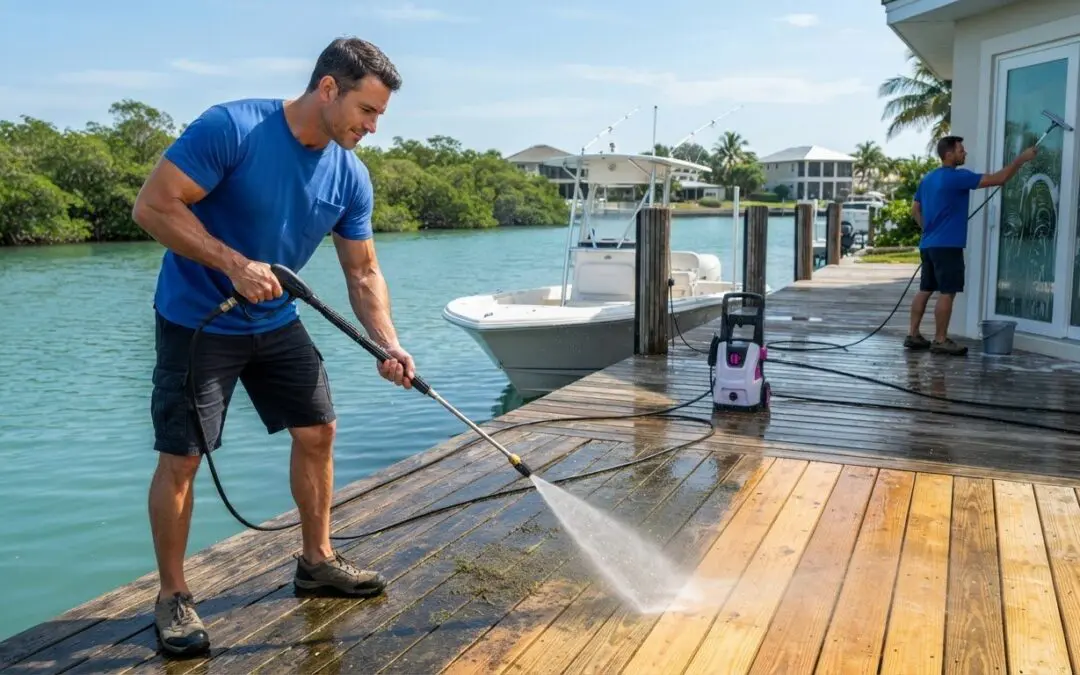
A dock can look sturdy while algae, mildew, grime, and stains take over its surface. Boat dock pressure washing in Port Charlotte removes surface buildup and helps docks and piers look cleaner. Wooden docks benefit from annual washing. This is useful upkeep, not just a cosmetic tidy-up, especially when a slick layer makes the walk to your boat a balancing act.
It’s reasonable to want a clean dock without risking damage to the surface or nearby water. The right approach depends on the material: wood, composite, aluminum, and vinyl each need suitable care, and excessive pressure can do more harm than good. A careful wash lifts buildup while respecting the dock’s surface.
Here, you’ll learn what dock and pier pressure washing can remove, which surfaces can be cleaned, and why wooden docks benefit from annual washing. You’ll also see what affects the cleaning approach and how professional pressure washing can fit into routine exterior maintenance in Port Charlotte.
Key Takeaways
- Algae, mildew, grime, and stains can make a dock look neglected and affect how comfortable it feels to walk on. Learn what buildup may respond to washing and when a cleaning solution may be needed.
- Wood, composite, aluminum, and vinyl docks can be cleaned, but the right approach depends on the surface and its care requirements.
- Wooden docks benefit from annual washing. Gentle technique matters: excessive pressure can etch the wood instead of simply cleaning it.
- For composite decking, follow the manufacturer’s care guidance before washing; for wood, consider whether resealing after cleaning would help protect the surface.
- Thoughtful dock and pier cleaning balances a fresh appearance with care for the dock and nearby water, making the cleaning method as important as the result.
Algae, mold, mildew, and stain removal
Boat dock pressure washing in Port Charlotte can lift grime from docks and piers. Algae, mildew, and pollutants can dull a dock’s finish, while dirt and organic buildup can contribute to surface deterioration. Algae may also make a wet dock slippery. Cleaning removes surface buildup, and a careful inspection helps reveal other issues.
Algae and mold may look similar, but they don’t always respond alike. Algae can often be removed with pressure washing alone, while mold may need a cleaning solution first. Start by identifying the growth and where it appears. For example, green film across an exposed walkway may be algae, while dark growth in a shaded corner may need pretreatment. Matching the method to the buildup helps avoid treating every stain as the same problem.
Mildew commonly appears where dampness and shade persist. PVC dock surfaces can develop mildew or mold, particularly in shaded areas, so regular cleaning helps keep buildup from settling in. Sun, water, and environmental exposure can also leave dirt and pollutants on dock finishes. Check shaded edges, joints, and spots where water lingers, even when the main walkway looks clean.
Stains can have different sources, too. Boat traffic may leave oil or rust marks on dock surfaces, and a simple rinse may not remove them. Identify whether a stain is surface grime, oily residue, or rust before choosing a cleaning approach. A rust-colored mark beside a boat fitting, for instance, is different from a broad algae film. Treating the whole dock uniformly can miss the cause of a stubborn spot.
Vinyl decking may need a cleaner suited to its surface. Oxygen bleach uses oxygen ions to neutralize stains and dirt on vinyl decking, making it a possible approach for certain marks, not a universal solution for every dock material. PVC also needs routine attention in damp or shaded areas, where mold and mildew can return. Consider the material before selecting a cleaner or applying pressure.
A careful cleaning sequence starts with inspection, not the trigger. First, note the dock material and mark areas with algae, mold, mildew, oil, or rust. Then choose a method suited to both the surface and the stain. Pretreat mold when needed, then wash the affected area with controlled pressure. Finally, recheck corners and shaded sections. This step-by-step approach helps you spot remaining buildup without blasting every surface indiscriminately.
Clean surfaces can improve a dock’s appearance and remove some slippery buildup, but they can’t repair damaged boards or a failing finish. If washing reveals splintering wood, loose sections, or persistent discoloration, treat those as separate maintenance concerns. A dock is for reaching the boat, not auditioning for a slapstick routine. Careful cleaning focuses on removable buildup while respecting the surface beneath it.
Pressure washing wood, composite, and aluminum docks
Dock material determines how cleaning should be approached. Near Florida waterways or storm drains, contain debris and residue rather than letting runoff travel freely. Containment tarps or other strategic methods can help keep cleaning waste out of nearby water. Plan this before washing begins, not after the rinse has carried grime away.
Wood needs a lighter touch than a stubborn stain might suggest. Pressure above 1200 – 1500 PSI may etch wooden boards, leaving visible marks instead of a clean finish. Cedar and pine call for particular care: a recommended range is 500 – 600 PSI. Keep the stream moving, work with the grain, and test an inconspicuous spot first. A narrow, concentrated blast can scar a board quickly, so steady passes are kinder than treating the washer like a carving tool.
Composite decking has its own care requirements. Check the decking manufacturer’s instructions before pressure washing, since following them can help avoid warranty problems. Medium pressure is recommended for composite cleaning, but the surface’s specific care directions still matter. A textured composite dock, for example, may hold dirt differently from a smoother board. Follow the manufacturer’s guidance and assess the visible buildup instead of assuming every composite surface responds alike.
Aluminum docks also need a surface-conscious approach. Check joints, fasteners, and coated areas for existing wear. Remove loose dirt with a controlled rinse before addressing stubborn patches, and avoid holding the spray in one place, especially around seams or edges. These steps help clean exposed surfaces without turning a small area of buildup into a larger maintenance headache.
For any material, a careful sequence keeps the work controlled. Clear loose debris first, identify the dock surface, and choose a suitable pressure level. Use a fan-tip nozzle to spread force across a wider area. Work in manageable sections, keep the spray moving, and watch for changes in the surface. Rinse away loosened residue while containing runoff near the water’s edge.
Near Florida waterways and storm drains, take a simple precaution: contain wash debris and residue, and keep them out of nearby water. The cleaning method should account for the dock’s location, not just the boards underfoot.
Dock-cleaning prices may be calculated by square foot for deck area or linear foot for narrow runs. The price depends on the dock’s size, material, access, and buildup, with a quote provided after a request.
Choosing careful pressure washing means matching the method to the dock, not forcing one setting onto every surface. Wood, composite, and aluminum each deserve a measured approach.

Annual pressure washing of wooden docks
Choose a time when you can examine the whole structure before washing. Walk the dock and note loose boards, splintering, worn finish, and areas that stay damp. Marking those spots helps distinguish routine dirt from damage that cleaning can’t fix. A dark mark may wash away, while a soft or cracked board needs attention beyond surface cleaning. Pressure washing cleans wood; it doesn’t make a damaged board sound again.
During washing, keep the nozzle about a foot from the wood. Move steadily along the boards instead of holding the spray in one place. Start with a small, less visible area and observe how the surface responds. This lets you adjust your technique before covering the main walkway. Think of it as a dress rehearsal, with the wood in the starring role.
During washing, keep the nozzle about a foot from the wood. Move steadily along the boards rather than holding the spray in one place. Start with a small, less visible area and observe how the surface responds. This gives you a chance to adjust your technique before covering the main walkway. Think of it as a dress rehearsal, only the wood gets the starring role.
Wood has natural oils that offer some protection against insects and decay, but that doesn’t eliminate the need for regular care. After washing, inspect the boards for rough spots, changes in the finish, or areas that remain discolored. The surface condition can guide maintenance decisions. Keep notes with the annual reminder, especially if one section repeatedly needs extra attention.
Annual washing is a useful baseline, not a reason to ignore obvious buildup between cleanings. A heavily used dock may need attention sooner than a lightly used one. Watch for slippery patches, grime, or a dulled finish, and consider how exposure and traffic affect the wood. In Port Charlotte, an annual review with a Florida dock professional can help shape a sensible care routine. Consistent inspection keeps maintenance planned instead of waiting until algae is waving a flag.
Annual washing is a useful baseline, not a reason to ignore obvious buildup between cleanings. A dock used heavily may need attention sooner than a lightly used one. Watch for slippery patches, grime, or a finish that looks dulled, then consider how exposure and traffic affect the wood. In Port Charlotte, an annual review with a Florida dock professional can help shape a sensible care routine. Consistent inspection keeps maintenance planned instead of leaving it until the dock practically waves a little algae flag.
Dock and pier pressure washing
A sound cleaning plan considers the dock surface, nearby water, and cleaning runoff. In Port Charlotte, those details help shape careful work from preparation through final rinse.
Choosing a Licensed and Insured Company
For dock pressure washing in Port Charlotte, compare documented qualifications and insurance alongside the cleaning method. Look for experience with the dock material, a plan for controlling runoff, and clear preparation steps. A pier beside open water needs different precautions from a paved area. The method should account for where wash water and loosened debris will go.
Pressure washing can damage a dock if the force or technique doesn’t suit its surface. A concentrated spray held in one spot may mark or wear material. Before cleaning, inspect boards, seams, and finish for existing damage. After washing, keep foot traffic off wet areas until they’re dry. A freshly washed dock shouldn’t become a surprise skating rink.
Surface Damage and Slip Hazards
Algae and cleaning residue can both affect footing. During a wash, work in sections and keep people away from the active area. Once rinsing is complete, check walkways, steps, and access points for remaining film or pooled water. A clean-looking surface still needs a final walk-through before regular use resumes.
For fish, manatees, and other marine life, prioritize keeping cleaner and residue out of the water. Environmentally considerate cleaning solutions are described as safe for surrounding wildlife and the environment. Containment tarps or other strategic methods can help capture debris and residue. A product label does not replace controlling where runoff travels.
For fish, manatees, and other marine life, prioritize keeping cleaner and residue out of the water. Environmentally considerate cleaning solutions are described as safe for surrounding wildlife and the environment. Containment tarps or other strategic methods can help capture debris and residue. Avoid treating a product label as a substitute for controlling where runoff travels.
Are permits required to pressure wash a dock in Charlotte County? There isn’t a blanket permit answer for every site and activity. Surface washing differs from dock construction or alteration, so the work scope and location matter.
A well-planned dock cleaning starts with defining the work area. In Port Charlotte, note whether the project includes just the main deck or also connected walkways, steps, and landing areas. A narrow pier with a simple layout needs a different plan from a dock with several platforms. Clear boundaries help everyone understand what the cleaning covers before work begins.
Boat dock pressure washing services in Port Charlotte, FL
Start with a walk-through of the structure. Identify the surface material, visible buildup, access points, and sections needing extra care. A dock with a wooden walkway and composite landing, for example, has two surfaces to consider. Note loose boards or worn finishes separately, since washing removes surface grime but doesn’t repair structural issues. A short written list keeps details from disappearing into the sea breeze.
Access affects the work plan, too. Note whether the dock is easy to reach from the property, whether a gate or narrow path limits equipment movement, and where boats or stored items sit. A clear route helps avoid unnecessary handling around the dock. Moving portable items away from the cleaning area can also make edges and corners easier to reach.
Before scheduling, gather useful project details: the dock’s material, approximate dimensions, connected sections, and main concerns. Photos can show whether the priority is general surface buildup or specific areas, such as a stained landing beside a boat. These details help describe the scope clearly and make it easier to discuss a suitable cleaning approach without relying on a vague “it’s by the water” description.
During the visit, expect attention to the dock’s actual condition, not just its footprint. A walkway with shaded corners may need a different plan from an open platform with even exposure. The cleaning sequence should account for transitions between materials and narrow spaces around posts or steps. For example, the edge beside a railing can collect debris that a broad pass across the center misses.
After cleaning, review the work area from the same points noted during the initial walk-through. Check the main walkway, steps, connections, and specific spots identified beforehand. This comparison helps show what changed and what remains a separate repair or maintenance issue. A clean dock should look cared for, not as if it lost an argument with a fire hose.
For homeowners in Port Charlotte, a clear scope and site review make dock maintenance easier to plan. Gather the material, dimensions, access details, and priority areas before discussing the project. That practical information helps shape a suitable approach for the dock rather than relying on guesswork.
For homeowners in Port Charlotte, a clear scope and site review make dock maintenance easier to plan. Prepare the material, dimensions, access details, and priority areas before discussing the project. That practical information helps shape a suitable approach for the dock instead of relying on guesswork.
Sabrina’s Window Cleaning: Window Cleaning
Sabrina’s Window Cleaning offers Pressure Washing for exterior surfaces, helping homeowners address grime and buildup as part of property maintenance. If your dock needs attention, a well-planned cleaning starts with its material, condition, and location beside the water. For homes with other exterior cleaning needs, Window Cleaning and Soft Wash Roof Cleaning can help keep surfaces looking cared for, while Hurricane Shutter Installation supports storm preparation.
Consider reaching out when dock buildup returns, or when you’re planning broader exterior upkeep. A clear description of the dock and its surface helps start the conversation. Clean surroundings make a welcoming home, though algae may still insist on making itself comfortable.
Contact Sabrina’s Window Cleaning to discuss your exterior cleaning needs.
Make Dock Care Part of Your Property Plan
Pressure washing removes surface buildup that can make a dock look neglected and feel slick underfoot. A cleaner boarding area also makes it easier to spot issues such as a loose plank or worn finish during routine checks. Clearing grime around a ladder, for example, can make that access point easier to inspect. Professional boat dock pressure washing in Port Charlotte can help keep dock surfaces cleaner, but washing won’t fix structural damage.
Sabrina’s Window Cleaning can help with exterior pressure washing and other property upkeep, including window cleaning and hurricane shutter installation. If you’re ready to discuss the dock or another exterior cleaning need, contact Sabrina’s Window Cleaning. A considered next step can make maintaining your outdoor spaces feel more manageable, and leave you with more time to enjoy the view.
Frequently Asked Questions
Why Have Your Dock or Pier Pressure Washed?
Pressure washing removes surface buildup that can make a dock look neglected and feel slick underfoot. A cleaner boarding area also makes it easier to spot issues such as a loose plank or worn finish during routine checks. For example, clearing grime around a ladder can make that access point easier to inspect. Professional boat dock pressure washing in Port Charlotte can help keep dock surfaces cleaner, but washing won’t fix structural damage.
What Is the Best Pressure Washing Method for Wood, Composite, and Concrete Docks?
The best method depends on the material and its care instructions. Cedar or pine wood calls for a gentle approach, with 500-600 PSI recommended; higher pressure can etch wood. For composite boards, follow the manufacturer’s guidance before washing. On concrete, use a controlled fan spray and test a small area first, particularly if the surface is coated or has visible wear. Avoid concentrating force in one spot.
How Often Should a Boat Dock Be Pressure Washed in Southwest Florida?
Plan to wash a wooden dock annually, then adjust for use and visible buildup. A dock used often for boarding, fishing, or entertaining may need attention sooner than a lightly used one. After periods of heavy use, inspect the walking surface for grime or slippery patches. For other materials, consider their condition and care directions rather than applying the wooden-dock schedule automatically. Regular observation helps you choose a sensible cleaning interval.
Disclaimer
All articles are designed to entice you to hire Sabrina's to clean your windows, not to teach you how to clean them. They are meant for entertainment purposes only. We are not responsible for the out come of your DIY cleaning project!